Skip to content

Automotive & powersports · ecommerce growth

Marine parts marketing agency

Marine parts buying is governed by a serial number and a short season. An engine model alone is not enough, because manufacturers change components mid-production and the serial range decides which impeller, gasket or gear housing is correct. Meanwhile the whole year's demand can arrive in the weeks around launch and haul-out. We build the diagram and serial-range structure that makes fitment provable, and pace the marketing to a calendar that gives most stores two narrow windows to earn from.

The buyer, in brief

Consideration
Hours when a boat is on the trailer and the weekend is booked, longer for repowering decisions and major drivetrain work
Purchase frequency
Two service points a year for most owners, plus failure-driven purchases during the season and consumables such as oil, filters, anodes and impellers
Seasonality
Extremely compressed in northern markets, with a spring commissioning peak, a summer failure-driven trickle and an autumn winterisation rush, while warm-water regions run year round
Price band
Low for consumables and hardware, very high for props, lower units, controls and electronics
Return risk
Moderate, driven by serial range mismatches and by owners ordering from a diagram for the wrong model year
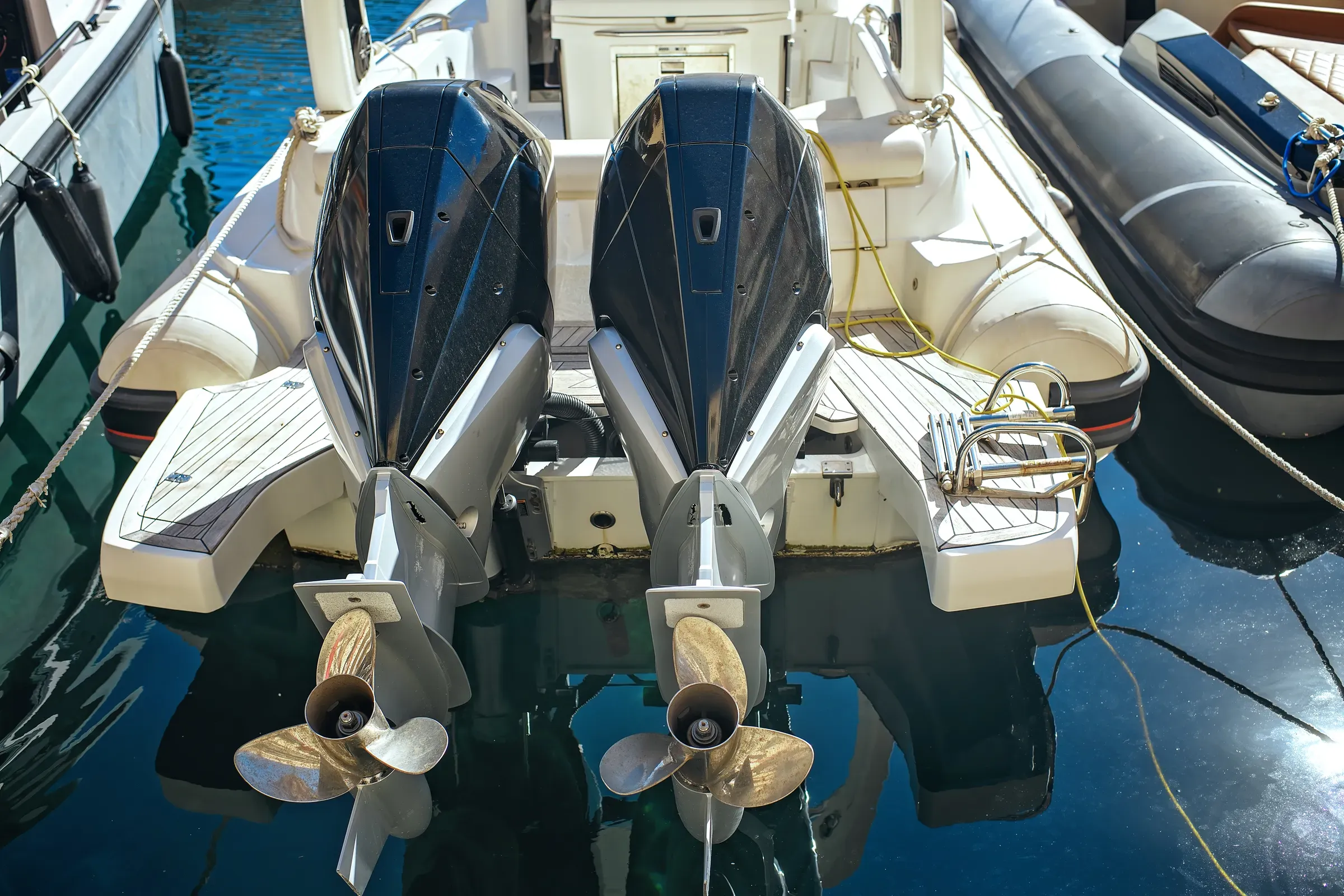
Twin Outboard Marine Engines on Modern Motorboat, boat & marine parts ecommerce
Boat & marine partsBoat owners doing their own maintenance and small marine repair shops, who work from an exploded parts diagram, quote a serial number, and check whether a component is rated for saltwater before ordering.

How boat & marine parts makes money

Four levers, and what limits each one here

Revenue is traffic times conversion rate times order value times purchase frequency. In this niche each lever has its own ceiling.

Traffic

Traffic: the engine model and the diagram are the search

Marine part searches usually contain an engine model, sometimes a serial range and often a component named from a parts diagram rather than from a catalog. Owners learn the vocabulary from the manufacturer's own documentation, so a store using different words is invisible to them. The traffic lever is building pages around the same structure the owner is already looking at: a page per engine family, a page per assembly within it, and part pages that list the models and serial ranges they cover as text. Boat model pages are the second family, since hull-side components such as pumps, hardware and electronics are searched by boat rather than by engine.

Conversion

Conversion: serial range confirmation and saltwater suitability

Two questions decide a marine order. The first is whether the part matches the specific engine, which depends on the serial break rather than on the model year, and the page has to explain where the owner finds their serial number as well as which ranges the part covers. The second is environment: a component suitable for freshwater may corrode quickly in salt, and buyers in coastal markets look for the material and the treatment before anything else. Stating both plainly, alongside a photograph clear enough to compare against the removed part, converts far better than a specification table. Where a part supersedes an older number, saying so prevents a customer rejecting the correct component because the number does not match.

Order value

Order value: service kits beat individual components

Marine maintenance is done in jobs, and each job has a known list. A water pump service takes an impeller, a housing, gaskets, a key and often a seal. An outdrive service takes lubricant, bellows, anodes and hardware. Owners assembling that list one part at a time from a diagram frequently miss something and lose a weekend waiting for a gasket. A store that publishes the complete kit for a job, matched to the engine and serial range, earns a much larger order and a genuinely better outcome. Winterisation and commissioning kits do the same seasonal work, and anodes, filters and lubricants attach naturally to almost every order in the category.

Frequency

Frequency: two appointments a year, plus whatever breaks

In seasonal markets the reliable pattern is commissioning in spring and winterisation in autumn, both of which consume a predictable list of parts for a known engine. A store that records the engine, the serial number and the region can reach an owner ahead of both with the exact list their boat needs, which is far more effective than a general seasonal promotion. Failure-driven purchases fill the middle of the season and reward availability above all else, because a boat on a trailer with a booked weekend is a very urgent customer. Repair shops are the steady counterweight, ordering all season and valuing stock accuracy and dispatch speed over price.

Search visibility

Search: engine families, assemblies and the winterisation calendar

The catalog structure and the content structure should mirror the manufacturer's parts documentation, because that is what owners are reading when they search. Engine family pages act as hubs, assembly pages cover the groupings owners work within, and part pages carry the model coverage and serial ranges as text so both people and crawlers can read them. This is unglamorous structural work and it is where most of the durable traffic in this niche comes from.

Seasonal and procedural content is the second layer and it is heavily searched. How to winterise a particular type of engine, how to replace an impeller, what to check at commissioning, how often anodes should be replaced, what the difference is between freshwater and saltwater service intervals. These pages arrive with demand twice a year and hold their rankings between peaks, which makes them unusually good value for the effort.

Boat and hull-side content completes the picture, covering pumps, plumbing, electrical systems, safety equipment and hardware searched by boat type rather than by engine. The technical work is mostly about coverage and consolidation: making sure supersessions redirect, that discontinued parts keep a page naming their replacement, and that the many small hardware items with almost identical names do not produce duplicate pages competing with one another.

Queries that matter

  • impeller for a mercruiser alpha one
  • how to winterize an outboard motor
  • yamaha outboard lower unit oil change parts
  • anode replacement interval saltwater
  • trim pump for a 1998 evinrude
  • boat bilge pump wiring diagram
  • spring commissioning checklist for an inboard

Engine family and assembly pages with serial ranges in text, plus seasonal procedure guides, rank well here. Generic marine category pages and product pages carrying only a distributor line do not.

AI answers

AI answers: maintenance procedure and compatibility questions

Boat owners ask assistants two kinds of question: how to carry out a maintenance procedure, and whether a specific part suits their engine. Both have factual answers, so assistants attempt them, and the sources that get used are pages where the procedure is written as steps and the compatibility is expressed as model and serial ranges in readable text. Stores become citable by publishing those clearly, by naming components the way the manufacturer documentation names them, and by being accurate about saltwater and freshwater differences. We write the procedure guides answer-first, keep safety guidance sound around fuel and electrical work, and check that page, structured data and feed all agree on fitment.

Which impeller kit fits my engine serial number?
How often should anodes be replaced in salt water?
What is involved in winterising an outboard?
Is this pump rated for continuous duty?
What oil does this outdrive take and how much?

Questions shoppers put to assistants. A store gets named when its pages answer them in plain text.

Google Shopping and Merchant Center

Merchant Center for marine parts, hazmat and heavy items

Marine feeds carry three complications at once. Many parts have no retail barcode, so brand and MPN identify them and identifier_exists is set honestly rather than filled with a placeholder. A share of the catalog is restricted for transport, including flares, fuel additives, batteries, aerosols and certain lubricants, which needs proper shipping classes, ground handling and region exclusions rather than a promise the carrier will decline. And a further share is simply heavy or awkward, since props, lower units, controls and hardware sets are not parcel items.

Titles carry the fitment work because the feed has nowhere to hold a serial range. Leading with brand, part type and engine application matches how owners search, with product detail attributes carrying the serial coverage, the material, the corrosion treatment and any supersession. Condition should be honest on remanufactured drivetrain components, which are common in this category and perfectly saleable when described accurately.

Budget pacing is the strategic decision. In a market where most demand arrives in two short windows, an evenly spread annual budget spends most of the year on searches that will not convert and runs short exactly when boats are being launched. Campaigns should be built to release and cut on the local season, with the warm-water regions handled separately since their calendar does not match.

Feed attributes that decide eligibility

  • brand and mpn
  • identifier_exists where no barcode exists
  • product_detail for engine model and serial range
  • product_detail for corrosion treatment and water type
  • condition for remanufactured drivetrain components
  • shipping_label for restricted and oversized items
  • shipping_weight and dimensions
  • custom_label for seasonal release

Disapprovals we see in this niche

  • Restricted items such as flares or fuel additives offered into regions carriers refuse
  • Fabricated identifiers on hardware that never carried a barcode
  • Shipping mismatch on props, controls and drivetrain components
  • Availability drift during commissioning weeks when stock turns quickly

Meta and social ads

Meta and social: the water sells the season, the workshop sells the part

Paid social has a narrow but real role here. It works well ahead of the season, when owners are thinking about the boat but have not yet started the list, and it works for maintenance education that builds an audience of owners for a specific engine family. It works poorly for individual failure-driven parts, because nobody scrolling needs an impeller until theirs fails.

Creative should look like a workshop or a ramp rather than a brochure. A winterisation walkthrough, an impeller replaced on camera with the worn one held up next to the new part, a comparison of corrosion on a neglected anode against a maintained one, and a spring commissioning checklist all earn attention from owners who know they should be doing the same thing. Audiences build from customers segmented by engine family and region, and from communities around boat types. Safety-related products and any claim about reliability at sea should be described conservatively, and content should never suggest skipping required safety equipment.

  • Winterisation walked through on a real engine before the first freeze
  • A worn impeller held next to a new one, with the failure explained
  • Corrosion compared between a maintained and a neglected anode
  • A spring commissioning checklist filmed on the ramp
  • A repair shop explaining the failure they see most often
  • What lives in a spares box for a weekend on the water

Policy line

Describe safety and reliability conservatively, never suggest skipping required safety equipment, and keep any performance or durability claim within what the manufacturer publishes.

Conversion and the store

The store: proving the part before a weekend is lost

A marine product page has one overriding job, which is to make the buyer certain before they commit a weekend to the job. That means the serial range coverage stated plainly, an explanation of where to find the serial number on their own engine, a photograph clear enough to compare against the removed component, any supersession noted so a changed number does not cause doubt, and the water type and corrosion treatment made explicit. Kits should show every item included so an owner can check nothing is missing from their job.

Availability and dispatch matter more than price for a large share of these orders. Showing real stock, a dispatch cutoff and a delivery estimate near the button is worth more than a discount, because the alternative for the customer is a dealer counter that has it today. On mobile, which is where a lot of this happens beside the trailer, the fitment information and the stock position should be visible without scrolling past a long description, and the diagram or reference photograph should zoom cleanly.

Objections the page must answer

  • “Does this fit my serial number, not just my engine model”
  • “Is it suitable for salt water”
  • “Is this the current part or has the number been superseded”
  • “Does the kit include every gasket and seal the job needs”
  • “Will it arrive before the weekend”
  • “Is a remanufactured unit safe to rely on”

Email, SMS and retention

Email and SMS: commissioning, haul-out and the engine on file

Two messages a year do most of the work, and they only work if the store knows the engine. With the model, the serial number and the region recorded, the spring message can list the exact commissioning parts that boat needs and the autumn message can do the same for winterisation, timed to local conditions rather than to a national date. That specificity is why these sends outperform anything generic in this category.

Between them, the useful flows are practical. A spares recommendation before a long trip, an anode replacement reminder timed to water type rather than to a fixed interval, and restock notifications for parts that sold out during the peak. Repair shops need a separate programme built on availability and reordering rather than on seasonal advice they already act on. SMS suits the narrow windows well: a dispatch cutoff before a holiday weekend, a back-in-stock alert during commissioning, and a delivery notice on a freight item. Off season is the right time for procedure content and planning rather than pressure.

  1. Spring commissioning list by engine

    As launch season opens in the customer's own region

  2. Autumn winterisation list

    Before the first freeze locally, excluding warm-water customers

  3. Anode and service interval reminder

    Based on water type and time since the last order

  4. Spares kit before a long trip

    Early in the season, framed around what fails away from shore

  5. Back in stock during peak

    Immediately, for a specific part and serial range

  6. Trade reorder for repair shops

    Through the season, built from their own order history

Where revenue leaks

The leaks we find in boat & marine parts stores

The Growth Analysis ranks these against your own numbers and says which to close first.

Get a Growth Analysis for your marine parts store
  • Serial ranges that exist only in a supplier spreadsheet

    The store knows which serial breaks a part covers and none of it reaches the page, so buyers guess, order the wrong component and return it during the weeks when the store can least afford the handling.

  • A budget divided evenly across a two-window year

    Spend trickles away through months when nobody is boating and runs out during commissioning, which is the one period when almost every search converts.

  • Restricted items sold where they cannot ship

    Flares, fuel additives and batteries are ordered from regions carriers will not serve, producing cancellations at the worst possible moment in the season.

  • Superseded numbers treated as discontinued

    A part number changes, the old page is removed, and years of searches for the original number find nothing. Redirecting and naming the replacement recovers demand that already exists.

  • Kits left for the customer to assemble

    Owners buy an impeller and discover the job also needed gaskets and a key, which costs them a weekend and costs the store the goodwill and the second order.

Platform notes

Where the platform changes the work

Shopify

Serial ranges and engine applications are best held as metafields or a separate dataset so they render on the page and populate feed attributes. Restricted and oversized items need their own shipping profiles, and service kits should draw down component stock rather than existing as unlinked products.

WooCommerce

Engine family and assembly attributes can drive both filters and indexable archives, and shipping classes handle the split between hardware, hazmat and freight. Large hardware catalogs need query performance checked before the peak rather than during it.

BigCommerce

Custom fields carry serial coverage and corrosion treatment, and price lists suit stores serving repair shops alongside owners from one catalog.

Questions

Boat & marine parts owners ask us

By CartKernel · Last reviewed

How do you handle fitment when a serial number decides the part?

By putting the serial coverage on the page as readable text and telling the owner where to find their number on the engine. A selector helps, but the ranges also need to exist as content so they can be found in search and read by an assistant. Where a supplier only supplies ranges in a document, getting that into structured data is usually the highest-value first project.

How should marketing budget be paced around a short season?

Concentrated into the windows where demand actually exists, released by region rather than nationally, and reduced rather than eliminated in between so the account keeps its footing. A flat monthly budget in a seasonal market spends most of its money on the months that cannot convert and caps out during the weeks that could.

Can marine safety and chemical products be sold online at all?

Many can, within transport rules that vary by product and carrier. Flares, fuel additives, batteries and aerosols each have their own handling requirements and some regions cannot be served. The workable approach is accurate shipping classes, clear region rules and honest availability rather than accepting orders that will later be cancelled.

Is it worth publishing maintenance guides for engines we do not make?

Yes, provided they are accurate and safety-conscious. Owners search procedures far more often than they search parts, and the store that explains the job well is the one they buy the parts from. It also gives a natural home for the kits, since a procedure guide can list exactly what the job consumes for a given engine family.

How do you compete with dealers who hold the warranty relationship?

By competing where dealers are weakest: breadth of stock across brands, availability during the peak weeks, depth of procedure content and shipping speed to owners who are not near a dealer. Dealers keep warranty and service work, and that is fine. The online opportunity is the maintenance and repair the owner intends to do themselves.

What causes most returns in a marine parts catalog?

Serial range mismatches and superseded numbers, in roughly that order. Both are data problems rather than customer errors. Publishing the ranges, explaining where the serial number is found, and keeping supersessions visible on the page addresses most of it, and the same information reduces the support load during the weeks when the store is busiest.

Grow your boat & marine parts store.

A free Growth Analysis ranks what your store should fix first, by revenue at stake, in about a week.