Skip to content

Automotive & powersports · ecommerce growth

Towing equipment marketing agency

Towing customers arrive with an arithmetic problem before they have a shopping problem. They want to know what their vehicle can pull, what the tongue weight will be with the trailer loaded, whether the hitch class is adequate and what the wiring needs to be. Answer that clearly and the product choice follows almost automatically. We build the capacity content that captures those searches, compatibility data that makes a purchase safe, and the account structure that serves fleets alongside weekend towers.

The buyer, in brief

Consideration
Days for a first setup where capacity and legality are being worked out, minutes for a replacement part with a known specification
Purchase frequency
One substantial setup purchase, then components, wiring, straps and accessories as they wear or as needs change
Seasonality
Spring and early summer as boats, campers and utility trailers come out, a moving season in late summer, and steady trade demand year round
Price band
Low for wiring, balls and pins, mid to high for hitches, weight distribution systems and brake controllers
Return risk
Moderate, mostly caused by receiver size mismatches, wiring harness incompatibility and buyers discovering their vehicle needs a different class
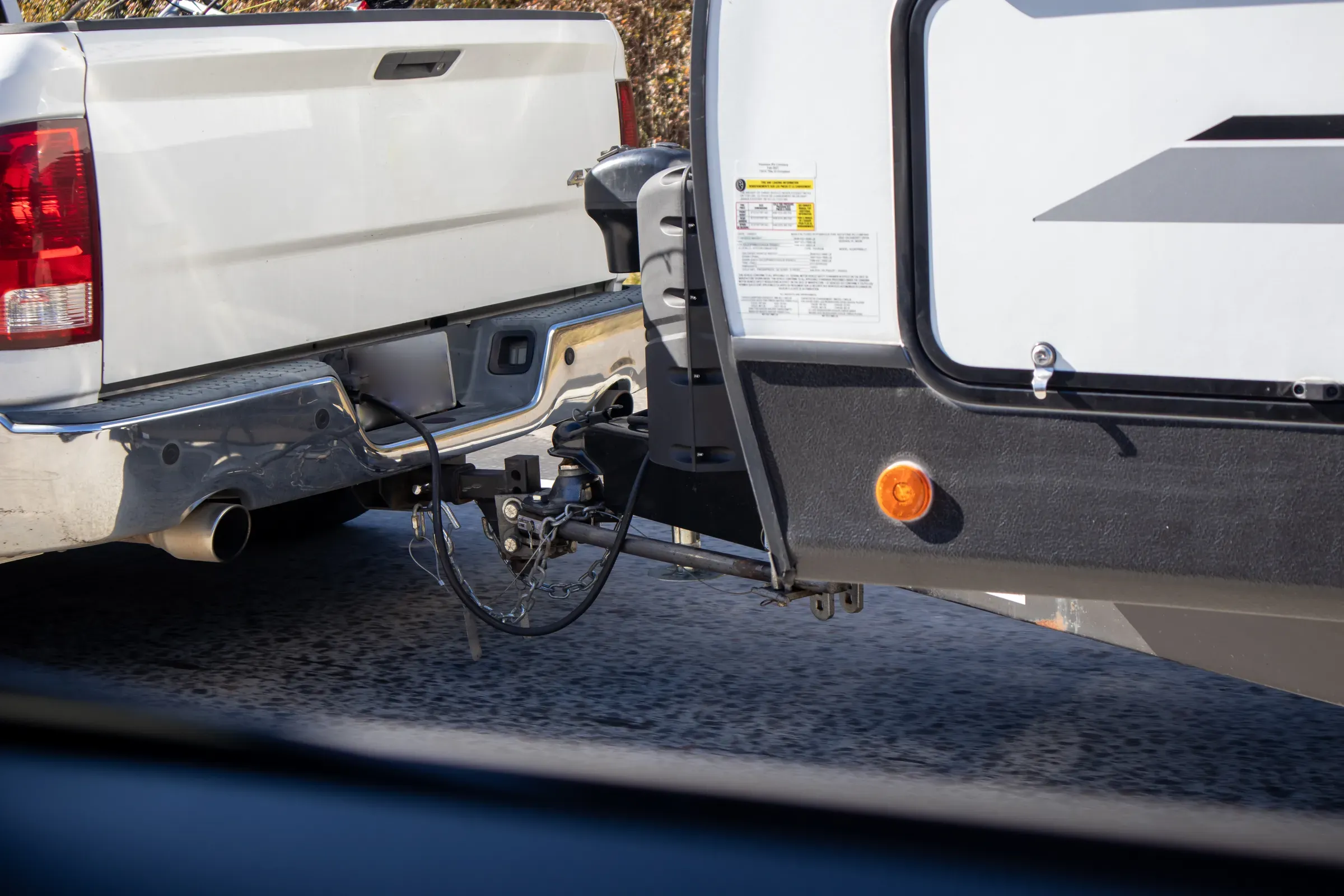
Truck towing a trailer home, trailer & towing ecommerce
Trailer & towingVehicle owners preparing to tow for the first time, experienced towers replacing or upgrading equipment, and fleet and trade buyers who order the same items repeatedly and need availability and account terms more than advice.

How trailer & towing makes money

Four levers, and what limits each one here

Revenue is traffic times conversion rate times order value times purchase frequency. In this niche each lever has its own ceiling.

Traffic

Traffic: capacity questions come long before product searches

The first thing somebody types is not a product. It is a question about what their vehicle can tow, what tongue weight means, whether they need a weight distribution system, or whether a particular class of hitch is enough for a trailer they are considering. Those searches carry enormous volume and are answered mostly by generic content that sells nothing. The traffic lever is a proper reference library: vehicle towing capacity pages, plain explanations of the rating terms and how they interact, and calculators that produce a real answer rather than an email capture. Product recommendations then sit inside a conclusion the reader trusts, which is a far stronger position than competing on hitch category terms alone.

Conversion

Conversion: compatibility resolved in both directions

A towing purchase involves the vehicle at one end and the trailer at the other, and both have to be satisfied. The vehicle decides the hitch fitment, the receiver size, the wiring connector and whether a brake controller can be integrated. The trailer decides the coupler size, the ball diameter, the drop or rise needed and whether electric brakes are present. A page that resolves only one side leaves the buyer guessing about the other. Conversion comes from asking both questions, presenting the complete list of what the setup requires, and being explicit about anything that needs a professional, particularly brake controller wiring on vehicles where the integration is not straightforward.

Order value

Order value: a towing setup is six items, not one

Somebody buying a hitch also needs a ball mount at the correct drop, a ball of the right diameter, a pin and clip, a wiring harness for their vehicle, often a converter, and frequently a brake controller. Sold individually those are six decisions, each with a chance of error. Sold as a complete setup configured from the vehicle and the trailer, they are one confident purchase with a much larger value and a much lower chance of a return. Weight distribution and sway control systems raise the ceiling further for heavier loads. Straps, chains, locks and covers attach naturally, and safety equipment is an easy addition when the page explains what is legally required rather than simply listing it.

Frequency

Frequency: consumables for towers, standing orders for fleets

Consumer repeat purchase comes from wear and from change. Straps, chains, lights, connectors and locks are replaced regularly, and a new vehicle or a different trailer resets the whole setup. Recording what somebody tows and with what makes each of those moments a specific recommendation rather than a guess. The larger and steadier opportunity is trade: contractors, rental operators, landscapers, marinas and fleet workshops buy the same consumables continuously and choose a supplier on availability, dispatch speed and account terms. Serving them properly means account pricing, saved order lists, purchase order handling and stock reliability, which is a different operation from consumer retail even when it runs on the same catalog.

Search visibility

Search: capacity references, compatibility guides and legal requirements

The capacity library is the anchor. Pages that explain the rating terms clearly and pages that give towing figures for specific vehicles attract very large research audiences, and they are searched all year rather than seasonally. Written honestly, with the caveat that a vehicle's own documentation is authoritative, they earn links and become the reference people return to. A calculator that shows its working converts better than one that hides the answer behind a form.

Compatibility guides are the commercial layer. What connector a given vehicle uses, which hitch class matches which receiver size, how to choose ball size from a coupler, how much drop a level tow needs, and what a weight distribution system actually does. Each answers a question that stands between the reader and a purchase, and each links naturally to the products that resolve it.

Legal and safety content completes the set and is genuinely searched, covering when trailer brakes are required, what lighting a trailer must display, safety chain requirements and licence considerations for heavier combinations. This varies by province and state, so accuracy and clear scoping matter. Technically, the work is keeping the reference content connected to the catalog, and making sure vehicle capacity pages do not become thousands of near-identical templates with a number swapped.

Queries that matter

  • how much can a 2020 tacoma tow
  • what is tongue weight and how do i measure it
  • class 3 vs class 4 hitch difference
  • 7 pin trailer wiring diagram
  • do i need a weight distribution hitch
  • trailer brake controller for a ram 1500
  • when are trailer brakes required by law

Capacity references, compatibility explainers and clearly scoped legal guidance rank strongly here because the questions are constant and the answers are checkable. Product category pages with no explanation, and calculators that withhold the result, do not.

AI answers

AI answers: towing maths is exactly what assistants get asked

Towing questions are arithmetic and rules, which is the category assistants handle most confidently and users trust most readily. People ask what their vehicle can pull, how to calculate tongue weight, whether a class of hitch is sufficient, what connector their truck uses. Stores become citable by publishing the reasoning as text with the terms defined, being explicit about which figures are general and which require checking the vehicle's own rating, and keeping regional legal statements scoped to the places named. We write the capacity and compatibility content answer-first, avoid presenting general figures as if they were a specific vehicle's rating, and keep product compatibility claims consistent across page, structured data and feed.

How much weight can my vehicle safely tow?
How do I work out the tongue weight of a loaded trailer?
Is a class three hitch enough for the trailer I am buying?
Which wiring connector does my truck have from the factory?
Do I legally need brakes on this trailer?

Questions shoppers put to assistants. A store gets named when its pages answer them in plain text.

Google Shopping and Merchant Center

Merchant Center for hitches, wiring and safety-rated equipment

Two feed characteristics define this catalog. The first is that capacity ratings are the defining specification and belong in the product data, since gross trailer weight, tongue weight, receiver size and hitch class are what buyers compare and what more specific searches contain. Putting them into product detail attributes lets a listing match those searches rather than competing only on brand and price. Ratings must match the manufacturer exactly, because these are load-bearing safety products and an overstated figure is both a misrepresentation risk and a genuine hazard.

The second is weight. Hitches, weight distribution systems and heavy-duty ball mounts are dense items that a parcel rule will misquote, so accurate weights and dimensions with proper shipping rules prevent the disapprovals that otherwise remove the most valuable products. Vehicle-specific hitches and harnesses need their application in the title, since that is how those searches are typed.

Campaigns split by buyer. Consumer campaigns run heaviest through the towing season and lead with complete setups rather than components. Trade demand is steadier and is better served by availability, account access and reliable dispatch than by advertising, so the paid budget concentrates on consumer acquisition while the trade relationship is built operationally.

Feed attributes that decide eligibility

  • product_detail for gross trailer weight and tongue weight ratings
  • product_detail for hitch class and receiver size
  • title carrying the vehicle application on fitment items
  • gtin on branded equipment
  • brand and mpn on hardware and adapters
  • shipping_weight and dimensions for dense items
  • custom_label for consumer setup versus trade consumable

Disapprovals we see in this niche

  • Capacity ratings in the feed that differ from the manufacturer's published figures
  • Shipping mismatch on heavy hitches priced by a parcel rule
  • Missing identifiers on pins, balls and adapters
  • Availability drift on drop-shipped vehicle-specific hitches

Meta and social ads

Meta and social: nervous first-time towers are the audience

The most valuable audience on social here is people about to tow for the first time, because they have real anxiety and very little knowledge, and content that reduces that anxiety earns trust quickly. Loading a trailer correctly, measuring tongue weight with a bathroom scale and a lever, what sway feels like and how to avoid it, reversing technique, and a pre-departure check list all perform because they answer a fear rather than sell a product.

Audiences build from customers, from owners of vehicles commonly used for towing, and from the communities around boats, campers and horse trailers, each of which tows differently. Trade buyers are a separate audience reached better through direct outreach than through consumer creative. Policy considerations are mostly about safety claims: capacity figures must match manufacturer ratings exactly, nothing should imply a product allows towing beyond a vehicle's rating, and content showing unsafe loading or overloaded combinations can restrict an account as well as damage credibility.

  • Loading a trailer to get the tongue weight right, demonstrated simply
  • What sway feels like and what actually causes it
  • A pre-departure check done in under two minutes
  • Reversing a trailer explained without the usual jargon
  • A complete setup unboxed and fitted to a vehicle
  • A contractor explaining what wears out first and why

Policy line

Match every capacity figure to the manufacturer's rating, never imply equipment allows towing beyond a vehicle's own limit, and avoid content showing overloaded or unsafely loaded combinations.

Conversion and the store

The store: two vehicles to satisfy and one setup to get right

The page has to resolve the vehicle side and the trailer side together. That means a selector that takes the tow vehicle and returns the correct hitch, receiver size and wiring, plus a way to specify the trailer so that ball size, drop and brake requirements are settled at the same time. The complete setup should be addable in one action, with each item explained in a line so the buyer understands why it is there rather than suspecting an upsell. Where a brake controller or wiring job needs professional installation on a particular vehicle, saying so prevents both a return and a genuinely unsafe outcome.

Ratings need to be prominent and unambiguous, with the limiting figure explained, because buyers frequently do not realise that the weakest component sets the capacity of the whole setup. Trade customers need a different path entirely: account login, saved order lists, purchase order support and stock visibility, ideally without wading through consumer guidance. On mobile the calculator has to work properly and the results need to be readable, since a large share of this research happens on a phone in a driveway or at a dealership.

Objections the page must answer

  • “Can my vehicle actually tow what I am planning to tow”
  • “Which class and receiver size do I need”
  • “What wiring does my vehicle use and will it work with my trailer”
  • “Do I need a weight distribution or sway control system”
  • “Can I install this or does the wiring need a professional”
  • “Is everything in this setup rated for the load”

Email, SMS and retention

Email and SMS: first-time towers, season prep and standing orders

A first towing purchase is the start of a relationship if the store treats it that way. A sequence after that order covering safe loading, the pre-departure check, what to inspect after the first few trips and what commonly needs replacing first is useful enough to be opened, and it produces the accessory orders that follow. Recording the vehicle and the trailer makes every later message specific.

Seasonal prompts fit the equipment. A pre-season inspection message covering lights, couplers, chains and bearings before the first trip of the year is genuinely valuable and sells consumables. A moving-season message reaches a different audience entirely. Trade accounts need a separate programme built on reordering, stock and account terms, with no consumer education in it at all. SMS suits back-in-stock alerts on vehicle-specific items, delivery notices on heavy shipments and short seasonal reminders, and it should stay out of the trade programme unless a customer has asked for it.

  1. First-time tower safety series

    Sequenced across the two weeks after a first setup order

  2. Pre-season equipment inspection

    As towing season opens in the customer's region

  3. Wear item replacement

    Estimated from purchase date and stated usage

  4. Vehicle or trailer change check-in

    Annually, since either change resets the whole setup

  5. Trade standing order

    On the account's own cycle, built from order history

  6. Vehicle-specific item back in stock

    Immediately, for a named vehicle application

Where revenue leaks

The leaks we find in trailer & towing stores

The Growth Analysis ranks these against your own numbers and says which to close first.

Get a Growth Analysis for your towing equipment store
  • Calculators that hide the answer behind an email form

    The reader came for a number and is asked for an address instead, so they leave for a site that simply answers. The result page is where the product recommendation belongs, and gating it forfeits both the trust and the sale.

  • Hitches sold without the rest of the setup

    A buyer receives a hitch and discovers they still need a ball mount, a ball, a pin and a harness. The order becomes several orders, several shipping charges and often a return when one part turns out to be wrong.

  • Trade buyers forced through a consumer checkout

    A fleet customer who orders the same items monthly has to rebuild the basket every time, with no account pricing, no saved list and no purchase order option, so they move to a distributor who offers all three.

  • Capacity figures that differ between page and feed

    A rating stated one way on the product page and another in the feed is both a policy exposure and a safety problem, and it destroys confidence with buyers who check specifications carefully.

  • Research content with no path into the catalog

    Guides answer the capacity question thoroughly and never say what to buy, so the reader finishes informed and completes the purchase somewhere that made the next step obvious.

Platform notes

Where the platform changes the work

Shopify

Vehicle applications and capacity ratings belong in metafields so they can drive fitment pages, product detail attributes and the setup configurator. Trade pricing, purchase orders and saved order lists usually need business-to-business functionality rather than a discount code approach.

WooCommerce

Capacity and class attributes can power indexable archives as well as filters, and role-based pricing handles trade accounts without a separate store. Heavy item shipping needs its own classes rather than a single flat rule.

BigCommerce

Price lists and customer groups suit a catalog serving both consumers and fleets, and product rules can express drop, rise and ball size options without duplicating products.

Questions

Trailer & towing owners ask us

By CartKernel · Last reviewed

Should towing calculators be gated behind an email capture?

No. The reader is trying to answer a safety-relevant question and gating it sends them elsewhere, usually permanently. Give the answer, show the working, and put the recommended equipment on the result page. Stores consistently earn more from a calculator that converts to a purchase than from one that collects addresses and loses the session.

How careful do we need to be with capacity claims?

Very. These are load-bearing safety products and the figures come from the manufacturer, so they should be reproduced exactly on the page, in structured data and in the feed. Never imply that equipment raises what a vehicle can legally or safely tow, and make clear that the lowest-rated component in a setup determines the limit for the whole combination.

Can a store serve fleet customers and consumers from one site?

Yes, provided the trade path is genuinely separate. Account pricing, saved order lists, purchase order handling and stock visibility matter more to a fleet buyer than any content, and forcing them through a consumer journey loses accounts that would otherwise order every month. The catalog can be shared even when the experience is not.

What causes most returns on towing equipment?

Receiver size and connector mismatches, followed by buyers discovering their vehicle needs a different class or a different wiring approach than they assumed. All of it is preventable on the page by resolving the vehicle side and the trailer side together and by stating what the setup requires in full before the order is placed.

Is it worth writing about regional towing laws?

Yes, when it is scoped carefully. Requirements for trailer brakes, lighting, chains and licensing vary by province and state, and people search them constantly. Write for the specific regions you serve, date the content, point to the official source and update it when rules change. Vague national generalisations help nobody and can be actively misleading.

How should seasonal budget be handled in this niche?

With a consumer peak through the towing season and a steady baseline for trade demand that continues year round. Unlike some automotive categories the off season is not empty, because fleets keep buying consumables. We separate the two in reporting so the seasonal consumer curve does not mask what is happening with trade revenue.

Grow your trailer & towing store.

A free Growth Analysis ranks what your store should fix first, by revenue at stake, in about a week.