Skip to content

Automotive & powersports · ecommerce growth

Car audio brand marketing agency

A car audio order is rarely one product. Replacing a head unit means a dash kit, a wiring harness, an antenna adapter and often a module to keep the steering wheel controls working. Replacing speakers means knowing what size fits which door in which trim. The stores that grow are the ones that turn that complexity into a single confident recommendation. We build the vehicle fit data, the specification-rich pages and feeds that support it, and the bundles that make sure nothing is missing when the box arrives.

The buyer, in brief

Consideration
An evening for a speaker swap, weeks for a full system where amplifier power, enclosure design and installation cost are all being planned
Purchase frequency
Upgrades arrive in a ladder rather than a cycle, with speakers, then amplification, then a subwoofer, then sound treatment over a year or two
Seasonality
A gifting peak in December, a spring lift as project season begins, and steady demand from installers all year
Price band
Mid for speakers and head units, high for amplifiers, subwoofer systems and integration work
Return risk
Moderate, driven by missing adapters, incorrect speaker depth and buyers underestimating what the installation requires
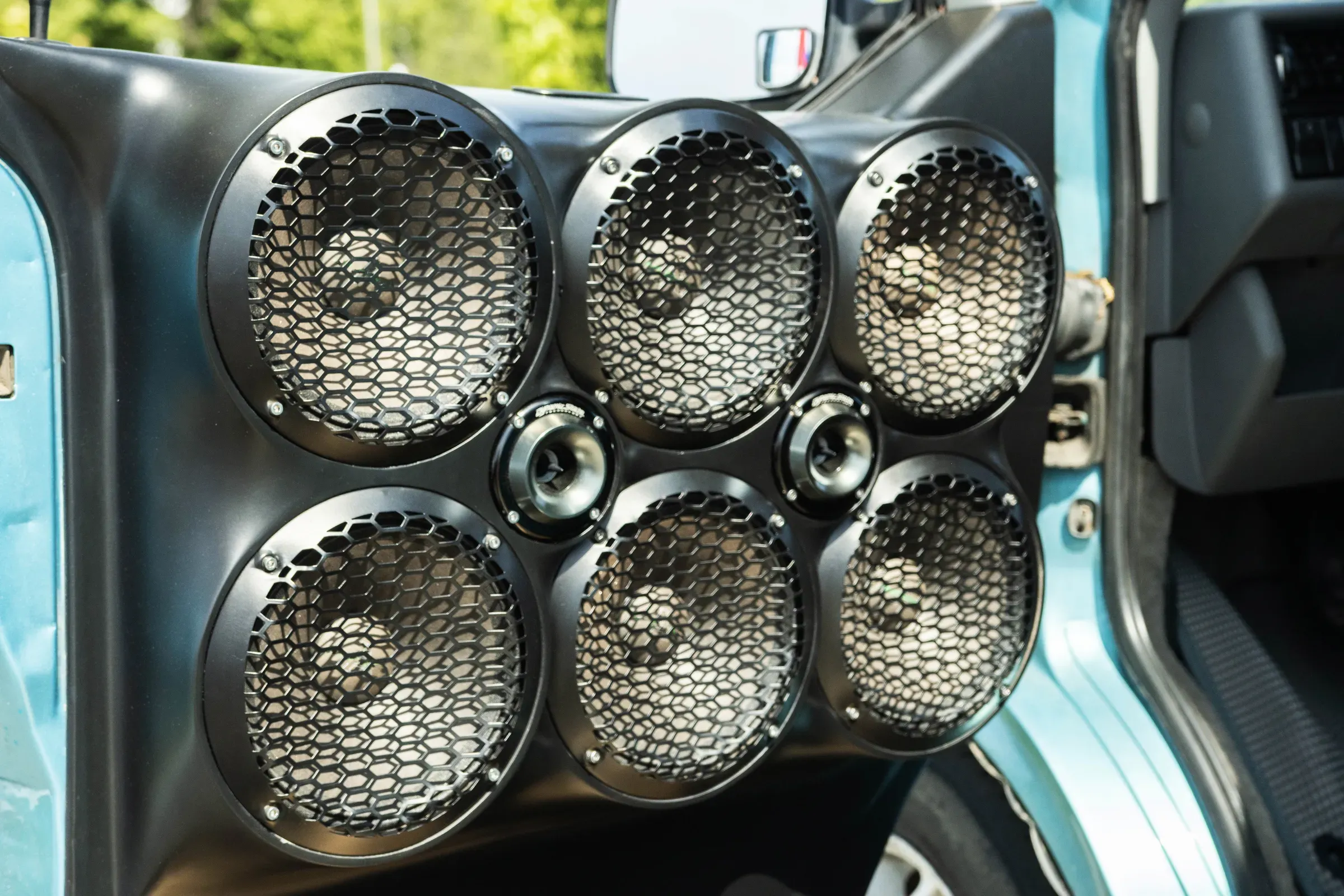
Custom car door with multiple audio speakers installed for powerful sound system, featuring six main speakers, car audio ecommerce
Car audioOwners upgrading factory sound, competitors and hobbyists building systems around specific power and enclosure figures, and installers buying repeatedly for customer vehicles, all of whom compare specifications closely before deciding.

How car audio makes money

Four levers, and what limits each one here

Revenue is traffic times conversion rate times order value times purchase frequency. In this niche each lever has its own ceiling.

Traffic

Traffic: what fits the door, and what the spec sheet says

Two distinct search behaviours drive this niche. One is fit-led, where an owner wants to know what size speaker fits the front doors of their vehicle, whether a double din unit will go in the dash, or how deep a subwoofer can be under the seat. The other is specification-led, where a more experienced buyer searches by power handling, impedance, sensitivity or enclosure volume. Most stores serve neither well, publishing a brand-organised catalog with a fitment tool bolted on. Building vehicle fit pages that list what goes where in each trim, alongside specification landing pages for the figures people actually search, captures both audiences with content that competitors mostly leave unwritten.

Conversion

Conversion: the complete list of what the install needs

The single biggest cause of a failed car audio order is a missing adapter. A head unit arrives without the harness, the dash kit or the interface that retains steering wheel controls, and the customer either returns everything or spends a frustrating weekend sourcing parts. Conversion in this niche comes from resolving that on the page: given the vehicle and trim, show exactly what is required alongside, mark what is optional, explain what will be lost without an interface, and let the whole set be added in one action. The same principle applies to speakers, where depth, mounting hole size and adapter brackets decide whether a fit is straightforward or a problem.

Order value

Order value: systems, not components

Order value in car audio is decided by whether the store sells a system or a box. An amplifier alone is a low-value order that often ends in a support conversation about wire gauge and fusing. The same amplifier sold with a correctly sized wiring kit, the right fuse, a distribution block and speakers matched to its output is a much larger order and a much better outcome. Sound treatment, an integration module and a line output converter attach naturally to almost any upgrade. The way to present this is by output goal rather than by price tier, because a buyer who wants clearer vocals at moderate volume needs a different set from someone who wants low bass in a hatchback.

Frequency

Frequency: the upgrade ladder and the installer account

Enthusiast buyers rarely finish in one purchase. A typical progression runs from front speakers, to an amplifier, to a subwoofer, to sound deadening, to a processor, spread over a year or more as budget allows. Knowing the vehicle and the current configuration lets the store time the next conversation usefully rather than guessing. The second and steadier repeat source is the installer, who buys for other people's vehicles continuously and chooses a supplier on stock accuracy, dispatch speed and account pricing rather than on marketing. Serving both from one store means two different pricing structures, two email programmes and often two navigation paths.

Search visibility

Search: vehicle fit guides, specification pages and install explainers

Vehicle fit pages are the commercial core. For each vehicle and trim the store supports, a page listing the speaker sizes by location, the head unit opening, the adapters required, the factory amplifier situation and any integration considerations answers a question owners genuinely cannot answer themselves. Those pages are generated from fitment data but carry real per-vehicle notes, and they are the closest thing this niche has to an unclaimed traffic pool.

Specification content serves the more experienced audience. Pages explaining power ratings and how they are measured, impedance and what it does to an amplifier, sensitivity, enclosure volume and tuning, and how to match components sensibly, rank for research queries and give the product pages the context that makes their numbers meaningful. Comparison content between component types is heavily searched and rarely written honestly.

Installation explainers complete the set: wire gauge and fusing, running power through a firewall, retaining factory features, and when a job genuinely needs a professional. These earn links and reduce support load. The technical work is mostly variant and specification handling, since a speaker sold in several sizes and a subwoofer sold in several impedances must not fragment into competing pages, and specification tables need to exist as text rather than as images.

Queries that matter

  • what size speakers fit a 2015 civic front doors
  • double din dash kit for a silverado
  • amp wiring kit gauge for 1000 watts
  • 2 ohm vs 4 ohm subwoofer
  • keep steering wheel controls with aftermarket head unit
  • shallow mount subwoofer under seat
  • line output converter for a factory amplifier

Vehicle fit pages with per-trim detail, specification explainers and honest installation guides rank here. Brand landing pages copied from the manufacturer, and product pages that publish a specification image instead of text, do not.

AI answers

AI answers: matching questions with technically correct answers

Car audio questions suit assistants because most have a technically correct answer: what size fits, what wire gauge a given current needs, whether an amplifier is stable at a particular impedance, what happens to power when subwoofers are wired in parallel. Stores get cited when those answers exist as readable text with the reasoning shown, and when specifications are published as text rather than inside a datasheet image. We write the fit guides and matching explainers so each answer stands alone, keep power and impedance figures consistent between the page, the structured data and the feed, and make sure the required-accessory logic is described in words rather than only encoded in a configurator.

What speaker size fits my car and how deep can it be?
Will I lose my steering wheel controls with an aftermarket unit?
What gauge wire does this amplifier need?
Can this amplifier run two subwoofers safely?
Do I need an amplifier or will new speakers be enough?

Questions shoppers put to assistants. A store gets named when its pages answer them in plain text.

Google Shopping and Merchant Center

Shopping feeds where the specification is the differentiator

Car audio products are compared on numbers, so the feed should carry them. Power handling, impedance, sensitivity, mounting depth, cutout diameter and enclosure requirements all belong in product detail attributes, because those are the terms that appear in the more valuable searches and because a listing without them competes only on price. Titles should lead with brand, product type and the defining specification rather than with a marketing name, and vehicle applications belong in the title for fitment-specific items such as dash kits and harnesses.

Branded electronics generally carry barcodes, so GTINs should be used and are worth auditing, since distributor feeds often omit them. Variants matter here in an unusual way: the same subwoofer in two impedances is genuinely a different product for the buyer but should still be grouped so the listings do not cannibalise one another. Bundles need care, because a kit assembled from items also sold separately must not create stock or pricing conflicts in the feed.

Campaign structure separates the audiences. Fitment accessories such as harnesses and kits are low-value, high-attachment items that support the account rather than carry it. Speakers and head units are the volume. Amplifiers, subwoofer systems and processors are the margin and deserve their own campaign with a longer measurement window, since those decisions take weeks.

Feed attributes that decide eligibility

  • gtin on branded electronics
  • product_detail for power handling and impedance
  • product_detail for mounting depth and cutout size
  • item_group_id for size and impedance options
  • title carrying the vehicle application on fitment accessories
  • is_bundle for complete install kits
  • custom_label for accessory, volume and margin lines

Disapprovals we see in this niche

  • Missing GTINs on branded units where a distributor feed dropped them
  • Specification claims in the feed that differ from the manufacturer datasheet
  • Bundle pricing that conflicts with the components sold separately
  • Images with distributor watermarks or promotional text

Meta and social ads

Meta and social: sound is hard to demonstrate, installation is not

The obvious creative problem in car audio is that the product cannot be experienced through a phone speaker. Attempting to demonstrate sound quality in a video rarely works and often reads as exaggeration. What does work is showing the installation: a factory dash removed and a new unit fitted, a door treated and the difference in panel resonance made visible, a clean amplifier rack built under a seat, cable runs done properly. Craft is the selling point that the format can actually carry.

Audiences build from vehicle communities and from customers segmented by what they have already fitted, since the upgrade ladder makes past purchases an excellent predictor of the next one. Installers are a separate audience with entirely different creative. Claims to watch are power figures, which should match the manufacturer's rating and its measurement standard rather than a peak number used for marketing, and anything implying a specific loudness result. Creator content works well here because installers already film their work, and agreements should cover specification claims as well as usage.

  • A factory dash removed and a new unit fitted in real time
  • A door before and after sound treatment, with the panel tap audible
  • An amplifier rack built neatly, showing the wiring discipline
  • What comes in the box for a complete vehicle-specific kit
  • A step-by-step explanation of retaining factory features
  • An installer explaining the mistake they fix most often

Policy line

Match power figures to the manufacturer's rating and state the standard used, avoid implying a specific loudness or quality outcome, and hold creator specification claims to the same standard as the brand's own.

Conversion and the store

The store: nothing missing when the box is opened

The decisive feature of a car audio product page is the requirements block. Once the shopper has selected a vehicle and trim, the page should state exactly what is needed alongside the product, what is optional, what will be lost without an integration module, and how deep the available mounting space is. Adding the complete set in one action removes both the main cause of returns and the main cause of a bad installation weekend. Specifications belong on the page as text, including the measurement standard for power figures, because buyers in this category compare numbers carefully and distrust vague ones.

Installation is the second conversion factor. Being clear about difficulty, listing the tools needed, and offering an installer path for buyers who want one converts people who would otherwise hesitate. On mobile, the vehicle selector should persist, the specification table needs to be readable without zooming, and the requirements block belongs above the fold rather than beneath a long description, since it is the information the buyer actually came for.

Objections the page must answer

  • “Will this physically fit my dash or door opening”
  • “What else do I need so nothing is missing on the day”
  • “Will I keep my steering wheel controls and factory features”
  • “Is this power rating measured the same way as the one I compared”
  • “Can I install this myself or should I book a shop”
  • “Will this amplifier and speaker combination actually work together”

Email, SMS and retention

Email and SMS: the upgrade ladder and the installer account

The most effective flow in this niche follows the ladder. Somebody who bought front speakers is a strong candidate for amplification a few months later, and someone who bought an amplifier is a candidate for a subwoofer and sound treatment after that. Sent as advice about what the next step actually changes, with the vehicle on file so the recommendation is specific, that sequence performs far better than a general promotion because it matches what the customer was already planning.

Support flows carry the rest. An installation pack at dispatch, listing the required parts included, the wire gauge, the fusing and a link to the fitting guide, prevents a large share of returns and support tickets. A follow-up asking whether the install went well catches problems while they are still fixable. Installers need their own programme built on stock, new product availability and account terms rather than education. SMS suits back-in-stock alerts, gifting cutoff reminders in December and delivery notifications on heavier items.

  1. Installation pack at dispatch

    With the shipping notification, including wiring and fusing detail

  2. Next step on the ladder

    Six to twelve weeks after an upgrade, based on the vehicle and system on file

  3. Install check-in

    About two weeks after delivery, offering help before a return starts

  4. Installer account programme

    Ongoing, built on stock availability and new product releases

  5. Gifting countdown

    December, built backwards from the shipping cutoff

Where revenue leaks

The leaks we find in car audio stores

The Growth Analysis ranks these against your own numbers and says which to close first.

Get a Growth Analysis for your car audio store
  • Head units sold without the parts that make them work

    A buyer receives a unit and no harness, dash kit or interface, so the order becomes a return or a support case. A vehicle-aware requirements block on the page solves it and raises the order value at the same time.

  • Specifications published as an image

    The numbers this audience searches for are locked inside a datasheet picture, invisible to search engines and assistants, and awkward to read on a phone.

  • Impedance options split into unrelated listings

    The same subwoofer in two impedances appears as two competing products, dividing reviews and ranking signals and confusing a buyer who does not yet know which they need.

  • No installer path for buyers who will not fit it themselves

    A significant share of shoppers want the product but not the job, and with no route to installation they either abandon the purchase or buy from a local shop that offers both.

  • Installer orders mixed into consumer reporting

    Steady trade repeat business flatters the consumer acquisition numbers, hiding the fact that new customer growth has stalled and leading to the wrong budget decisions.

Platform notes

Where the platform changes the work

Shopify

Vehicle fitment and required-accessory logic usually needs a data structure outside the product record, with metafields carrying specifications onto the page and into product detail attributes. Complete kits should draw down component stock rather than existing as unlinked bundle products.

WooCommerce

Specification attributes can power both filtering and indexable archives, which suits an audience that searches by power and impedance. Trade pricing for installers sits naturally in a customer role rather than in a separate store.

BigCommerce

Product rules can express size and impedance options without cloning products, and price lists handle installer accounts alongside consumer pricing from a single catalog.

Questions

Car audio owners ask us

By CartKernel · Last reviewed

How do you stop customers ordering a head unit without the adapters?

By making the requirement part of the product page rather than a suggestion. Once the vehicle and trim are known, the page should list what is required, what is optional and what feature is lost without each item, with a single action to add the whole set. Stores that do this see both fewer returns and larger orders, because the accessories were always going to be needed.

Should power ratings be published as peak or continuous figures?

Continuous ratings with the measurement conditions stated, because that is what informed buyers compare and what an installer will design around. Peak figures invite mistrust from exactly the audience most likely to spend. Where a manufacturer publishes both, showing both with the standard named is clearer than choosing the more flattering number.

How should a store handle installers and consumers together?

With separate pricing, separate communication and separate reporting on one catalog. Installers want stock accuracy, dispatch speed and account terms; consumers want fitment help and education. Blending them means the trade customer wades through beginner content and the consumer sees pricing that does not apply to them, and it hides what is really happening in new customer acquisition.

Do vehicle fit pages actually rank if the data comes from a supplier?

They rank when they carry something the supplier data does not: per-trim notes, the factory amplifier situation, mounting depth constraints, what is lost without an interface, and answers to the questions that vehicle attracts. A page that only reformats a compatibility table is competing with every other store using the same source and has no reason to win.

Is it worth partnering with local installation shops?

Usually, because a meaningful share of buyers want the product without the labour. Even a referral list removes an objection, and a formal arrangement where installation can be arranged at purchase converts noticeably better on larger systems. It also creates a trade relationship that often turns into a wholesale account.

How do you demonstrate sound quality in advertising?

Mostly by not trying to. Compressed audio through a phone speaker cannot carry the difference, and attempts to claim it read as exaggeration. Show the craft instead: the installation, the wiring, the treatment, the fit and finish. Then let specifications, honest comparisons and customer experience do the persuading, which is what this audience trusts anyway.

Grow your car audio store.

A free Growth Analysis ranks what your store should fix first, by revenue at stake, in about a week.