Skip to content

CPG & household · ecommerce growth

Pest control product marketing agency

Pest demand arrives with an emergency and a photograph. Somebody has found something in a cupboard, taken a picture of it, and is searching for what it is and how to stop it before nightfall. Whoever identifies the pest and explains the treatment properly earns the order, and whoever sells one bottle without explaining the full protocol loses the customer when the problem returns. We build the identification, treatment and geographic machinery this category needs.

The buyer, in brief

Consideration
Minutes to hours during an active infestation, longer for preventive and professional-grade buying
Purchase frequency
Concentrated bursts during an infestation, then annual or seasonal repeats where prevention is understood
Seasonality
Sharply seasonal and regional: ants and wasps in warm months, rodents as temperatures fall, moths and stored product pests with their own calendars
Price band
Low to mid per product, mid for full treatment kits, which are the format that actually works
Return risk
Low, since these products cannot be resold once dispatched, and dissatisfaction usually appears as a complaint that treatment failed rather than as a return
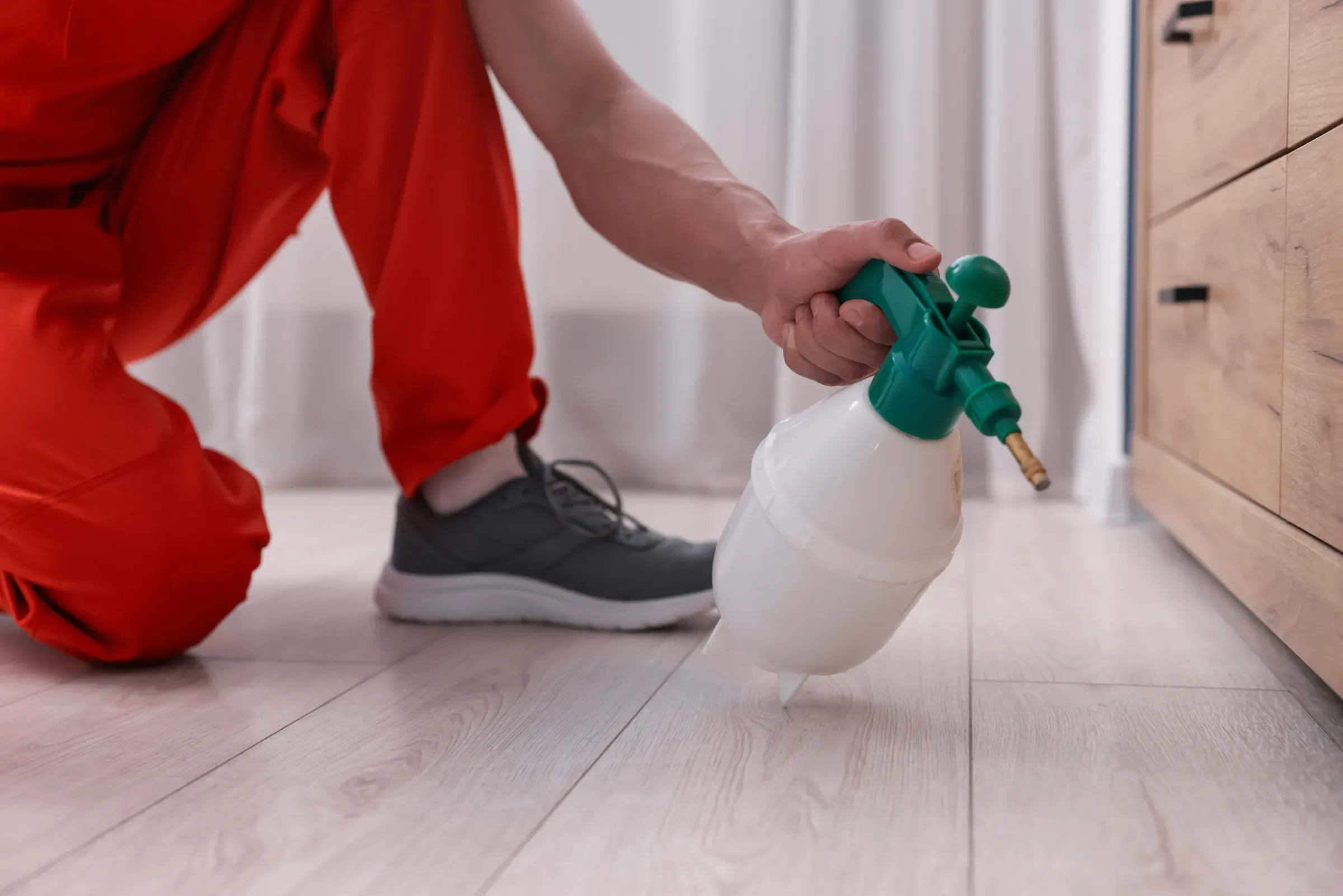
Pest control worker spraying insecticide at home, closeup, pest control products ecommerce
Pest control productsHomeowners and renters in an urgent, slightly distressed state who want the pest identified first and the treatment second, plus a steady base of property managers and smallholders buying preventively on a known seasonal schedule.

How pest control products makes money

Four levers, and what limits each one here

Revenue is traffic times conversion rate times order value times purchase frequency. In this niche each lever has its own ceiling.

Traffic

Traffic: identification comes before any product

The search that starts everything is not a product search. It is a small brown bug in my kitchen, tiny holes in my jumper, droppings behind the fridge, what bit me in the night. Identification pages that describe each pest properly, with the signs, the droppings, the damage pattern and what it is commonly confused with, catch that demand at its earliest and largest point. Treatment pages follow underneath, and prevention pages catch the season before it starts. This is one of the few categories where content is not a supplement to the catalog but the actual route to market, because product pages cannot answer the question being asked.

Conversion

Conversion: sell the protocol, not the bottle

Most pest treatments fail because the customer buys one product and treats once. Eggs hatch, the population returns and the brand gets blamed. The page has to set out the full method: what to apply, where, how often, what to do about the surrounding area, how long before results are expected and when to repeat. Doing that honestly means recommending more than one product, which raises order value and prevents the failure that costs the relationship. Safety information belongs in the same view, particularly around children, pets and food surfaces, since that is the hesitation that stops an order at the last moment.

Order value

Order value: the kit that finishes the infestation

Treatment kits are the correct unit of sale here. A rodent kit with bait stations, a monitoring element and gloves. An ant kit with a bait and a residual barrier. A textile pest kit with traps, a treatment and storage protection. Each kit maps to a protocol rather than to a price point, and each needs its own page because people search for a full treatment rather than an ingredient. Beyond the kit, applicators, protective equipment and monitoring devices carry real value. Larger concentrate sizes suit the professional and smallholder segment, who buy differently and should not be shown the domestic starter product.

Frequency

Frequency: prevention on a calendar the pest sets

Repeat business here comes from two mechanisms. The first is the treatment cycle itself, where a follow-up application is required within a defined window and a reminder timed to that window both improves the outcome and produces the order. The second is prevention, which is genuinely seasonal and genuinely local. A customer who had ants in May is a strong candidate for a preventive treatment the following April, and one who had rodents in October will listen in September. Timing those messages to regional conditions rather than to a national date makes the difference between a useful reminder and an irrelevant one.

Search visibility

Search: identification, treatment method and seasonal prevention

Identification pages sit at the top of the funnel and carry enormous volume. One page per pest, with clear photographs, size references, the signs left behind, the difference from lookalikes and the risk each actually poses. Written carefully, without exaggerating danger, these pages are among the most linked content any household brand can produce because people share them when trying to identify something.

Treatment pages sit beneath and should describe a method rather than a product. Where to apply, how much, how often, what to move first, how long to wait, what to do if it does not work. Product recommendations belong inside that method. Pages that skip the method to reach the product convert worse and generate the complaints that follow failed treatments.

Prevention and seasonal content is the third layer and it is where regional targeting matters. Pest pressure differs enormously by climate and region, and content tied to when a pest becomes active locally will outperform a single national article. Technically, concentrates and ready-to-use versions of the same active belong as related products rather than duplicates, kits need their own pages, and any product with geographic sale restrictions must make that visible rather than surprising the customer at checkout.

Queries that matter

  • what is this small brown bug in my kitchen
  • how to get rid of ants in a wall cavity
  • signs of mice behind kitchen units
  • clothes moth treatment for wool
  • bed bug treatment kit for a flat
  • pet safe ant killer indoors
  • when do wasps start nesting

Identification pages with real diagnostic detail, method-led treatment guides and locally timed prevention content rank here. Product pages with an ingredient name and a price rarely do.

AI answers

AI answers: identify it, then tell me what to do

This is a category where people describe what they have found and ask an assistant to name it. What the insect is, whether it bites, whether it is dangerous to a pet, how to get rid of it, whether it will come back. Being the source that gets cited depends on identification content that is accurate and calm, treatment guidance written as a sequence of steps, and honest limits about when a professional is needed. We write identification and method pages answer-first, keep active ingredient and safety wording exactly consistent with the label, and avoid the alarm framing that both misleads readers and makes a page a poor citation.

What is this insect I found in my kitchen cupboard?
How do I get rid of mice without harming my cat?
How long does an ant treatment take to work?
Is this product safe to use near food preparation surfaces?
When should I call a professional instead of treating it myself?

Questions shoppers put to assistants. A store gets named when its pages answer them in plain text.

Google Shopping and Merchant Center

Google Shopping and Merchant Center for pest control products

This is one of the most tightly constrained feeds in household goods. Pesticide products are registered for sale in specific jurisdictions, and a product registered in one place may not be lawfully sold or advertised in another, so the feed and the campaign geography have to agree with the registration. Where a registration number is required on the label it should be on the page too, and the product category needs to sit at the specific pest control node rather than in a general garden or household bucket.

Ad policy adds a second layer. Platforms apply dangerous products and chemicals rules to this category, some markets restrict pesticide advertising outright, and imagery of dead or distressed animals runs into shocking content policy. Descriptions that promise total elimination or immediate results invite misrepresentation review, and safety-critical wording has to match the label exactly rather than being softened for marketing.

Shipping is the third constraint. Aerosols, concentrates and some baits travel as restricted goods with ground-only services and destination limits. Those restrictions must be reflected in the shipping data and stated on the page, because a customer in an urgent situation who reaches checkout and then discovers the product cannot reach them is lost immediately and permanently.

Feed attributes that decide eligibility

  • product_detail for the registration number where required
  • product_detail for target pests
  • product_detail for active ingredient and concentration
  • google_product_category at the pest control node
  • shipping restrictions and ground-only service flags
  • multipack for bait station and trap counts
  • custom_label for domestic versus professional grade

Disapprovals we see in this niche

  • Products advertised into regions where the registration does not apply
  • Total elimination or instant result promises under misrepresentation
  • Imagery of dead or distressed animals flagged as shocking content
  • Restricted goods offered with shipping services that cannot carry them

Meta and social ads

Meta and social ads: useful information without the horror film

Social is a difficult placement for this category, because the visual instinct is exactly what review will refuse. What works is instructional rather than graphic. A hand placing a bait station correctly. The signs of an infestation shown through damage rather than through the animal. A seasonal warning explaining what becomes active this month and what to check. Identification carousels that help someone recognise a problem perform well and build an audience before the emergency arrives.

Policy here is firm. Imagery of dead animals, distressing close-ups of insects and content designed to shock are refused, and repeated attempts risk the account rather than just the ad. Some markets restrict pesticide advertising to the point where prospecting is not viable, which needs establishing before budget is committed. Fear-based framing also performs poorly with the preventive audience, who are the more valuable segment. Retargeting works well on identification page visitors, since many of them are days away from acting.

  • A bait station placed correctly, shown as an instruction
  • The damage a pest leaves, shown without the pest itself
  • A seasonal check list for the month ahead
  • An identification carousel comparing commonly confused insects
  • A safety walkthrough for treating a home with pets in it

Policy line

No dead or distressed animal imagery, no shocking or fear-driven creative, pesticide advertising restrictions confirmed market by market before spending, and safety and usage wording kept exactly in line with the product label.

Conversion and the store

The store: answering a worried person in a hurry

The buyer is anxious and short of patience, so the page has to lead with the answer. Which pest this treats, how quickly it works, whether it is safe with children and animals in the house, and what else is needed to finish the job. Safety is the single largest hesitation in this category and it belongs above the fold, stated plainly rather than left in a downloadable label.

The treatment kit should be the recommended option on every infestation page, with the reason each component is included. Delivery speed matters more here than in any other household niche, so the page must state when it will arrive and, critically, whether it can be delivered to that address at all given restricted goods rules. On mobile, keep the target pest list, the safety statement and the delivery estimate together near the price. An identification tool that helps someone confirm what they have found before they buy reduces both wrong purchases and the complaints that follow them.

Objections the page must answer

  • “Is this the right product for the pest I actually have”
  • “Is it safe with a dog, a cat or a small child in the house”
  • “How fast does it work and how many treatments will I need”
  • “Can it be delivered to me and how quickly”
  • “What do I do if the problem comes back”

Email, SMS and retention

Email and SMS: follow-up treatments and the season ahead

The most valuable message this store sends is the follow-up reminder. Most treatments require a second application within a defined window, and a customer who misses it will conclude the product failed. A message timed to that window, restating the method and offering the refill, protects the outcome and produces the order at the same time. It is the rare flow where the commercial interest and the customer's interest are identical.

The second programme is seasonal prevention, timed regionally rather than nationally. Someone who dealt with ants last spring should hear from you a few weeks before the same conditions return in their area, with the preventive product rather than the emergency one. Beyond that, the identification audience is worth a light educational sequence that keeps the brand present without alarm. SMS is well suited to dispatch and delivery updates during an active infestation, when the customer genuinely wants to know when the parcel arrives, and should be used for little else.

  1. Treatment follow-up

    Timed to the repeat application window for that product

  2. Did it work check-in

    Two to three weeks after the first treatment

  3. Regional prevention reminder

    Weeks before local seasonal activity begins

  4. Identification nurture

    Light monthly content for non-buying subscribers

  5. Property maintenance restock

    Annual for professional and smallholder buyers

Where revenue leaks

The leaks we find in pest control products stores

The Growth Analysis ranks these against your own numbers and says which to close first.

Get a Growth Analysis for your pest control brand
  • One product sold where a protocol was needed

    The customer treats once, the population returns from eggs, and they decide the brand does not work. The order that should have been a kit becomes a complaint and a lost customer at the same time.

  • Ads served into regions where the product cannot be sold

    Campaign geography is set for reach rather than for registration, so budget buys clicks that cannot legally convert and the listings attract exactly the wrong kind of attention.

  • Restricted shipping revealed at the final step

    Someone dealing with an infestation reaches checkout before learning an aerosol cannot travel to their address. In a category defined by urgency, that customer never returns.

  • Identification traffic with nowhere to go

    The identification page ranks well and answers the question, then offers no clear next step into a treatment method. The visitor gets what they came for and buys the solution somewhere else.

  • Seasonal messages sent on a national calendar

    A prevention reminder arrives weeks early in one region and weeks late in another. The list learns to ignore the timing, and the single most predictable repeat purchase in the category goes unclaimed.

Platform notes

Where the platform changes the work

Shopify

Market-level publishing should be used so products only appear where their registration applies, with shipping profiles restricting aerosols and concentrates to services that can carry them. Target pest, active ingredient and safety wording belong in metafields so the label text, the page and product_detail cannot drift apart.

WooCommerce

Sale restrictions by region need to be enforced at the product and shipping-zone level rather than in a policy page, and attributes for target pest and treatment type should drive indexable archives, since pest-specific pages are the main route to this catalog.

BigCommerce

Channel and price list controls can keep professional-grade concentrates separate from the domestic range, which matters because the two audiences need different content, different pack sizes and sometimes different eligibility.

Questions

Pest control products owners ask us

By CartKernel · Last reviewed

How do we handle the fact that our products are only registered in some regions?

Enforce it in three places at once: publish the product only in markets where the registration applies, restrict campaign targeting to those regions, and state the restriction on the page. Relying on the feed alone leaves ads running where an order cannot be fulfilled, which wastes budget and creates exactly the kind of compliance exposure worth avoiding.

Why do customers say our treatment did not work?

Usually because a single application was made where a protocol was required. The fix is editorial and structural: write the method on the page, recommend the kit rather than the single product, and send a follow-up reminder timed to the repeat window. Outcomes improve and so does order value, because the honest recommendation is also the larger one.

Can pest control products be advertised on social platforms?

It varies by market and by creative. Dead or distressed animal imagery and shock-driven content are refused, some markets restrict pesticide advertising substantially, and repeated rejections put the account at risk. Instructional and identification creative usually clears review, so we establish what is permitted in each market before committing budget.

Is identification content worth the effort when it does not sell directly?

It is the largest and earliest demand pool in the category, and it is where the customer relationship starts. Someone trying to identify what they found is minutes from needing a treatment, and the page that names it accurately is the one they trust for the next step. These pages also earn links and citations that product pages never attract.

How should seasonal campaigns be timed?

By region and by conditions rather than by a national date. Pest activity begins weeks apart across a country, and a campaign that launches everywhere on the same day is early in some places and late in others. We structure geography so budget can follow the actual season, which also means being ready for an unusually warm spring.

How do we deal with shipping restrictions on aerosols and concentrates?

Put them on the product page, enforce them in the shipping configuration with the correct services and excluded destinations, and check the address before the customer reaches payment. In a category driven by urgency, a restriction discovered at checkout does not become a delayed order, it becomes an order placed with someone else.

Grow your pest control products store.

A free Growth Analysis ranks what your store should fix first, by revenue at stake, in about a week.