Skip to content

Food & beverage · ecommerce growth

Hot sauce brand marketing agency

A five-ounce bottle of hot sauce costs less than the box it ships in, which is the whole commercial problem of selling condiments direct. The buyer knows what heat they want and what they put it on, they have probably seen your bottle in a grocery aisle or on a marketplace, and they will only order from you if the cart makes sense as a three-pack, a gift set or a subscription. We build sauce stores that win the heat-level and flavour searches, turn the single bottle into a bundle by default, and grow direct sales without undercutting the retailers who stock you.

The buyer, in brief

Consideration
Short; a first order is often impulse after seeing a bottle elsewhere, a gift set decision takes a few minutes of comparing bundles
Purchase frequency
A daily user finishes a bottle in four to eight weeks; collectors buy new releases; gift buyers return for Father's Day and December
Seasonality
Grilling season from May to September, Father's Day as the single largest gifting date, December sets, and release-driven spikes when a new pepper or limited batch drops
Price band
Low per bottle, which is why bundles, variety packs and limited editions carry the economics
Return risk
None for opened food; breakage and leaks in transit are the real cost, solved with packaging rather than policy
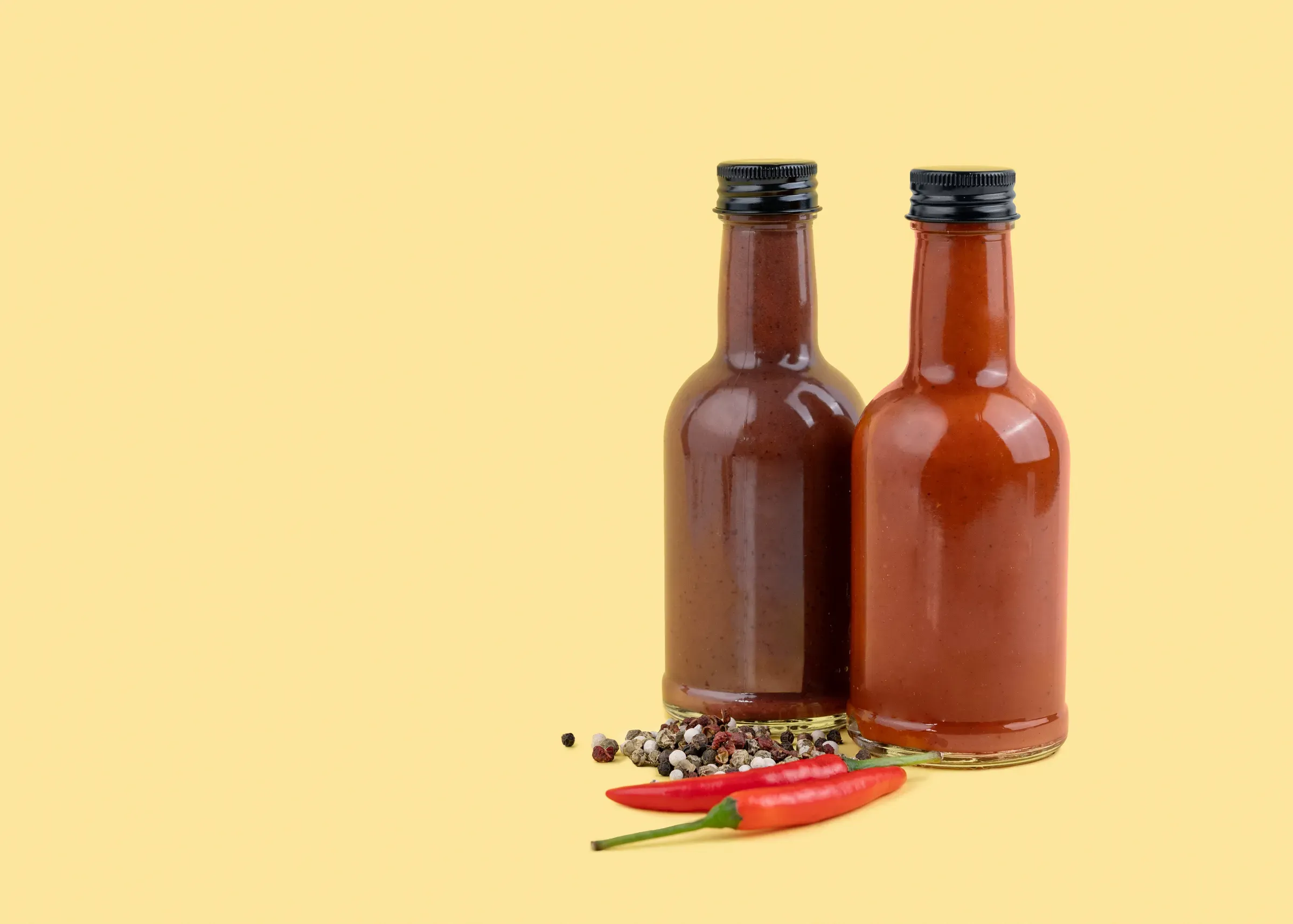
Two spicy sauce bottles with chili peppers and spices on yellow background, hot sauce & condiments ecommerce
Hot sauce & condimentsHeat seekers who navigate by Scoville and pepper variety, home cooks searching by what the sauce goes on, and gift buyers assembling a set for someone who collects bottles. They check the heat rating, the ingredient list for vinegar, sugar and preservatives, and whether the price beats the shelf at their grocer.

How hot sauce & condiments makes money

Four levers, and what limits each one here

Revenue is traffic times conversion rate times order value times purchase frequency. In this niche each lever has its own ceiling.

Traffic

Traffic: heat level, pepper and pairing are the three query types

Sauce searches fall into heat (mild hot sauce, extra hot sauce, hottest hot sauce in Canada), pepper and flavour (habanero mango hot sauce, chipotle hot sauce, fermented hot sauce, scotch bonnet), and pairing (hot sauce for eggs, best hot sauce for wings, hot sauce for tacos). Most brands sell from a single Shop page ordered by SKU, so all three go to marketplaces and to grocery chains with a website. The traffic work is a catalog with heat-level collections that carry a Scoville range and honest copy, pepper and style collections, and pairing pages that recommend two or three sauces and link to recipes. Brand and product names rank on their own; the category demand is what has to be built.

Conversion

Conversion: the heat rating and the ingredient line decide it

A shopper who cannot tell how hot a sauce is does not buy it. The product page needs a heat rating on a consistent scale with a Scoville range, the pepper named, a one-line description of the flavour that is not just spicy, the full ingredient list as text, and a pairing suggestion. Photography should show the bottle at real size with the label legible, because buyers compare it with the one on their shelf. The second conversion job is the cart logic: a single bottle should be offered with a build-a-three-pack option and a visible free-shipping threshold, because a five-ounce bottle plus shipping is a price nobody accepts twice.

Order value

Order value: the three-pack is the product

In condiments the bundle is not an upsell; it is the unit of sale that makes shipping work. A build-your-own three or six pack with a small saving, curated sets by heat progression or by cuisine, variety packs of smaller bottles, and gift boxes with a wooden crate or a printed heat chart all raise the ticket to a level that covers the box and the carrier. Limited releases and collector bottles add a premium line without discounting the core sauces. Merch such as aprons and hats works for brands with a following. The cart drawer should show the bundle saving and the distance to free shipping in bottles.

Frequency

Frequency: the empty bottle and the new batch

Repeat purchase in sauce comes from two triggers. The first is the empty bottle, which arrives four to eight weeks after delivery for a daily user, and which a replenishment email or a bottle-of-the-month subscription can catch if it names the sauce they bought. The second is novelty: a new pepper, a fermented batch, a collaboration, a limited edition that collectors want first. Brands with a release calendar keep a list warm all year; brands without one send discounts. A subscription that alternates a staple with a new release each cycle does better than one that ships the same bottle monthly, because it serves both triggers at once.

Search visibility

Search for sauces and condiments: heat collections, pairing pages and the retailer overlap

Sauce SEO starts with a catalog that mirrors the way people ask for heat. Collections by heat level (mild, medium, hot, extra hot) with a Scoville range and honest copy, collections by pepper and style (habanero, ghost pepper, chipotle, fermented, Caribbean, Louisiana style), and pairing pages (hot sauce for eggs, for wings, for pizza) that recommend specific bottles and link to recipes. Each is built as an indexable collection inside the platform with real product data, so the ranking page is also the buying page. Condiments beyond hot sauce (mustards, barbecue sauce, chili crisp, pickles) get the same treatment by style and use.

Recipe and pairing content is the second layer, and it must sit on the store's domain and link to the sauces it uses. A wing recipe that names your hot sauce ranks for the recipe query and passes authority to the product. Recipe structured data is worth adding when the recipe is complete with ingredients and steps.

The technical issue unique to this niche is overlap with retailers and marketplaces that sell your bottles. Your product page competes with theirs for your own product name, so the page needs the manufacturer's depth (pepper, process, heat, ingredients, pairing, batch notes) that a retailer listing lacks, plus Product structured data with your brand as the brand. Bundle pages need their own URLs that link to every bottle inside them, and a stockist page for where to buy locally captures the near-me demand you cannot ship against.

Queries that matter

  • habanero mango hot sauce
  • hottest hot sauce in canada
  • hot sauce for eggs
  • fermented hot sauce small batch
  • hot sauce gift set father's day
  • hot sauce variety pack
  • chili crisp online

Heat-level and pepper collections with real copy, pairing pages that name bottles, recipes on the store's own domain, and product pages with maker-level detail rank for sauce queries. A single Shop page ordered by SKU cedes every category query to marketplaces and grocers.

AI answers

How assistants answer hot sauce questions and which stores they name

People ask an assistant how hot a sauce is in Scoville terms, which sauce suits eggs or wings, whether a bottle needs refrigerating after opening, how long it lasts, and where to buy a specific brand near them. Stores are cited when the heat rating, the Scoville range, the pepper, the ingredients, the storage guidance and the shelf life are stated as text on the product page and agree with the feed and the markup. Pairing pages that make a clear recommendation get quoted more than a grid. We write the heat scale and storage guidance as direct sentences, keep one consistent rating per sauce across the site, and make sure stockist and shipping pages state plainly where the sauce can be bought and delivered.

How hot is this sauce in Scoville units?
Which hot sauce goes best with eggs?
Does hot sauce need to be refrigerated after opening?
Which hot sauce brands sell a variety pack that ships within Canada?

Questions shoppers put to assistants. A store gets named when its pages answer them in plain text.

Google Shopping and Merchant Center

Shopping for hot sauce: bundles, multipacks and the retailer price problem

Hot sauce feeds have three jobs: represent bundles correctly, carry the buying words, and stay in line with prices elsewhere. A three-pack of the same sauce is a multipack and uses the multipack attribute with a quantity; a set of three different sauces is a bundle and uses is_bundle with its own price. Titles carry brand, sauce name, pepper, heat and size (Ghost Pepper Hot Sauce, extra hot, 148 ml). Bottles sold in grocery carry retail barcodes, so the GTIN goes in and must match the size; a bundle does not borrow a single bottle's barcode. Unit pricing per 100 ml helps the larger bottle compete, and google_product_category sits at the Hot Sauce or Condiments node.

The policy edge here is not claims but price. Google's price competitiveness signals compare your listing with other sellers of the same GTIN, and a brand whose grocery and marketplace partners sell below the direct price loses Shopping impressions to them. That is a pricing strategy question before it is a feed question: DTC needs a reason to exist (bundles, limited editions, subscription) rather than a lower bottle price that undercuts retailers.

Campaigns are structured by unit: bundles and sets bid to acquire, single bottles in a lower-priority campaign that catches product-name demand, limited releases in their own campaign for the launch week, and free listings on so retail-overlap products still appear without spend.

Feed attributes that decide eligibility

  • gtin matching the exact bottle size
  • multipack for same-sauce packs
  • is_bundle for mixed sets
  • unit_pricing_measure per 100 ml
  • product_detail for heat level and pepper
  • custom_label separating bundles from single bottles

Disapprovals we see in this niche

  • Mismatched GTIN when a bundle reuses a single bottle's barcode
  • Price mismatch after a build-your-own bundle shows a dynamic price the feed cannot express
  • Limited performance flags when single bottles are priced above the same GTIN elsewhere
  • Missing multipack attribute on three-packs, treated as one bottle at three times the price

Meta and social ads

Meta for hot sauce: the taste test, the heat ladder and the crate

Hot sauce creative writes itself if the product is honest: someone tasting a sauce and reacting, a heat ladder from mild to extreme with the bottles lined up, a chef's hands dressing a plate, the bottle poured over a specific dish. Short reaction video, founder-led origin stories about the pepper and the batch, and customer clips of their own heat challenge all work, provided you have rights to the clips. The bundle is the offer: creative that shows three bottles and a crate performs better than a single bottle at a shipping-inflated price.

Audiences start with your buyers and site visitors, then lookalikes, then broad in grilling season and before Father's Day. Catalog ads for retargeting need bundle products in the catalog, not just single bottles. Policy is light for sauces; the edges are health claims (metabolism, weight loss, gut health from fermented sauces), which fall under health rules, and creative that depicts pain or distress in a way reviewers read as shocking. Keep the reaction fun and the claims about flavour.

  • Taste-test reaction, one sauce, one honest face
  • The heat ladder: five bottles from mild to extreme, explained
  • A plate finished with the sauce, filmed from above
  • Founder on the pepper, the ferment and the batch number
  • The crate opened, with the bundle price on screen

Policy line

No health or weight claims for fermented or pepper-based products, no shock-value depictions of pain, and gift creative aimed at a date must state a delivery cutoff that checkout can actually meet.

Conversion and the store

Sauce store pages: heat clarity, bundle-first carts and the stockist link

The product page for a sauce answers heat, flavour and use before anything else. A heat rating on a consistent scale with the Scoville range, the pepper named, a flavour line that says more than spicy, the ingredient list in full, and two pairing suggestions, all above the fold. The bottle is photographed at real scale with a legible label. The bundle logic sits beside the price: add two more for a saving, or build a three-pack from a picker, and the cart shows how many bottles remain until free shipping. Bundle pages and gift sets need their own templates with the crate or box shown.

On mobile, the heat scale should be a visual bar with a number, the bundle picker a single tap per bottle, and the sticky add-to-cart should show the bundle price. A stockist page with a map or list handles the shopper who wants a bottle today; a store that hides its retailers loses that customer to a search engine rather than keeping them. Checkout should accept gift notes and a recipient address for the Father's Day buyer without an account.

Objections the page must answer

  • “How hot is it really, compared with the bottle I already own”
  • “What does it taste like beyond heat”
  • “Why would I pay shipping on one bottle when the grocer has it”
  • “Is the gift set going to look like a gift when it arrives”
  • “Will the glass arrive in one piece”

Email, SMS and retention

Email and SMS for sauce brands: the empty bottle, the new batch and Father's Day

The post-purchase flow for a sauce order does two useful things: it explains storage and shelf life for the bottles ordered, and it suggests one dish per sauce, which shortens the time to the empty bottle. The replenishment email lands around week six for a single bottle and later for a multipack, names the sauce, and offers the three-pack or the subscription rather than a discount. The subscription pitch that works alternates a staple bottle with a new release, which is how the collector and the daily user are served by one product.

Release emails are the heartbeat of a sauce list. A new pepper, a fermented batch, a collaboration or a limited edition goes to subscribers first, then to the list, with a numbered batch and a quantity. Father's Day and December get a gift sequence that starts four weeks out with sets and ends at the cutoff. Recipe emails keep the list open between releases. SMS is used for release drops to the collectors who opted in and for the gift cutoff reminder.

  1. Storage and pairing

    On delivery, matched to the sauces in the order

  2. Empty bottle replenishment

    Around six weeks after a single bottle, later for packs

  3. Release drop

    Subscribers first, list the next day, when a new batch or pepper lands

  4. Father's Day and December gift sequence

    Four weeks before each, ending at the shipping cutoff

  5. Collector win-back

    After two releases without a purchase

Where revenue leaks

The leaks we find in hot sauce & condiments stores

The Growth Analysis ranks these against your own numbers and says which to close first.

Get a Growth Analysis for your hot sauce brand
  • Single bottles listed at a price plus shipping that no one accepts

    Ads and Shopping send buyers to a lone five-ounce bottle, the cart shows shipping that doubles the price, and the customer buys the same bottle at a grocer or a marketplace instead.

  • Stockists outbidding the brand on its own sauce names

    Retailers bid on your product names, the click lands on their site at a lower bottle price, and the direct channel loses both the sale and the customer record.

  • Direct prices that undercut the retailers who built the brand

    A DTC discount below shelf price wins a few orders and costs the grocery listing, which was the larger channel; the direct store needs bundles and exclusives, not a lower bottle price.

  • Glass shipped in a box that was built for merch

    One leaking bottle ruins three, the replacement costs more than the order, and the review mentions the mess rather than the sauce.

Platform notes

Where the platform changes the work

Shopify

Heat rating, Scoville range and pepper live in metafields that render the heat bar and feed product_detail. Shopify Bundles or a bundle app builds three-packs and mixed sets from single-bottle inventory, which keeps stock accurate and gives each bundle a page. A stockist app or a metaobject-backed page handles where to buy, and B2B handles retailer reorders separately.

WooCommerce

Composite or grouped products handle build-your-own packs while drawing down single-bottle stock, and a global heat attribute powers filters and an indexable archive per heat level. The feed plugin must send bundles with their own price and identifier settings rather than the components.

BigCommerce

Product pick lists handle mixed bundles natively and customer groups give wholesale stockists their own pricing without a second storefront.

Questions

Hot sauce & condiments owners ask us

By CartKernel · Last reviewed

How do we sell hot sauce direct without annoying the grocers who stock us?

By giving the direct store a job the shelf cannot do. Bundles, build-your-own packs, limited batches, subscriptions and gift sets are direct-only reasons to buy; the single bottle stays at shelf price. A stockist page sends local buyers to retailers rather than hiding them. Reported that way, direct growth comes from products retailers do not carry, not from undercutting them.

What is the right way to list three-packs and variety packs in Google Shopping?

A pack of the same sauce is a multipack: one product with the multipack attribute set to the quantity and a price for the pack. A set of different sauces is a bundle: is_bundle set to true, its own price, and no borrowed barcode from a single bottle. Build-your-own packs with dynamic pricing are usually kept out of the feed and promoted through search and social instead.

Should a hot sauce brand run a subscription?

Yes, if it alternates a staple with something new. A bottle-of-the-month that ships the same sauce is cancelled once the fridge fills; one that pairs a favourite with each new release serves daily users and collectors together. We time the cadence to how fast the staple runs out and give the release the first email.

How do you make heat level useful for search and for shoppers at once?

One scale, used everywhere. Each sauce gets a rating and a Scoville range stored as data, which renders a heat bar on the product page, sets the heat collection it belongs to, feeds product_detail in Merchant Center, and appears in text an assistant can quote. Copied by hand into five places, the rating drifts and the shopper stops trusting it.

Can recipe content actually sell sauce, or is it just blog traffic?

It sells when it lives on the store, names the bottle it uses and links to the bundle that contains it. A wing recipe that ranks brings a cook who needs the sauce this week. Recipes hosted on a separate blog or written without a named product bring readers and no orders. We build pairing pages and recipes as part of the catalog, with structured data where the recipe is complete.

Why does our Shopping traffic keep going to marketplaces selling our own bottle?

Because Shopping compares sellers of the same barcode and favours the lower price and the stronger seller signals. If a marketplace sells your bottle below your direct price, it wins the impression. The fix is a direct catalog built on bundles and exclusives that carry different identifiers and prices, plus a single-bottle price that matches the shelf.

Grow your hot sauce & condiments store.

A free Growth Analysis ranks what your store should fix first, by revenue at stake, in about a week.