Skip to content

Food & beverage · ecommerce growth

Snack brand marketing agency

Every snack shopper on your site has a marketplace tab open in the next window, and the direct store has to earn the order against a listing with hundreds of reviews and two-day delivery. What wins is what the marketplace cannot offer: variety packs built the way the customer wants, sizes and flavours that exist only here, a subscription that shows up before the pantry empties, and pages that answer the protein, sugar and ingredient questions in the buyer's own words. We build snack and jerky stores around that difference, with feeds priced per ounce, claims that pass review and a box that comes back every month.

The buyer, in brief

Consideration
Minutes; the comparison is price per unit and delivery speed against a marketplace listing, and the variety pack settles it
Purchase frequency
Every three to six weeks for a household snacker, monthly for a box subscriber, seasonal bulk buys before road trips and hunting season
Seasonality
Summer road trips and back-to-school, autumn hunting season for jerky, the Super Bowl and holiday gift crates, and a January lift for high-protein and low-sugar snacks
Price band
Low per bag, so cases, variety packs and subscriptions carry the order; premium for grass-fed, sugar-free and single-ingredient lines
Return risk
None for food; crushed chips and damaged bags are the cost, and packaging plus honest shipping expectations keep it down
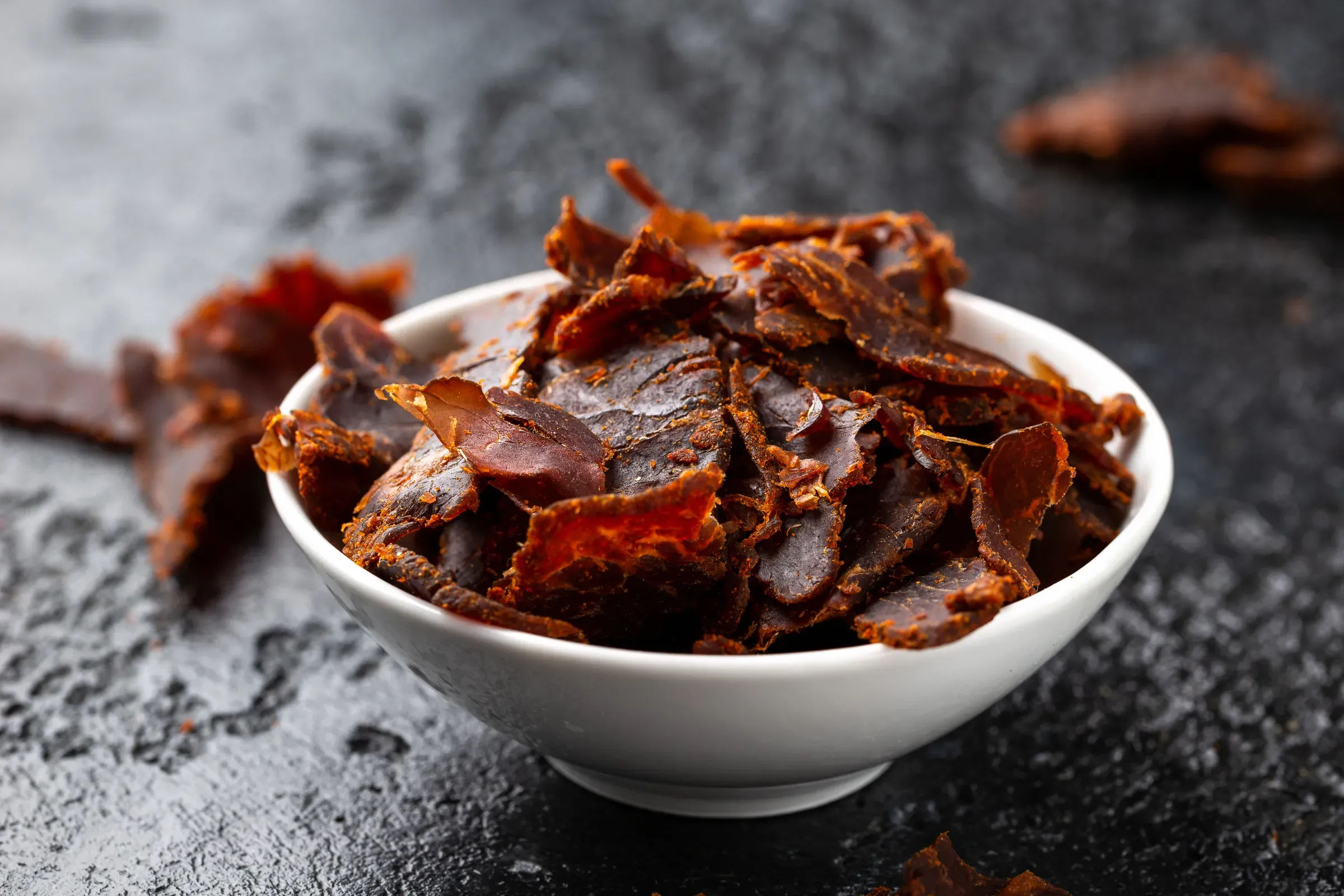
Dried Beef Jerky snack in white bowl, snacks & jerky ecommerce
Snacks & jerkyProtein-focused buyers reading grams per serving, parents stocking lunchboxes, road-trippers and hunters buying jerky in bulk, and offices ordering for a break room. Before trusting a store they compare the per-ounce price with the marketplace, check sugar and ingredient lines, and look for a variety pack so they can try flavours without committing to a case.

How snacks & jerky makes money

Four levers, and what limits each one here

Revenue is traffic times conversion rate times order value times purchase frequency. In this niche each lever has its own ceiling.

Traffic

Traffic: attribute searches that the marketplace answers badly

Snack demand is dominated by attribute queries: high protein snacks, sugar free beef jerky, keto snacks, gluten free crackers, grass-fed jerky, snacks for kids' lunchboxes, healthy office snacks bulk. Marketplaces rank for these with pages that mix hundreds of brands and no explanation, which leaves room for a store whose attribute collections are specific, honest and built on real product data. The traffic work is a set of indexable collections by diet, by protein per serving, by ingredient claim and by occasion, product pages that carry the nutrition facts as text, and a comparison of your flavours that answers the which-one-should-I-try question the marketplace listing cannot.

Conversion

Conversion: unit price, nutrition and the variety pack

The direct store loses the snack sale on price per ounce when the customer can do the arithmetic and the store makes it hard. Show the per-100 g or per-ounce price on every size, put the nutrition table and ingredient list on the page as text, and make the variety pack the first thing a new visitor sees. The second decision is delivery: a shopper used to two-day delivery needs the ship time stated beside the button, and a threshold for free shipping that a case or a variety pack clears on its own. Reviews that mention flavour and texture rather than a star count answer the last doubt.

Order value

Order value: the case and the build-your-own box

A single bag never covers shipping, so the store is designed around cases, build-your-own boxes and bulk. A twelve-bag box where the customer picks the flavours, a case of one flavour at a per-bag saving, an office bulk tier with a quantity discount and an invoice, and a gift crate for the holidays each raise the ticket. Larger bag sizes with per-ounce pricing shown push the habitual buyer up a size. The direct-only flavour or limited run that is not on any marketplace is the one item that earns a full-price cart on its own.

Frequency

Frequency: the pantry clock and the monthly box

Snacks run out on a schedule that the order size predicts: a twelve-bag box lasts a household about a month, a case of jerky longer. The replenishment email is timed to that, names the flavours they bought and offers the box again with one tap. The subscription is a monthly or six-weekly box with the flavours pre-selected from the last order and a swap option, because a subscriber who gets the same box every month cancels when they are bored. Seasonal bulk buyers (hunters, road-trippers, offices) are reminded ahead of their season rather than monthly. New flavour drops go to subscribers first.

Search visibility

Snack SEO: diet and protein collections, flavour comparisons and the marketplace gap

Snack search is attribute search. Collections by diet (keto, gluten-free, vegan, paleo), by nutrition (high protein, low sugar, zero sugar), by ingredient claim (grass-fed, single ingredient, no nitrates) and by occasion (lunchbox snacks, office snacks, road trip snacks, hunting snacks) need to be real collections with copy that explains what qualifies, built from product data rather than filter parameters. The store that does this competes with marketplace category pages that have volume but no explanation, and it tends to win the specific queries.

The second layer is comparison content the marketplace cannot host: a flavour guide that ranks your own flavours by heat, sweetness and texture; a page on how jerky is made and what the sugar and sodium numbers mean; a guide to snacks for a specific diet that recommends products by name. These pages capture the which-one and is-this-actually-keto queries and pass authority to the products.

Product pages carry the nutrition table, ingredient list and allergen statement as text, protein per serving in the first line, and Product markup that validates. Bag sizes are variants under one URL and boxes have their own pages that link to every flavour inside. Because your products also exist on marketplaces, the direct product page must carry more depth than the marketplace listing to be chosen for the product-name query.

Queries that matter

  • high protein snacks online
  • sugar free beef jerky
  • keto snacks canada
  • grass fed jerky variety pack
  • healthy office snacks bulk
  • best jerky flavours ranked
  • snacks for kids lunchboxes

Diet and protein collections with explanatory copy, flavour comparison guides, and product pages with nutrition as text rank for snack queries. Thin collections that mirror a marketplace category, and product pages copied from the marketplace listing, do not.

AI answers

Snack questions assistants field and how a brand gets recommended

Shoppers ask an assistant which jerky has the most protein per serving, whether a snack is actually keto, which brands sell a variety pack, how long jerky lasts once opened, and what the cheapest per-ounce option is for a bulk order. Brands get named when nutrition facts, serving size, protein and sugar per serving, ingredient lists and shelf life are on the page as text and match the feed, when the variety pack page lists every flavour inside, and when the brand's own flavour comparison ranks flavours honestly. We write the nutrition block as plain sentences alongside the table, keep serving-size figures identical everywhere, and state shelf life and storage on every product.

Which beef jerky has the most protein per serving?
Is this snack actually keto and how many net carbs per bag?
Which snack brands sell a build-your-own variety pack in Canada?
How long does jerky last after the bag is opened?

Questions shoppers put to assistants. A store gets named when its pages answer them in plain text.

Google Shopping and Merchant Center

Merchant Center for snacks: unit pricing, multipacks and claims that stay on the label

Snack feeds compete on unit price, so unit_pricing_measure and unit_pricing_base_measure are set on every size so Shopping can show the per-100 g figure and the larger bag can win. Bags carry retail barcodes, so gtin is required and must match the exact size and flavour; a case of one flavour is a multipack with the quantity set, and a mixed variety pack is a bundle with its own price. Titles lead with brand, product, flavour, the headline attribute and size (Original Beef Jerky, zero sugar, 85 g). Product_detail carries protein, sugar and the diet claims from the label; product_highlight carries the three things a shopper would say about it. Google_product_category sits at the Jerky or Snack Foods node.

Claims are the policy risk. Keto, high protein, zero sugar and gluten-free are label facts and are fine when the label supports them; anything that implies weight loss, muscle gain or a health outcome moves the listing into health policy. Price is the other risk, because the same GTIN on a marketplace at a lower price reduces your impression share on single bags; that is why the direct feed leans on boxes, cases and direct-only flavours.

Campaign structure follows the unit: variety packs and cases in an acquisition campaign, single bags at low priority to catch product-name demand, direct-only products bid to margin, and free listings on for everything.

Feed attributes that decide eligibility

  • gtin per flavour and size
  • unit_pricing_measure so the price per ounce shows
  • multipack for single-flavour cases
  • is_bundle for variety packs
  • product_detail for protein, sugar and diet claims
  • custom_label for direct-only products

Disapprovals we see in this niche

  • Health claims in titles or descriptions implying weight loss or muscle gain
  • GTIN mismatch when a variety pack reuses a single bag's barcode
  • Limited performance on single bags priced above the same GTIN on a marketplace
  • Missing multipack attribute on cases, listed as one bag at case price

Meta and social ads

Meta for snack brands: the box build, the label close-up and the review clip

Snack creative on Meta needs to beat scrolling and beat the marketplace habit at once. The build-your-own box being filled flavour by flavour shows the thing the marketplace cannot sell. A label close-up reading protein and sugar per serving out loud answers the nutrition doubt. Customer clips of a bag opened in a truck, at a desk or on a trail, with rights secured, carry more than studio shots. Founder content on sourcing (the ranch, the smokehouse, the kettle) builds the premium lines. The offer is always the pack or the subscription, never the single bag.

Audiences start with buyers and box subscribers, then lookalikes, then broad in the seasons that matter. Catalog ads for retargeting need the packs in the catalog. Policy is where claims get caught: ads implying weight loss, muscle building, or that a snack is a meal replacement fall under health rules, and before-and-after body imagery is rejected outright. Keep the claims to what the label says and let the customer describe the rest.

  • Filling a twelve-bag box flavour by flavour, price on screen
  • Label close-up: protein and sugar per serving read aloud
  • Customer clip in the truck, at the desk, on the trail
  • The smokehouse or the kettle, with the process explained
  • Flavour ranking by heat and sweetness in fifteen seconds

Policy line

No weight-loss, muscle-gain or meal-replacement claims, no body imagery implying results, diet claims limited to what the label states, and ads aimed at children restricted under Meta's rules for food marketing to minors.

Conversion and the store

Snack store pages: per-ounce clarity, the box builder and delivery expectations

The product page has to win the comparison the shopper is already making. Price per 100 g or per ounce sits next to every size, the nutrition table and ingredient list appear as text without a tab, protein and sugar per serving are in the first line, and the ship time is stated beside the button. The variety pack is offered on every single-bag page and the single bag is offered on the pack page for someone who already knows the flavour. Reviews are filtered by flavour so a shopper researching one sees the right ones.

The box builder is the template that carries revenue. It needs a running count, a per-bag price that updates, a minimum that clears free shipping, and a save-as-subscription option at the end. On mobile the builder must work with one tap per flavour and a sticky summary. The bulk and office page is separate, with quantity tiers, an invoice option and a contact for larger orders. Checkout should show the delivery date range rather than a shipping method name, because the shopper is comparing against a promised day.

Objections the page must answer

  • “Is this cheaper per ounce than the marketplace, once shipping is in”
  • “How much protein and sugar are actually in a serving”
  • “Which flavour should I start with”
  • “When will it arrive, in days”
  • “Can I get a box with only the flavours I like”

Email, SMS and retention

Email and SMS for snacks: the pantry clock, the box swap and the season ahead

The first email after a snack order asks which flavour they opened first and links a one-tap reorder of the box, because the answer sets up the next box. Replenishment is timed to the order size: about a month after a twelve-bag box, longer for a case, and the email shows the box they bought with a swap link for the flavours they did not finish. That swap is what keeps the subscription alive, so the subscription reminder before each shipment carries it too. New flavour drops go to subscribers first with a free-bag add-on for that cycle.

Seasonal buyers are treated as segments: hunters get a bulk offer in late summer, road-trippers before summer, offices at the start of the school year and in January, gift buyers in November with the crate. Win-back after two missed cycles leads with the direct-only flavour rather than a discount. SMS handles the shipment notice, the pre-shipment swap window for subscribers and the restock of a sold-out flavour for people who asked.

  1. First bag opened

    Three days after delivery, with one-tap reorder

  2. Pantry clock replenishment

    About a month after a twelve-bag box, later for cases

  3. Subscription swap window

    Five days before each subscription shipment

  4. Seasonal bulk offer

    Late summer for hunters, spring for road trips, September and January for offices

  5. New flavour drop

    Subscribers first, then the full list

Where revenue leaks

The leaks we find in snacks & jerky stores

The Growth Analysis ranks these against your own numbers and says which to close first.

Get a Growth Analysis for your snack brand
  • Single bags listed against the marketplace on price

    Shopping serves your single bag next to a marketplace listing of the same barcode at a lower price with faster delivery, and the click goes there.

  • Subscriptions that ship the same box every month

    Without a swap window, the subscriber gets bored of the flavours by the third box and cancels; the churn shows up as a retention problem when it is a product problem.

  • Claims copied from a competitor's label into your ad

    A keto or high-protein line that your own label does not state gets the ad rejected and, repeated, restricts the account before the season starts.

  • Bulk buyers pushed through a retail cart

    An office ordering thirty cases hits the same checkout as a household, gets no invoice or tier pricing, and orders from a distributor instead.

Platform notes

Where the platform changes the work

Shopify

Nutrition facts, protein per serving and diet claims live in metafields that render the nutrition block and populate product_detail. Shopify Bundles or a box-builder app handles build-your-own packs from single-bag inventory, and selling plans carry the subscription with a swap option through the customer portal. B2B on Shopify Plus or draft orders handle offices.

WooCommerce

Composite products handle the box builder with per-item stock draw-down, global attributes for diet and protein power indexable archive pages, and the subscriptions extension supports item swaps if configured; the feed plugin must send packs as bundles and cases as multipacks.

Headless

A custom box builder with live per-bag pricing and free-shipping progress is a common reason snack brands go headless, and it must expose the pack products as real URLs so search and Shopping can list them.

Questions

Snacks & jerky owners ask us

By CartKernel · Last reviewed

How can a snack brand compete with its own listing on a marketplace?

By selling something different direct. Build-your-own boxes, direct-only flavours, cases at a per-bag saving, subscriptions with swaps and bulk tiers for offices are products the marketplace listing does not carry. The single bag stays priced to match. Growth is then measured on those direct products, and the marketplace keeps doing the job it does for single-bag buyers.

What nutrition and diet claims can our snack ads make?

The ones on your label. Protein and sugar per serving, gluten-free, keto-friendly, no added sugar and grass-fed are label facts when the label says so. Claims about losing weight, building muscle or replacing a meal are health claims and get rejected or restrict the account. We keep ad copy, product page and feed wording identical to the label.

Should we set up a snack subscription or just send reorder emails?

Both, and the subscription needs a swap. Reorder emails timed to the box size catch the household that does not want a commitment. The subscription serves the one that does, provided each cycle offers a flavour swap window before it ships. Subscriptions without swaps churn on boredom rather than price, so we build the swap first and the discount second.

How should cases and variety packs be set up in the Shopping feed?

A case of one flavour is a multipack, listed as one product with the multipack quantity and the case price. A mixed pack is a bundle with is_bundle set and its own price, never a single bag's barcode. Build-your-own boxes with changing prices are usually left out of the feed and sold through search, social and email instead.

Which collections should a jerky store build for search?

Collections by claim (sugar-free, zero sugar, grass-fed, no nitrates), by protein per serving, by cut or protein source (beef, turkey, bison, salmon) and by use (hunting, hiking, office). Each needs copy that explains what qualifies and a grid built from product data. A flavour guide that ranks your own flavours honestly captures the which-one query these collections leave open.

How do we handle bulk orders from offices without a separate store?

With a bulk page on the same platform: quantity tiers, a per-case price, an invoice option and a contact for larger orders. On Shopify Plus that is B2B with company accounts; elsewhere it is customer groups or draft orders. Kept out of the retail cart, bulk orders stop distorting average order value and ad attribution and get the service they need.

Grow your snacks & jerky store.

A free Growth Analysis ranks what your store should fix first, by revenue at stake, in about a week.