Skip to content

Food & beverage · ecommerce growth

Meal kit marketing agency

A meal kit customer is worth whatever they pay for their second, third and fourth boxes, because the first box is usually sold at a loss. Everything in this business turns on that arithmetic: how much you can spend to acquire a subscriber depends on how long they stay, and how long they stay depends on the menu, the delivery day and how easy it is to skip a week instead of cancelling. We build meal kit and prepared meal growth systems that only advertise where you deliver, sell the first box without training customers to expect it forever, and keep the weekly menu, the pause flow and the reporting honest about payback.

The buyer, in brief

Consideration
A few days of reading menus and delivery terms, usually ending with a first-box offer; cancelled subscriptions often return months later when circumstances change
Purchase frequency
Weekly or biweekly boxes for active subscribers, with skips around holidays and travel; prepared meal customers often order in two-week blocks
Seasonality
January and September are the strongest sign-up months, summer brings skips and pauses, and the December holidays are a churn risk unless skipping is easy
Price band
Priced per serving with a plan size chosen by servings per meal and meals per week; prepared meals carry a higher per-serving price than kits
Return risk
Not returnable; credits for late, warm or missing boxes are the cost, and delivery reliability is the retention lever behind them
Meal Kit Delivery, meal kits & prepared meals ecommerce
Meal kits & prepared mealsHouseholds short on weeknight time, people on a specific plan (high-protein, low-carb, vegetarian, allergen-aware), new parents, and older adults or their families ordering prepared meals. Before trusting a service they check whether it delivers to their postal code, what day it arrives, what the menu looks like this week, the per-serving price after the intro offer, and how skipping and cancelling work.

How meal kits & prepared meals makes money

Four levers, and what limits each one here

Revenue is traffic times conversion rate times order value times purchase frequency. In this niche each lever has its own ceiling.

Traffic

Traffic: only inside the delivery map, and mostly by diet and city

Meal kit demand is searched by plan and by place: keto meal delivery, vegetarian meal kit, prepared meals delivered in Calgary, healthy meals for seniors delivered, meal prep delivery Toronto. Traffic outside the delivery map is worthless, so every channel is geo-fenced to the postal codes and regions the kitchen serves, and organic pages are built for the diets you actually offer and the cities you actually deliver to. Weekly menus are a traffic asset most services waste: a menu archive with each recipe on its own indexable page, tagged by diet and cuisine, ranks for recipe and dish queries all year and shows a prospective customer exactly what dinner will look like.

Conversion

Conversion: the postal code check comes before the offer

A visitor's first question is do you deliver to me, and the second is what day. The homepage and every landing page need a postal code check up front that returns the delivery days for that address, and the plan builder must show the per-serving price before and after the first-box offer so the second box is not a shock. This week's menu with photos and full nutrition, the dietary filters that match how people search, and a plain statement of how to skip, pause and cancel remove the remaining doubts. Sign-up should not demand a login before the postal code result or the menu is shown.

Order value

Order value: servings per week, add-ons and the plan size nudge

Order value in a meal kit is the plan size times the number of meals, plus add-ons. The plan builder decides it: defaulting to a realistic number of meals for the household size, showing the per-serving price dropping as meals per week rise, and offering add-ons (breakfasts, snacks, desserts, proteins, a bottle of wine where licensed) at the point the box is composed. Prepared meal services do the same with bundles of five or ten meals and a family size. The largest lever is upgrading a household from three meals to four on the second box, once they trust the delivery.

Frequency

Frequency: skip instead of cancel, and the reactivation curve

Purchase frequency in meal kits is retention by another name. The cancel button is where revenue disappears, so the flow that matters offers a skip, a plan change or a pause with a return date before it offers cancellation, and it does so inside the account without an email to support. Weekly menu emails on a fixed day, a reminder before the cutoff to choose meals or skip, and delivery-day SMS all reduce accidental churn. Cancelled customers are not lost: a reactivation sequence timed to the seasons people return (January, September, after a move or a baby) with the current menu, not a discount, brings a meaningful share back.

Search visibility

Meal kit and prepared meal SEO: diet pages, city pages that are earned, and the menu archive

Search for meal kits is dominated by plan and place, and a service only wants the traffic it can deliver to. Diet pages (keto meal delivery, vegetarian meal kits, gluten-free prepared meals, high-protein meal prep) are built as real landing pages with this week's qualifying meals, nutrition ranges, the per-serving price and the postal code check. City and region pages are built only for places the kitchen serves and only where search demand exists, with real local content: delivery days, cutoff times, the depot or kitchen location, and the neighbourhoods covered. A city page for somewhere you do not deliver is a doorway page and a customer service problem.

The menu archive is the asset most services delete every week. Each recipe or meal gets a permanent page with photos, ingredients, nutrition, allergens, cook time and the diets it fits, tagged so it appears on the diet pages. Those pages rank for dish queries, show prospects the real product, and can carry Recipe structured data when the full method is published.

Technically, the plan builder and account area should be kept out of the index, the postal code check must not create crawlable URLs per code, and the pricing page needs to state the per-serving price in text rather than in a calculator only. Nutrition and allergen data belongs on the page as text so search and assistants can read it.

Queries that matter

  • keto meal delivery canada
  • prepared meals delivered toronto
  • vegetarian meal kit weekly
  • healthy meals for seniors delivered
  • meal prep delivery high protein
  • meal kit for two people price per serving
  • how does a meal kit subscription work

Diet landing pages with real menus, city pages for places you actually deliver, and a permanent menu archive rank for meal kit queries. A single homepage with a sign-up form, weekly menus that vanish, and city pages minted for every town in the country do not.

AI answers

What assistants get asked about meal delivery and who gets suggested

People ask an assistant which meal kits deliver to their city, what the real price per serving is after the first box, whether a service fits a specific diet or allergy, how skipping and cancelling work, and what day boxes arrive. Services are recommended when the delivery area, delivery days, per-serving pricing and cancellation terms are stated as plain text on indexable pages, when this week's menu and the archive carry nutrition and allergens per meal, and when the FAQ answers the how-does-it-work questions directly. We write the pricing, delivery and policy pages answer-first, keep the per-serving figure identical on every page, and make sure the menu archive is crawlable without a login.

Which meal kit services deliver to my postal code?
What does this meal kit cost per serving after the first-box discount?
Can I skip a week without being charged?
Which prepared meal services offer a low-sodium plan?
What day of the week does the box arrive?

Questions shoppers put to assistants. A store gets named when its pages answer them in plain text.

Google Shopping and Merchant Center

Shopping for meal kits: where a feed fits, where it does not, and zone-limited listings

A weekly subscription with a rotating menu is a poor fit for a product feed, and pretending otherwise produces disapprovals. What can be listed are fixed products: a one-time starter box, prepared meal bundles of five or ten meals, gift cards, and any add-on sold as a standalone item. Each needs a fixed price, availability that is true, and shipping settings in Merchant Center that reflect the delivery map, using region-level shipping with excluded areas so the ad never shows where the box cannot go. Perishable delivery uses handling and transit times that match the actual delivery days, not a generic two-to-five days.

Titles state what the product is (Prepared Meal Bundle, 10 meals, high protein) and product_detail carries diet tags and allergen statements; google_product_category sits at the prepared meals or meal kits node. Subscription pricing, first-box discounts and per-serving figures are kept off the feed, because the price in the feed must equal the price at checkout for the listed product. Promotions can carry a first-order offer through Merchant Center promotions, with the terms matching the site.

Campaign structure is narrow: starter and prepared bundles in one Shopping campaign restricted to delivery regions, gift cards in another, free listings on for the fixed products, and the subscription itself sold through search, social and the landing pages instead.

Feed attributes that decide eligibility

  • shipping with region-level rules and exclusions
  • min_handling_time and max_handling_time by delivery day
  • availability kept true for fixed-price products only
  • product_detail for diet and allergen tags
  • is_bundle for multi-meal bundles
  • promotion_id for a first-order offer

Disapprovals we see in this niche

  • Price mismatch when a subscription price is fed and a one-time price is charged
  • Shipping availability errors when ads show outside the delivery map
  • Misrepresentation flags when the intro price is shown as the standing price
  • Delivery time mismatch when perishable delivery days differ from the feed's transit settings

Meta and social ads

Meta for meal kits: the box opened, the weeknight solved and the skip button shown

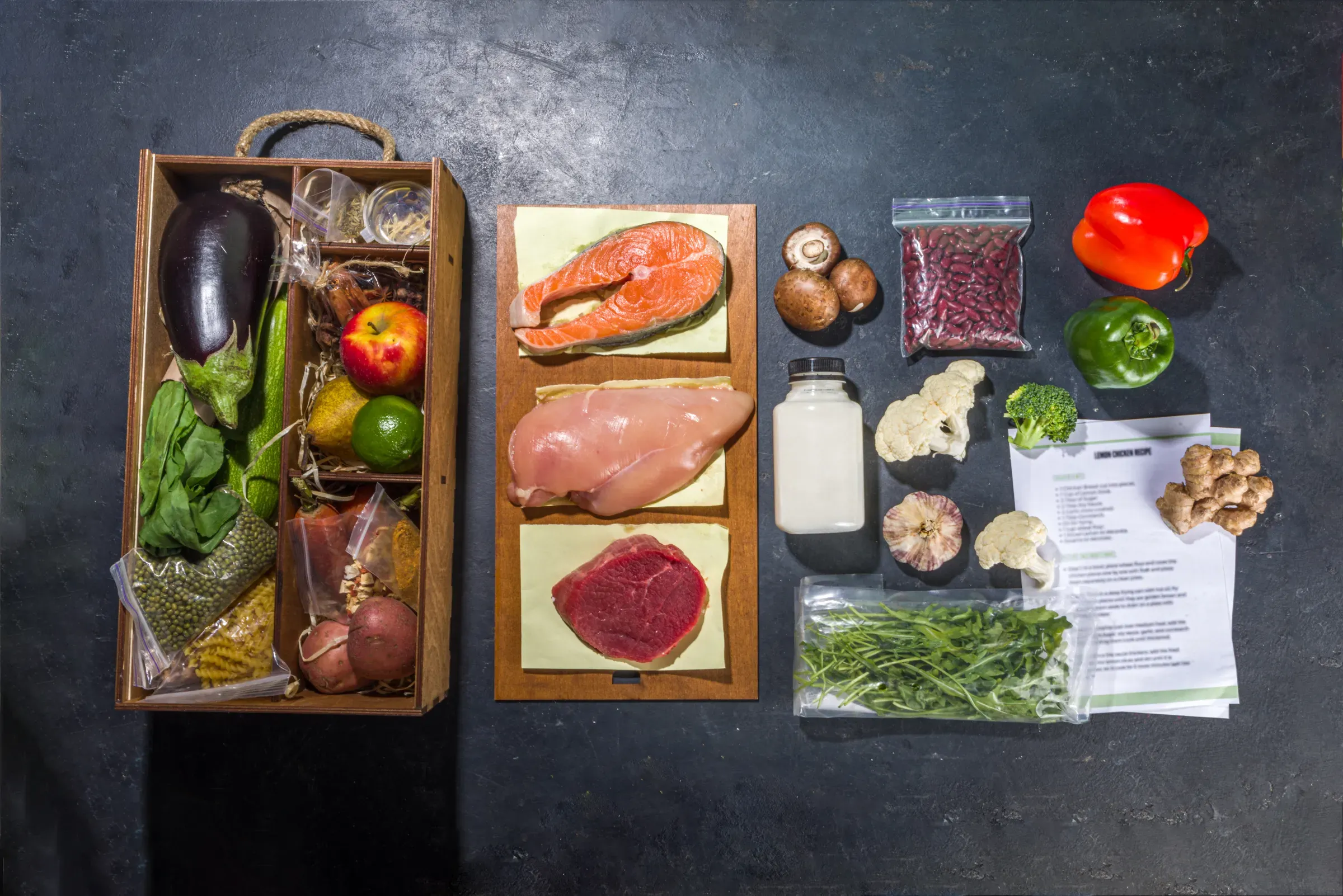
Meal kit creative works when it shows the real product and the real relief. The box opened on the counter with this week's ingredients, a meal cooked in the stated time with the clock visible, a prepared meal heated and plated, a parent feeding a family while the box does the planning. Showing the skip and pause buttons in an ad is unusual and effective, because commitment fear is the biggest reason people do not sign up. Customer clips with rights, filmed in their own kitchens, outperform studio footage. The first-box offer is the call to action, with the standing per-serving price stated so the second box is not a surprise.

Audiences are geo-fenced to the delivery map and start with lapsed subscribers and site visitors, then lookalikes of retained subscribers rather than of all sign-ups, then broad within the map. Policy edges are health claims (weight loss, medical diets), which are reviewed under health rules, and intro offers must be fully disclosed with terms in the ad or the landing page.

  • The box opened on the counter with the week's meals laid out
  • A meal cooked in the stated time with a visible timer
  • The skip and pause buttons, shown on screen, as the message
  • A subscriber's own kitchen, weeknight, with rights secured
  • Per-serving price before and after the first box, stated plainly

Policy line

No weight-loss or medical-diet outcome claims, no before-and-after body imagery, first-box offers disclosed with full terms and the standing price, and all delivery targeting confined to the postal codes you actually serve.

Conversion and the store

Meal kit sites: postal code first, plan builder second, menu everywhere

The landing page has one job before anything else: confirm delivery to the visitor's address and show the delivery days. That check goes above the fold, without requiring an account, and its result changes the page. The plan builder then has to make the price legible: servings per meal, meals per week, per-serving price before and after the first box, and the standing weekly total. This week's menu is shown before sign-up with dietary filters, photos and nutrition, because the menu is the product. The skip, pause and cancel terms are stated in a sentence near the button, not in a policy page.

Mobile is where most sign-ups happen and where plan builders fail: too many steps, a login wall before the menu, and a checkout that asks for delivery preferences it already knows. We cut the sign-up to postal code, plan, menu, payment, and keep a sticky summary of the weekly price. For prepared meals, the bundle picker needs a running count and a per-meal price, and the account area must make skipping one tap.

Objections the page must answer

  • “Do you deliver to my address and on which day”
  • “What will it really cost per week after the first-box offer ends”
  • “Can I skip a week or pause without being charged”
  • “Will the meals fit my diet and allergies”
  • “Is this going to be more work than it is worth”

Email, SMS and retention

Email and SMS for meal kits: the cutoff reminder, the skip rescue and the return season

The email and SMS program in a meal kit business is the operating system of retention. A weekly menu email on a fixed day lets subscribers choose meals; a cutoff reminder a day before the order locks reduces the surprise box that triggers cancellations; a delivery-day SMS with the window and a photo of what is inside reduces missed deliveries and credits. The first-box sequence covers what to cook first, how to store the ingredients and how to rate the meals, and it introduces the skip button early so it is used instead of cancel.

When someone skips twice, a flow offers a plan change or a pause with a return date. When someone cancels, the exit survey is short and the reactivation sequence is seasonal: the current menu in January and September, a note after a holiday, and a life-situation message where the reason is known. Prepared meal customers get a reorder reminder timed to the number of meals they bought. Discounts are held for reactivation, not for renewal.

  1. Weekly menu and cutoff reminder

    Menu on a fixed day, reminder twenty-four hours before the order locks

  2. First-box sequence

    Delivery day through the first cutoff, covering storage, cooking and the skip button

  3. Delivery-day SMS

    Morning of delivery with the window and contents

  4. Skip rescue

    After a second consecutive skip, offering a plan change or a dated pause

  5. Seasonal reactivation

    January and September to cancelled subscribers, with the current menu

Where revenue leaks

The leaks we find in meal kits & prepared meals stores

The Growth Analysis ranks these against your own numbers and says which to close first.

Get a Growth Analysis for your meal kit business
  • Ads served outside the delivery map

    Broad location settings and interest audiences send sign-ups from postal codes the kitchen cannot reach; the postal code check fails after the click and the spend is gone.

  • First-box offers judged on sign-ups instead of second boxes

    A deep intro discount fills the funnel with one-box customers, the cost per acquisition looks fine and the cohort never pays back.

  • Cancel as the only exit in the account

    A subscriber going on holiday cannot find skip or pause, cancels instead, and the reactivation costs as much as the original acquisition.

  • Weekly menus deleted after the cutoff

    Every recipe page is removed when the week ends, so the store never ranks for a dish and prospects cannot see what they would actually eat.

Platform notes

Where the platform changes the work

Shopify

Meal kits usually run on a subscription app with a custom plan builder and a postal-code gate built as a theme block or checkout extension; the menu archive is built from metaobjects so each meal has a page, and delivery-day logic often needs a delivery-date app or a custom checkout on Shopify Plus.

WooCommerce

The subscriptions extension handles weekly billing with skip and pause, shipping zones restrict checkout by postal code, and each meal is a custom post type with nutrition fields so the archive is indexable; performance tuning matters because the menu pages are image-heavy.

Headless

Many meal kit brands run a custom front end for the plan builder and account area; the requirement is that diet pages, city pages and the menu archive are server-rendered and indexable while the builder and account stay out of the index.

Questions

Meal kits & prepared meals owners ask us

By CartKernel · Last reviewed

How much should a meal kit business spend to acquire a subscriber?

Whatever the retained cohort pays back within the period you can finance. We calculate it from your own data: average boxes per subscriber by acquisition channel, contribution margin per box after food, packaging and delivery, and the first-box offer cost. That gives a ceiling per channel, and campaigns are judged on second and third box rates rather than on sign-up cost.

Can we run Google Shopping for a subscription meal kit?

For fixed products, yes: a one-time starter box, prepared meal bundles, gift cards. The weekly subscription with a changing menu and an intro discount does not fit a feed, because the listed price must equal the price charged. We list what is fixed, restrict Shopping to your delivery regions, and sell the subscription through search, social and the landing pages.

Should we build pages for every city we deliver to?

Only for cities where searches exist and where the page can say something true and local: delivery days, cutoff, the kitchen or depot, neighbourhoods served. A page per town with the city name swapped is a doorway page that can hurt the whole site. We start with the largest served cities, measure, and add pages as demand appears.

How do we reduce cancellations without giving discounts?

Make skipping easier than cancelling and remind people before the cutoff. Most cancellations are timing problems: travel, a full fridge, a missed menu choice. A visible skip and pause, a cutoff reminder, a delivery-day message and a plan-change offer after two skips handle those. Discounts are kept for reactivation, where they change a decision rather than reward one already made.

Is it worth keeping old weekly menus online?

Yes, as a permanent archive. Each meal page with photos, nutrition, allergens and cook time ranks for dish queries, shows prospects the real product, and can be tagged onto the diet landing pages. Deleting menus each week throws away the only content that grows. We build the archive so publishing a menu creates the pages automatically.

What should the first-box offer be?

Large enough to overcome commitment fear and small enough that the second box at full price is not a shock, with the standing per-serving price shown beside it. We test offer depth against second-box retention by cohort rather than against sign-up volume, and we keep the terms identical in the ad, the landing page and the checkout so the offer never becomes a misrepresentation issue.

Grow your meal kits & prepared meals store.

A free Growth Analysis ranks what your store should fix first, by revenue at stake, in about a week.