Skip to content

Food & beverage · ecommerce growth

Meat delivery marketing agency

A frozen box travelling under its own refrigeration sets every rule in this business. It decides how far you can ship, which days you can dispatch, what the order has to be worth before it makes sense, and what happens to a customer's trust if it arrives soft. On the other side of that box is a shopper who wants to know where the animal was raised or the fish was caught, and who has nowhere to put twenty pounds of protein. We build meat and seafood stores around the cold chain and the freezer: honest delivery promises, sourcing that is proved rather than described, and a reorder rhythm that matches the space someone actually has.

The buyer, in brief

Consideration
Long before a first box, because the order is large and the delivery is the risk, then quick on reorder
Purchase frequency
Every four to ten weeks, governed by freezer capacity more than by appetite
Seasonality
Grilling season, the holiday roast window and a January lift for households restocking
Price band
A high order value by grocery standards, since the box has to be large enough to justify the shipping
Return risk
Physical returns are impossible, so quality issues are handled as credits and every one of them is a cold chain question first
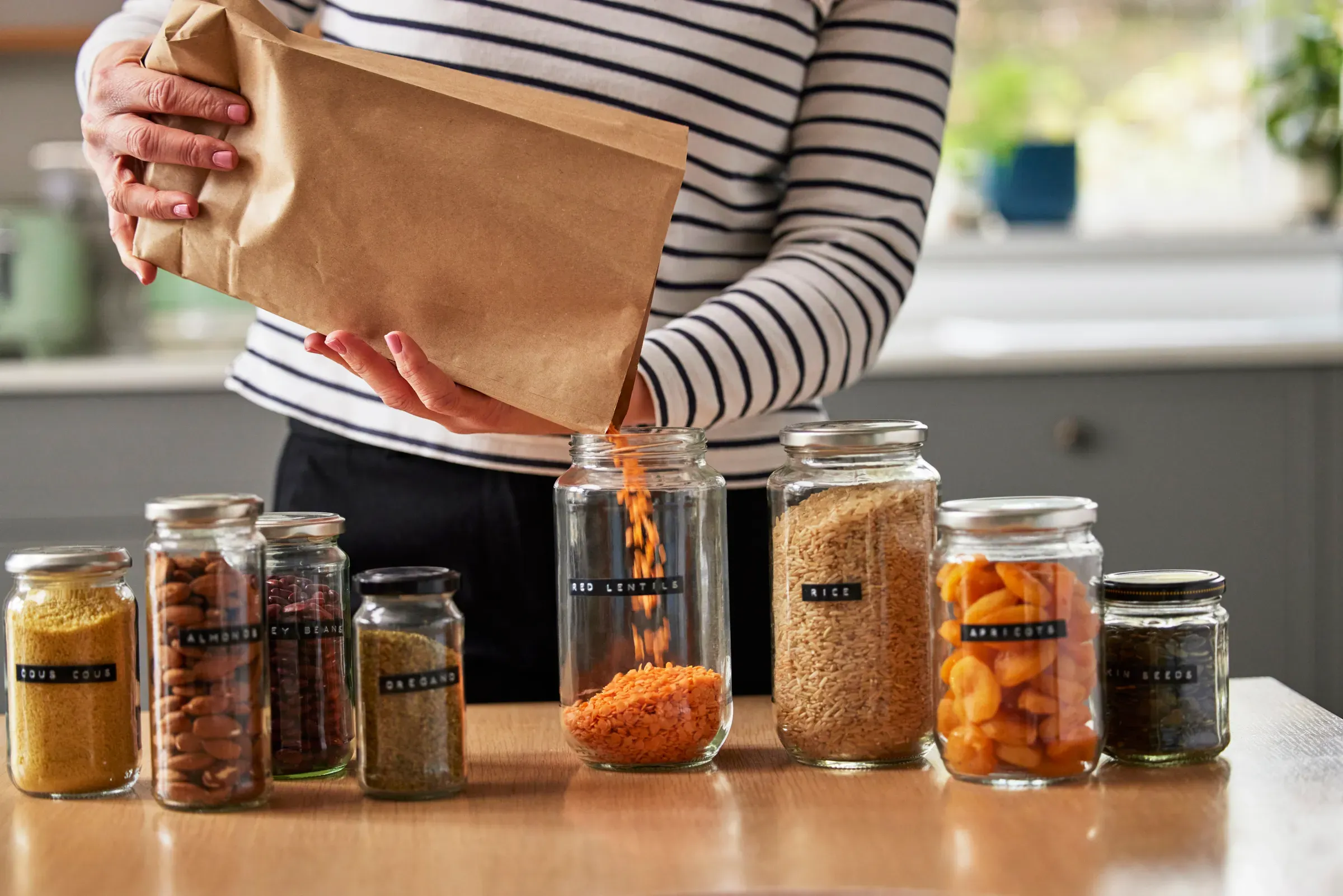
Woman Saving On Packaging By Filling Recycled Jars To Store Dried Food At Home, dtc meat & seafood ecommerce
DTC meat & seafoodHouseholds buying protein in bulk for quality or sourcing reasons, people who want to know the farm, the ranch or the vessel, and cooks looking for cuts their local shops do not carry.

How dtc meat & seafood makes money

Four levers, and what limits each one here

Revenue is traffic times conversion rate times order value times purchase frequency. In this niche each lever has its own ceiling.

Traffic

Traffic: cut and species demand, plus the question of whether it can reach them

The searches that convert here are specific. A cut by name, a species and its origin, a sourcing standard such as grass finished or wild caught, and a delivery question about whether frozen meat can be shipped somewhere at all. That last group is the one most brands ignore, and it is where the doubt lives. Pages that explain exactly how a box travels, how long it stays frozen and which regions can be reached within the transit window remove that doubt and rank for it too. Cut guides that explain what to do with a less familiar piece of the animal are the other reliable source of traffic and they support the whole-animal problem directly.

Conversion

Conversion: cold chain confidence and freezer space

Two objections decide this page. The first is whether the box arrives properly frozen, which is answered by showing the packaging, naming the refrigerant, stating the number of hours it holds and explaining exactly what happens if something goes wrong. The second is the one nobody addresses: where a household is supposed to put it. Stating the box weight, the number of meals and the freezer volume it needs turns an abstract commitment into a decision someone can actually make. Sourcing proof carries the rest, which means naming the farm, the ranch or the fishery, and describing any certification precisely as the certifying body describes it.

Order value

Order value: the minimum that makes the box economical

Insulated packaging, refrigerant and expedited transit cost the same whether a box holds four pounds or forty, so a minimum order value is not a marketing tactic here, it is the structure of the business. The site's job is to make that minimum feel like value rather than a barrier, which is done with box builders that show the running weight and cost per pound, curated boxes for a way of eating, and cuts that pair naturally with what is already in the cart. The other lever is the whole animal: pricing and merchandising need to move the cuts that are always left rather than only the ones that sell themselves.

Frequency

Frequency: freezer capacity sets the cadence

Reorder timing in this category is a storage question, not an appetite question. A household with a small freezer above the fridge buys differently from one with a chest freezer in the garage, and asking which they have is worth more than any behavioural model. Subscriptions should let the customer choose the interval, skip easily and change the box contents each cycle, because sending the same cuts repeatedly is the fastest way to fill a freezer with things nobody wants. We report subscription retention alongside the share of customers who changed their contents or interval, since that number usually explains the churn better than anything else.

Search visibility

Meat and seafood search: cuts, sourcing standards and the delivery question

Three demand pools matter. Cut and species queries are the commercial core, and each significant cut deserves its own page explaining what it is, where it sits on the animal, how to cook it and which of your boxes contain it. Species pages for seafood do the same work, with the addition of the catch method and the season. These pages hold their rankings even when a specific cut is out of stock, which matters in a business where availability moves constantly.

Sourcing queries are the second pool. Grass fed and grass finished are not the same thing and people search for the difference. Wild caught, line caught, farmed and the various certification schemes all carry demand, and a producer can answer them with their own supply chain rather than in general terms.

The third is delivery, and it is the most neglected. How frozen shipping works, how long a box stays cold, what to do if it arrives partly thawed and which regions can be served are all real searches with weak answers. Technically, keep cut pages live when stock runs out, handle variable weights so a page does not change its URL with each batch, and make sure availability in the feed follows what is actually left of the animal.

Queries that matter

  • grass finished beef delivered canada
  • wild caught salmon shipped frozen
  • dry aged ribeye online
  • how does frozen meat shipping work
  • quarter cow share delivered
  • sustainable seafood subscription box
  • what to cook with a chuck roast

Cut guides, sourcing explanations and honest cold chain pages rank here and keep ranking through stockouts. Box pages alone rarely carry the search demand for a meat or seafood brand.

AI answers

AI answers: sourcing, cooking and whether the box arrives frozen

The assistant questions here fall into three groups. Sourcing, which means where the animal was raised, what it was fed, how the fish was caught and what a certification actually covers. Cooking, which means times, temperatures and what to do with an unfamiliar cut. Delivery, which means whether a frozen box can reach a particular region and what happens if it does not arrive fully frozen. Stores get cited when those answers are text on the site rather than assumptions, when certification names match the certifying body exactly, and when the delivery explanation is specific about hours and regions instead of promising freshness in general terms.

Does this meat arrive frozen and how long does the box stay cold?
What is the difference between grass fed and grass finished?
How do I cook a cut I have never used before?
Is this seafood wild caught and where was it landed?
Which regions can receive a frozen delivery within two days?

Questions shoppers put to assistants. A store gets named when its pages answer them in plain text.

Google Shopping and Merchant Center

Merchant Center for perishables: transit limits, variable weight and live availability

Shipping configuration is the whole game. A perishable box can only be advertised where it can arrive inside the transit window, so region-level shipping rules and handling times built around real dispatch days have to be in the feed rather than explained at checkout. Advertising a two-day delivery into a region the carrier serves in four is a delivery time mismatch and, more damagingly, a thawed box and a lost customer.

Variable weight is the second complication. A steak sold at an approximate weight with a final price calculated at packing does not fit a feed that expects one price, so either the listing carries a fixed price for a stated weight range or the product is sold as a fixed pack. Whichever route you take, the page and the feed must agree, because a price that changes between the listing and the charge is a mismatch.

Availability is the third. Selling whole animals means the feed has to follow what is actually left, not what the catalog says exists, and a cut that sold out on Tuesday should stop being advertised on Tuesday. Unit pricing per pound or per kilogram lets a shopper compare a box against a supermarket shelf, which is a comparison worth inviting when your sourcing is the argument.

Feed attributes that decide eligibility

  • gtin only where a retail pack genuinely carries one
  • product_detail for cut, grade, sourcing and catch method
  • unit_pricing_measure so price per pound is visible
  • shipping rules limited to regions inside the transit window
  • min_handling_time set to the next dispatch day
  • availability following the cuts that actually remain

Disapprovals we see in this niche

  • Delivery time mismatch where a perishable box cannot arrive inside the transit window
  • Price mismatch on variable weight items charged at a different final price
  • Availability mismatch when a popular cut sells out between feed updates
  • Health claims about protein, keto or weight in product descriptions

Meta and social ads

Meta for meat and seafood: the sear, the packing line and the place it came from

Food this photogenic should be filmed rather than described. A steak searing, a fillet flaking, a box opened with everything still hard-frozen, and the packing line where the refrigerant goes in are all strong openings. The cold chain footage is unusually persuasive because it answers the objection directly, and very few brands bother to shoot it. The farm, the ranch or the boat carries the sourcing story better than any certificate on a slide.

Policy is not restrictive in this category, with one exception: nutritional and dietary claims about protein, keto or weight move creative into health rules, and any certification named in an ad has to match what is actually held. Audiences start with buyers and site visitors, because a household that has received one box has already proved the delivery works to their address. Prospecting should be constrained to the regions inside the transit map, which is a setting most accounts leave far too wide.

  • A steak searing in a pan with nothing else in frame
  • The box opened on delivery, everything still hard-frozen
  • The packing line, showing insulation and refrigerant going in
  • The ranch, farm or boat, filmed by the people who work it
  • One unfamiliar cut cooked start to finish in under a minute

Policy line

Nutritional and dietary claims about protein, keto or weight move creative into health rules, and any sourcing certification named in an ad has to match the one actually held.

Conversion and the store

Meat and seafood pages: arrival condition, freezer space and provenance

The page has to answer the delivery before it sells the food. That means the packaging shown in photographs, the refrigerant named, the number of hours the box holds temperature stated, the dispatch days listed and the policy for a box that arrives soft written in plain language rather than buried in terms. Doing this well converts better than any offer, because the doubt it removes is the reason people hesitate.

After that, freezer volume and meal count turn a weight into something a household can picture, and the sourcing block names the farm, ranch or fishery with any certification worded as the certifier words it. The template that carries revenue is the box builder, which should show running weight, running cost per pound and the point where the order reaches the minimum. On mobile, keep the delivery date selector and the freezer information above the reviews, and never let the shipping cost appear for the first time at the payment step.

Objections the page must answer

  • “Will it actually arrive frozen and what if it does not”
  • “Where am I going to put twenty pounds of meat”
  • “Where exactly does this come from and how do I know”
  • “How does the price per pound compare with a good butcher”
  • “What do I do with the cuts I have never cooked”

Email, SMS and retention

Email and SMS: the delivery window, the cut guide and the freezer clock

The most important message this business sends has nothing to do with promotion. It is the dispatch and delivery notice, and it needs to say when the box left, when it will arrive, that someone should bring it in promptly and what to do if anything is not fully frozen. Sending it well prevents most quality credits and most of the anxiety that stops a second order.

After that, cooking guidance does the retention work. A sequence built around the cuts in the box someone actually bought teaches them to use the whole order, which is the difference between a customer who reorders and one with a freezer full of things they were unsure about. The freezer clock reminder should be set from box size and household, and the subscription needs a swap window before each charge so the next box is different from the last. SMS is well matched to delivery-day alerts here, since the box needs to come inside.

  1. Dispatch and delivery day notice

    At dispatch and again on the morning of arrival

  2. Cook the box sequence

    Days two to fourteen, built around the cuts ordered

  3. Freezer clock reorder

    Four to ten weeks, set from box size and household

  4. Subscription swap window

    Five days before each charge

  5. Grilling and holiday roast sequences

    Ahead of the season, with the dispatch cutoff stated

Where revenue leaks

The leaks we find in dtc meat & seafood stores

The Growth Analysis ranks these against your own numbers and says which to close first.

Get a Growth Analysis for your meat delivery brand
  • Boxes advertised into regions the carrier cannot reach in time

    Targeting is wider than the transit map, so orders arrive soft, credits are issued and the customer never orders again. The cost shows up as a refund rate rather than as an advertising problem.

  • A freezer full of the cuts nobody chose

    The subscription sends the same box every cycle with no way to swap, so the customer stops before they cancel and the churn arrives without warning.

  • Whole animal balance left to chance

    The premium cuts sell out while the rest of the animal accumulates, so margin is tied up in inventory that no campaign is designed to move.

  • Cold chain explained only in the terms page

    The single biggest objection is answered where nobody looks, so shoppers who would have bought are left guessing about how a frozen box travels.

  • Cut pages that disappear with the stock

    A page that has been ranking for a cut is unpublished when the freezer runs out, so the rankings go with it and the next batch starts from nothing.

Platform notes

Where the platform changes the work

Shopify

Variable weight products need either a fixed price for a stated weight range or an app that reconciles at packing, and delivery date selection with dispatch day rules is usually a Function or an app rather than a theme change. Subscription contents should be editable by the customer between charges without cancelling the plan.

WooCommerce

Shipping zones can be built from real transit maps and validated at checkout, and weight-based rates need to account for the insulated packaging and refrigerant, which are frequently left out of the calculation entirely.

Headless

Worth considering when live inventory by cut has to drive the storefront, the feed and the delivery date picker together, since availability accuracy is a revenue issue here rather than a tidiness issue.

Questions

DTC meat & seafood owners ask us

By CartKernel · Last reviewed

How do we decide which regions to advertise a frozen box in?

From the carrier's transit times, not from where you would like customers to be. Map the regions a box can reach inside the hours your packaging holds temperature, set shipping rules and campaign locations to that map, and revisit it when carrier service levels change. Every order outside it costs you the product, the shipping, the credit and the customer.

What is the best way to handle variable weight products online?

Either sell a fixed pack at a fixed price, or state a weight range and charge for the range rather than reconciling afterwards. Customers dislike being charged a different amount from the one they agreed to, and a price that moves between the listing and the charge also creates feed mismatches. Where reconciliation is unavoidable, say so clearly before the order is placed.

How much should we say about our cold chain packaging?

All of it, with photographs. Name the refrigerant, state how many hours the box holds, list the dispatch days and explain what happens if something arrives soft. This is the objection that stops first orders, and it is the one piece of information almost no competitor site presents well. It belongs on the product page, not only in a policy.

What do we do about the cuts that never sell?

Merchandise them deliberately. Cut guides that explain what a piece is and how to cook it, boxes that pair a slow-moving cut with a popular one, and a value box built from what the animal actually yields all move inventory that would otherwise sit. Whole animal balance is a marketing problem as much as a butchery one, and it is usually left entirely to chance.

Should a meat or seafood brand run a subscription?

Yes, if the customer controls it. Set the interval from freezer capacity rather than from a monthly default, allow contents to be swapped before each charge, and make skipping straightforward. Subscriptions that send an identical box on a fixed cycle fill a freezer with things the household did not choose, and the cancellation that follows is entirely predictable.

How should sourcing claims be worded?

Precisely, and in the certifier's own language where a certification exists. Grass fed and grass finished mean different things, wild caught and sustainably managed are separate claims, and shoppers in this category know the difference. Name the farm, ranch or fishery where you can, and describe what you cannot verify honestly rather than reaching for a term that sounds stronger.

Grow your dtc meat & seafood store.

A free Growth Analysis ranks what your store should fix first, by revenue at stake, in about a week.