Skip to content

Footwear · ecommerce growth

Sock brand marketing agency

Nobody buys one pair of socks online, and a store built as if they might has already lost. The order is a pack, a bundle or a subscription, the basket has to clear a shipping threshold to make sense and the same buyer returns every December for the stocking. Search is by material and purpose rather than brand: merino hiking socks, no-show socks that stay up, bamboo socks for sweaty feet. We build sock stores around the pack: multipack and bundle attributes in the feed, a multi-buy structure that makes a low order value pay, a subscription people keep and gifting pages that carry the fourth quarter.

The buyer, in brief

Consideration
Minutes; the decision is the pack size and the price per pair
Purchase frequency
A drawer refresh once or twice a year, a subscription monthly or quarterly, and gifting every December
Seasonality
December for gifting, autumn for wool and hiking, spring for no-shows and running, and a January lift from subscriptions
Price band
Low per pair, so the business is built on packs, bundles and thresholds rather than on single items
Return risk
Very low, since worn socks cannot come back; a wrong size range on a gift is the main reason and it is handled as an exchange
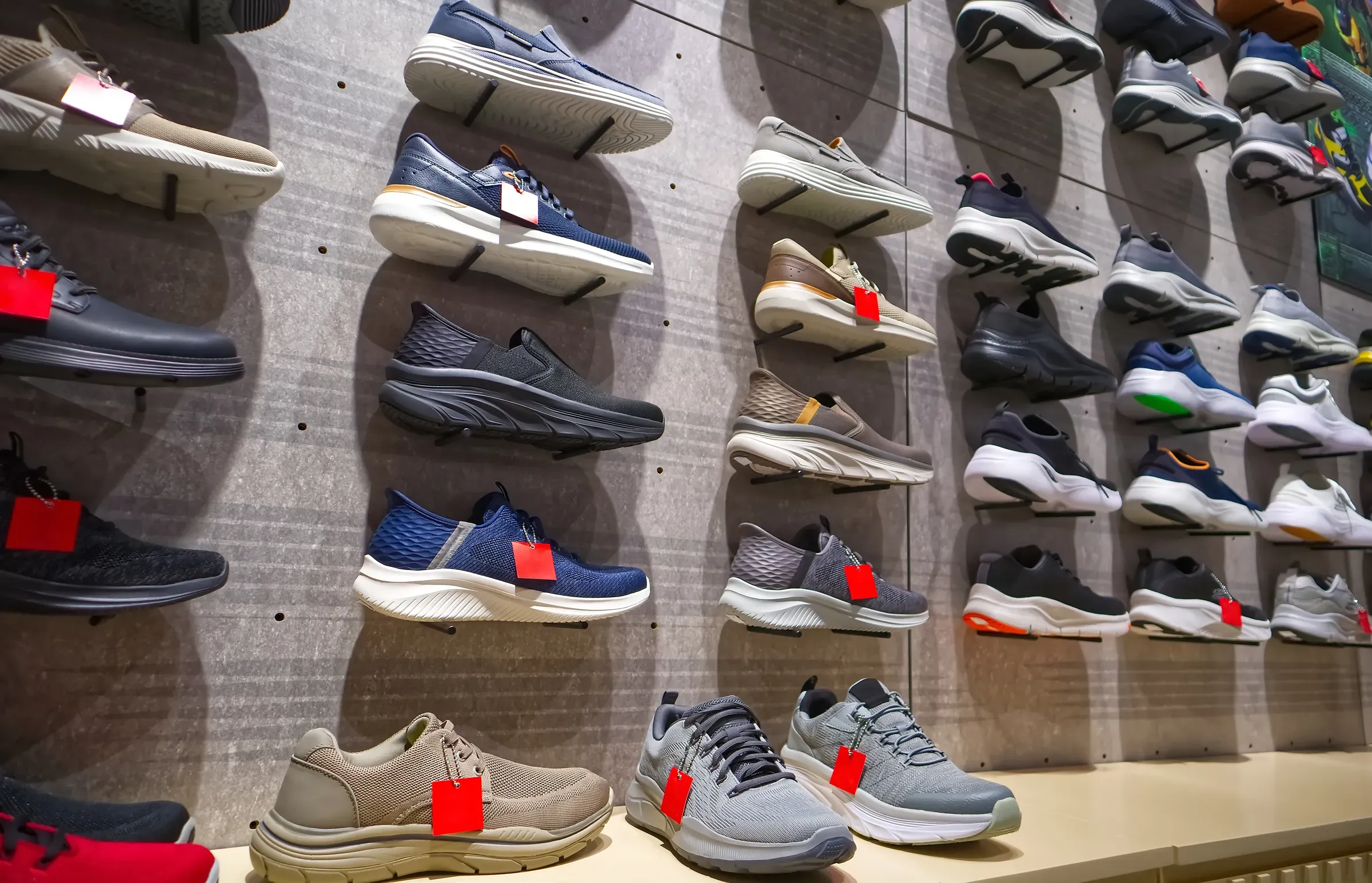
Sneakers on the shelves in the shoe corner in Department Store, Bangkok, Thailand, socks ecommerce
SocksAdults refreshing a drawer in one go, buyers with a specific need such as hiking, running or dress socks, and gift buyers in December, who check the material, the size range against a shoe size and the price per pair before the price per pack.

How socks makes money

Four levers, and what limits each one here

Revenue is traffic times conversion rate times order value times purchase frequency. In this niche each lever has its own ceiling.

Traffic

Traffic: material and purpose queries, and the price-per-pair comparison

Sock search is functional. People type the material and the job (merino hiking socks, bamboo socks for sweaty feet, cotton dress socks), the fit problem (no-show socks that do not slip, socks for wide calves) and the pack (dress socks six pack men). Brand comes later, if at all. Most sock stores are organized by colour and pattern, which is how the brand thinks and not how the buyer searches. The traffic lever is a catalog structured by material, purpose and fit with real copy, pack pages that rank for the pack query with the price per pair stated, and guides that answer the questions asked before a drawer refresh: sizing from a shoe size, merino against synthetic, how to keep no-shows up. Those pages bring in the buyer who has never heard of the brand.

Conversion

Conversion: the size range, the price per pair and the pack builder

A sock order converts when the arithmetic is obvious. The page has to show the size range against a shoe size, the price per pair beside the price per pack, the material and its weight, and a way to build a pack from the colours the buyer wants rather than the ones the brand chose. A no-show page has to say how it stays up; a hiking page has to say the cushion and the height. Free shipping has to be a threshold the buyer can see progress toward, because the single most common abandonment in socks is a basket that sits just under it. We build the pack builder, the per-pair price, the size range and the threshold bar into one product page, and put the subscription option where a first-time buyer can see the terms.

Order value

Order value: multi-buy thresholds designed around shipping

Order value is the whole economics of a sock brand, because a single pair cannot carry the shipping and the click. The lever is a threshold structure built backwards from the cost to serve: a three-pair entry, a saving at six, free shipping at a level that clears margin, and a pack builder that makes reaching each step feel like choice rather than pressure. Bundles across categories (a hiking pack with a running pair, a dress pack with a no-show set) raise the basket for buyers refreshing a whole drawer. Gift boxes, advent calendars and subscription gifts carry a higher price per pair because the box and the surprise are part of the product. Every threshold is tested against contribution margin, not against average order value alone.

Frequency

Frequency: a subscription people keep and the December stocking

Socks are the rare footwear product that suits a subscription, but only when it fits how people actually use socks. A monthly pair is a novelty that churns; a quarterly pack in the customer's sizes and preferred styles, with skip and pause a tap away, is a service people keep. Frequency is built from that subscription, a drawer refresh reminder around six months after a pack, a restock message when a favourite colour returns and the December stocking flow that brings gift buyers back every year. Subscription revenue, churn and the reason for cancelling are reported as their own lines, because a subscription that grows while churning fast is buying every customer twice.

Search visibility

Search: material and purpose collections, pack pages and the sizing guide

Sock search demand is built on material, purpose and fit, and the catalog has to be structured the same way to rank. Material collections (merino socks, bamboo socks, cotton socks, wool blend socks), purpose collections (hiking socks, running socks, dress socks, no-show socks, boot socks) and fit collections (socks for wide calves, socks for large feet) each need real copy that explains the material, the cushion and the height, a grid filtered by the attribute and links from the products. Pack pages rank for the pack query when the pack is a product with its own page, the price per pair stated and the contents listed.

Guides carry the informational demand: a sock size chart from shoe size that is built as an HTML table, merino against synthetic for hiking, how no-show socks stay up and how to wash wool socks without shrinking them. Gift pages (sock gift box, sock advent calendar, sock subscription gift) are published in October so they are indexed for November.

Technically, packs are products rather than cart rules, so they have a URL and a feed entry; colours are variants of one product; the size range is stated in the title and the markup; and the pack builder is a page that links to every product it can contain.

Queries that matter

  • merino wool hiking socks
  • no show socks that don't slip
  • bamboo socks for sweaty feet
  • sock size chart from shoe size
  • dress socks 6 pack men
  • sock subscription gift
  • build your own sock bundle

Material and purpose collections with the cushion, height and price per pair stated, pack pages built as products and a sizing table in HTML rank in this niche. A Socks collection sorted by colour does not.

AI answers

AI answers: what size, which stay up and whether merino is worth it

Shoppers ask assistants what size socks to buy for a given shoe size, which no-show socks actually stay up, whether merino is worth the price for hiking, how to wash wool socks and which sock subscription makes a good gift. The stores that get cited publish the size table as text, explain the construction that keeps a no-show in place, describe the material honestly including its limits, state the price per pair and describe the subscription terms in plain sentences. We write the sizing and material pages answer-first and make the pack and subscription pages plain HTML with named products an assistant can quote.

What size socks should I buy for a size 10 shoe?
Which no-show socks actually stay up all day?
Are merino socks worth it for hiking?
How do I wash wool socks without shrinking them?
Which sock subscription makes a good gift?

Questions shoppers put to assistants. A store gets named when its pages answer them in plain text.

Google Shopping and Merchant Center

Google Shopping and Merchant Center for packs, bundles and a low price per pair

Sock feeds are decided by how packs are described. A pack of identical pairs carries the multipack attribute with the number of pairs, so Shopping compares the pack to other packs rather than to single pairs on price. A mixed set carries is_bundle. The price in the feed is the pack price the page charges, never a per-pair figure or a price that only appears once a multi-buy rule fires in the cart. Size is submitted as the shoe-size range the sock covers, with size_system set, and the apparel attributes (colour, gender, age_group) are required as for any clothing item. Material names the fibre, pattern carries the design where it is searched and google_product_category sits at the socks node under underwear and socks rather than at shoes.

Policy risk is low but the economics are sharp. A single pair listed at a low price draws clicks that cost more than the margin, so single pairs are usually excluded from paid Shopping or bid low, and the pack and bundle listings carry the budget. Compression claims move a sock into health territory, so a brand that sells them describes the fabric rather than an outcome.

Campaigns are structured by pack price band and purpose: premium merino and hiking packs in a campaign bid to margin, dress and everyday packs in a volume campaign, gift boxes and subscriptions under their own label from November, and free listings on across the range, where they carry a real share of sock orders.

Feed attributes that decide eligibility

  • multipack for identical packs
  • is_bundle for mixed sets
  • size as the shoe-size range and size_system
  • material naming the fibre
  • google_product_category at the socks node
  • custom_label_0 for pack price band

Disapprovals we see in this niche

  • Multipacks submitted without the multipack attribute, so the pack is compared to single pairs on price
  • Mixed sets without is_bundle
  • Price mismatch when a three-for discount applies only in the cart
  • Size submitted as one size instead of the shoe-size range

Meta and social ads

Meta and social ads: the drawer refresh and the slip test

Sock creative works when it is playful about a boring purchase and specific about the product. A drawer emptied and refilled in one pack, the no-show slip test on a treadmill, a merino sock after twenty washes beside a new one, a subscription box opened by the person who received it and the pack builder filled in real time carry the argument. Patterns and colours are the hook for prospecting, the construction is the reason to buy. Customers describing the pair that finally stayed up, with rights secured, work better than any product spin.

Audiences are broad, because everyone wears socks; the brand's own customers, subscribers and pack-builder visitors come first, and gift audiences open in November. Catalog ads suit retargeting with the pack shown as the product. Policy is light, with one edge: compression socks and anything framed as health move the ad into medical review, so the fabric is described rather than the outcome.

  • A drawer emptied and refilled in one pack
  • The no-show slip test on a treadmill
  • A merino sock after twenty washes beside a new one
  • A subscription box opened by the person who received it
  • A customer describing the pair that finally stayed up, with rights secured

Policy line

Compression and health-adjacent claims are avoided or described as fabric properties only, material words must be true, and gift delivery dates must match the carrier.

Conversion and the store

The store: price per pair, the threshold bar and a pack builder that feels like choice

The sock product page has to make the arithmetic obvious: the price per pair beside the price per pack, the size range against a shoe size, the material and its weight, the cushion and the height for purpose socks and a pack builder that lets the buyer choose colours toward the next saving. A threshold bar in the cart drawer shows progress to free shipping, because the most common sock abandonment is a basket sitting just under it. The subscription option shows the terms, the sizes and the skip and pause controls before the buyer commits.

Gift pages need a gift box option, a note and the cut-off date. On mobile, the pack builder must work with taps rather than drag, the per-pair price must stay visible as the pack changes and the threshold bar must sit in the drawer rather than on a separate cart page.

Objections the page must answer

  • “How many pairs do I get and what is the price per pair”
  • “What size range for a size 10 shoe”
  • “Will the no-shows slip down in my shoes”
  • “Can I mix colours and styles in one pack”
  • “Can I pause or skip the subscription”

Email, SMS and retention

Email and SMS: the threshold nudge, the subscription that stays and the stocking

Sock flows follow the pack and the drawer. The welcome flow lands on the pack builder rather than on a single product, because the first order needs to clear the threshold. Abandoned-cart messages say how far the basket is from free shipping and which pair would get it there. Subscription onboarding explains the sizes on file and the skip and pause controls in the first message, which is what keeps people from cancelling in month two.

A drawer refresh reminder lands around six months after a pack. A restock message goes out when a favourite colour or pattern returns. The December stocking flow brings last year's gift buyers back with the gift box and the cut-off date, and SMS is reserved for the final days before the cut-off and for a subscription shipment notice. Win-back is the drawer refresh sent once more with the customer's sizes and past styles named.

  1. Welcome to the pack builder

    On signup, before the first order

  2. Threshold nudge

    One hour after a cart is abandoned under the free shipping level

  3. Subscription onboarding with skip and pause

    Immediately after the first subscription order

  4. Drawer refresh

    Around six months after a pack purchase

  5. Favourite colour back

    When a previously bought colour or pattern returns

  6. December stocking

    Mid-November, to last year's gift buyers

Where revenue leaks

The leaks we find in socks stores

The Growth Analysis ranks these against your own numbers and says which to close first.

Get a Growth Analysis for your sock brand
  • Single pairs in paid Shopping

    The cheapest listing draws the most clicks, each click costs more than a pair earns and the campaign that looks busy loses money on every order it produces.

  • A threshold nobody can see

    Free shipping exists at a level the buyer is never shown, the basket sits one pair under it and the order is abandoned at the shipping line.

  • A subscription with no skip

    The second box arrives before the first is worn, the only option is cancel, and the subscriber who would have paused for a month is gone for good.

  • Packs built as cart rules

    The six-pack price only appears once the rule fires, so the feed shows a price the page does not, the pack has no URL to rank and Shopping collects mismatches.

  • The gift box page published in December

    The sock gift box goes live when the searches start, is indexed in January and misses the six weeks that pay for the year.

Platform notes

Where the platform changes the work

Shopify

Packs are built as bundle products so they carry one price, a URL and a feed entry with multipack or is_bundle set; the pack builder runs on a bundle app, subscriptions on a subscription app with skip and pause exposed in the customer account, and the threshold bar is a theme section fed by cart totals.

WooCommerce

A bundle extension builds the packs as products with their own pages, a subscriptions extension handles skip and pause, and the feed plugin must send multipack and the shoe-size range rather than a per-pair price or a bare size.

BigCommerce

Bundles are products with option sets, the promotions engine handles the multi-buy saving as a product price rather than a cart rule where the feed is concerned, and a subscription app covers the recurring pack.

Questions

Socks owners ask us

By CartKernel · Last reviewed

How can a sock brand make money when a pair sells for so little?

By never selling one pair as the unit. The entry is a three-pair pack, the saving lands at six, free shipping sits at a level that clears margin and the pack builder makes reaching each step feel like choice. Paid Shopping runs on the packs and bundles with single pairs excluded, and every threshold is tested against contribution margin rather than average order value.

What feed attributes do multipacks and sock bundles need in Merchant Center?

Identical packs carry the multipack attribute with the number of pairs, mixed sets carry is_bundle, the price is the pack price the page charges, and the size is the shoe-size range with size_system set. Without multipack, Shopping compares a six-pack to single pairs on price and the listing looks expensive for what it is.

Does a sock subscription actually retain customers?

A quarterly pack in the customer's sizes and styles with skip and pause a tap away does; a monthly novelty pair usually churns after the surprise wears off. We report subscription revenue, churn and the stated cancel reason as their own lines, and we design the cadence and the controls before we spend money acquiring subscribers.

Should single pairs be advertised at all?

Rarely. A single pair at a low price attracts the most clicks and the least margin, so it is excluded from paid Shopping or bid very low, while free listings can still show it. The single-pair page stays on the site for search and links to the pack that contains it.

When should sock gift pages and advent calendars go live?

In October, so they are indexed before gift searches begin in November, with the cut-off date added as soon as the carrier confirms it. Advent calendars need to be live and advertised in early November because they are bought before December starts. Pages published in December rank for the following year.

How should sock sizes be shown for shoppers who only know their shoe size?

As a range against shoe sizes on the product page, in the size selector and in the feed, with a sizing table built as HTML rather than as an image. A gift buyer only knows the recipient's shoe size, and a range stated plainly turns that into an order rather than a guess and an exchange.

Grow your socks store.

A free Growth Analysis ranks what your store should fix first, by revenue at stake, in about a week.