Skip to content

Footwear · ecommerce growth

Running shoe brand marketing agency

A running shoe is chosen from a spec sheet. Heel-to-toe drop, stack height, weight, the foam, whether there is a plate, stability or neutral, and how this year's version differs from last year's. The shopper reads a review site, compares three models in separate tabs, then searches the exact model name with a sizing question. A brand competing for that runner is competing with review publications for the query and with every retailer for the sale. We build running shoe stores that publish the specs as data, own the version-to-version comparison, keep the model line indexable across releases and bring the runner back when the mileage says the pair is done.

The buyer, in brief

Consideration
A few days of comparison for a new model, minutes for a repeat purchase of a model they already run in
Purchase frequency
A replacement pair every few hundred miles, which for a regular runner means two or more pairs a year, plus a race-day pair and a trail pair for some
Seasonality
Lifts in January, in the spring and autumn marathon build-ups and at each model's release, with trail demand following the season
Price band
Mid to premium, with plated race shoes at the top and outgoing versions discounted heavily by retailers
Return risk
Moderate: sizing between models, width, and a fit that only shows up after a run; the worn-shoe return is the policy question every running brand has to settle
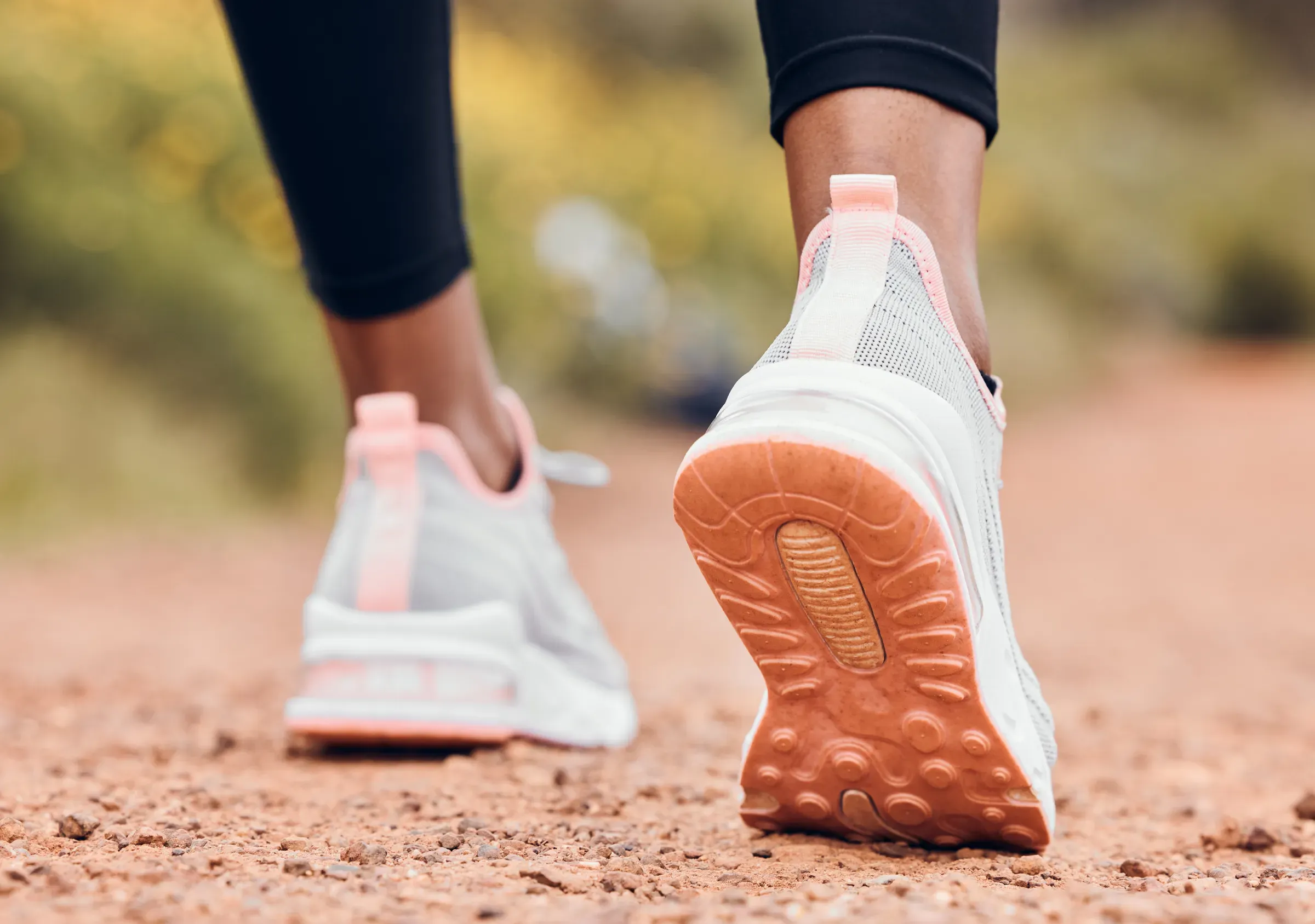
Shoes, fitness and person walking or hiking for outdoor exercise, workout or training as health and wellness., running shoes ecommerce
Running shoesRunners from beginners training for a first race to high-mileage club members, who compare drop, stack, weight and foam across models, trust independent reviews over brand copy and want to know whether this version fits like the last one.

How running shoes makes money

Four levers, and what limits each one here

Revenue is traffic times conversion rate times order value times purchase frequency. In this niche each lever has its own ceiling.

Traffic

Traffic: model lines, version deltas and the spec query

Running shoe search is dominated by review publications for the general query, so a brand rarely wins best cushioned daily trainer on its own site. What a brand can win is everything specific to its own models: the model line query, the version-to-version comparison, the sizing question, the spec query (drop, stack, weight) and the purpose question (is this for daily miles or race day). The traffic lever is a model line hub that survives every version, a page per version with the full spec table as text, a comparison page for each version change and purpose collections built from spec data. Those pages are the ones a runner opens after reading the review, and the brand is the only source that can publish them with authority.

Conversion

Conversion: specs as data, the size note and what changed

A runner converts on a product page that reads like the spec sheet they were looking for: drop and stack in millimetres, weight at a stated size, foam and plate named, stability or neutral stated plainly, widths listed, and a note on how the fit compares with the previous version and with the brand's other models. They also need the return position on a shoe that has been run in, because a fit problem only appears at mile two. We rebuild the product page around the spec table, add a version delta block, write the size note from returns data and state the run-in return policy clearly, so the runner does not have to open the review site again to find what the brand should have said.

Order value

Order value: the rotation, not the accessory

Running shoe baskets grow through the rotation. A runner who buys a daily trainer will, over the season, want a tempo shoe and a race-day shoe, and many add a trail pair. Socks and laces add little. The order value lever is a rotation page that explains which of the brand's models pair together and why, a two-pair offer framed around a training block rather than a discount, and a race-day upgrade offered to buyers of the daily trainer as the race approaches. Bundles of the same model in two colourways suit high-mileage runners who alternate pairs. The pages that carry this are the purpose collections and the rotation guide, and both need their own search demand mapped.

Frequency

Frequency: mileage, not months

A running shoe wears out by distance, and the runner knows roughly how far they run each week. Frequency in this niche is built from that number: a replacement reminder timed to the weekly mileage the customer gives at purchase, sent when the pair is approaching the commonly quoted replacement range, with a one-click reorder in the same model and size. A new-version alert when the model updates keeps loyalists from drifting to a retailer, and an outgoing-version offer to the same loyalists sells the last stock at a better margin than a public clearance. A brand that knows the model, the size and the mileage of each runner gets the next pair before the review site is opened.

Search visibility

Search: model line hubs, version pages and comparison pages built from spec data

Running shoe search splits into queries the brand can own and queries it cannot. General queries (best daily trainer, best stability shoe) are held by review publications and retailers, and a brand blog reposting launch copy will not move them. Model queries are the brand's territory: the model line hub that explains the shoe's purpose and history, a page per version with the full spec table as text, a comparison page for each version change that states what moved (drop, stack, weight, foam, fit, upper) and purpose collections built from spec data (daily trainer, tempo, race day, trail) with copy that explains the criteria.

Sizing and spec questions are the second layer. A page per model on how it fits relative to the brand's other models and to the previous version, with width options and a size recommendation drawn from returns data, ranks for the question runners ask last before buying. Spec filters (drop under six millimetres, stack over thirty-eight millimetres) become indexable collections when the specs live as structured product data.

Technically, each version is a product grouped under the model line, outgoing versions stay live with a link to the current one rather than being redirected, colourways are variants where the shoe is identical and sizes and widths are variants with one URL.

Queries that matter

  • model name v4 vs v3
  • model name drop and stack height
  • do model name run small
  • carbon plate racing shoes road legal
  • stability running shoes for overpronation
  • trail running shoes wide toe box
  • low drop daily trainer

Model line hubs with full spec tables, version comparison pages and purpose collections built from spec data rank in this niche. A brand blog reposting launch copy does not, because the review publications already hold the general query.

AI answers

AI answers: what changed, what the drop is and whether it is race legal

Runners ask assistants what changed between two versions of a shoe, what drop and stack a model has, whether a plated shoe is legal for a road marathon under the World Athletics stack height rule, whether a model runs small and which of a brand's shoes suits a slow long run. The brands that get cited publish the spec table as text, state the version delta plainly, describe fit relative to their other models and keep the numbers consistent between the page, the structured data and the feed. We write the spec and comparison pages answer-first, cite the actual rule where race legality is discussed and make the pages plain HTML the assistants' crawlers can read.

What is the difference between version three and version four of this shoe?
What drop and stack height does this model have?
Is this shoe legal for a road marathon under the 40 millimetre rule?
Should I size up in this model compared with the previous version?
Which of your shoes is best for a slow long run?

Questions shoppers put to assistants. A store gets named when its pages answer them in plain text.

Google Shopping and Merchant Center

Google Shopping and Merchant Center around a version launch

Running shoe feeds carry the apparel attributes and the specs as data. product_detail holds drop, stack height, weight, plate and surface (road or trail), product_highlight carries the three facts a runner names, and the title leads with the model, the version, the purpose and the colour. Each version and colourway is one item_group_id with size and width variants, and the new version gets its own item_group_id rather than inheriting the old one, so Shopping does not merge two different shoes. GTINs are present on almost every pair and do the matching.

The launch is the risk window. A new version listed as in stock before it ships produces availability mismatches; listing it as preorder needs an availability_date. The outgoing version enters clearance at the same time and the page price changes before the feed unless sale_price and its effective dates are set ahead. Titles cannot carry promotional text such as sale or free shipping. Price competitiveness matters more here than in most niches because retailers discount outgoing versions hard, and Shopping shows the comparison.

Campaigns are structured by version and margin: the current version in a campaign bid to margin, the outgoing version in a clearance campaign with its own label, plated race shoes protected from broad queries, and free listings on for every model and version page.

Feed attributes that decide eligibility

  • gtin
  • item_group_id per version and colourway
  • product_detail for drop, stack, weight, plate and surface
  • product_highlight
  • availability and availability_date for a launch
  • sale_price and sale_price_effective_date for the outgoing version

Disapprovals we see in this niche

  • Availability mismatch when a new version is listed as in stock before it ships
  • Missing availability_date on preorder offers for a launch
  • Duplicate listings when the new version reuses the old version's item_group_id
  • Promotional text such as sale or free shipping inside titles

Meta and social ads

Meta and social ads: the foam under load and the runner's own footage

Running shoe creative that works shows the shoe doing the thing: foam compressing in slow motion, a plate flexing, the outsole after two hundred miles, a version-to-version side by side on a scale and a ruler, and a runner's own footage from a long run in real weather. Club runners and coaches describing how a model felt at mile fifteen, with rights secured, carry more than a studio spin. Catalog ads suit retargeting by model, and the version delta makes a strong retargeting message to owners of the previous version.

Audiences start with buyers and site visitors by model, then broad prospecting with purpose-specific creative, because running interest targeting is broad and coaches and clubs are reached better through creators than through interests. Policy limits are about outcomes: no injury-prevention claims, no performance promises stated as facts, and race-legal statements must reference the actual rule rather than imply an approval that does not exist.

  • Foam compressing and a plate flexing in slow motion
  • The outsole after two hundred miles
  • Version-to-version side by side on a scale and a ruler
  • A runner's own footage from a long run in real weather
  • A coach describing how the model felt at mile fifteen, with rights secured

Policy line

No injury-prevention or health outcome claims, no performance promises stated as facts, specs shown must match the product, and race legality must cite the actual rule rather than imply an approval.

Conversion and the store

The store: the spec table, the version delta and the run-in return position

The running shoe product page has to answer the spec sheet and the fit question in one screen: drop and stack in millimetres, weight at a stated size, foam and plate named, stability or neutral, widths, surface, and a note on how the fit compares with the previous version and the brand's other models. A version delta block near the top says what changed, because that is what a returning runner came to check. The run-in return position is stated plainly under the price: whether a shoe that has been run in can come back, on what terms and for how long.

Purpose collections carry the rotation, so a daily trainer page shows the tempo and race-day partners with a sentence on why. On mobile, the size and width selector, the shipping line and a sticky add-to-cart decide the order, and the comparison table needs to scroll inside its own container rather than break the page.

Objections the page must answer

  • “Does it run small and should I size up from the last version”
  • “What actually changed from the previous version”
  • “Is this for daily miles or race day”
  • “Can I run in them and still send them back”
  • “Which widths do you make it in”

Email, SMS and retention

Email and SMS: the mileage clock, the new version and the race week

Running shoe flows run on distance and on the release calendar. A run-in and fit check at day seven asks how the first runs felt while a return or exchange is still simple, and it records the weekly mileage if the customer will give it. The mileage replacement reminder is the flow that carries the niche: timed from that number, it lands as the pair approaches the commonly quoted replacement range and links to a one-click reorder in the same model and size. A new-version alert goes to owners of the model the moment the update is announced, ahead of the retailers.

Rotation flows offer the tempo or race-day partner to daily trainer buyers as the season progresses, and a race-week message to buyers of a race shoe covers lacing, break-in runs and what not to change on the day. Outgoing-version offers go to loyalists before any public clearance. SMS is reserved for launch-day availability and a restock of the customer's size. Win-back is the new-version alert sent once more with the current model.

  1. Run-in and fit check

    Day seven after delivery

  2. Mileage replacement reminder

    Timed from the weekly mileage recorded at purchase, before the commonly quoted replacement range

  3. New version alert

    When the model the customer owns is updated

  4. Rotation partner

    Six to eight weeks after a daily trainer purchase

  5. Race week

    Seven days before a race for buyers of a race-day shoe

  6. Outgoing version to loyalists

    Before the public clearance of a version the customer owns

Where revenue leaks

The leaks we find in running shoes stores

The Growth Analysis ranks these against your own numbers and says which to close first.

Get a Growth Analysis for your running shoe brand
  • The new version launched as an unrelated URL

    Version four goes live as a fresh product with no link from version three and no model line hub, so the rankings and links the model earned over years stay on a page that now says discontinued.

  • Specs published as an image

    The spec table is a graphic from the launch deck, so the drop and stack queries land on a review site, the assistants cannot quote the numbers and the feed carries none of them.

  • Retailers holding the model query

    A retailer's discount ad sits above the brand's own on the model name, and the brand pays a premium to win back a search for its own product.

  • Mileage never recorded

    The runner would have told the store how far they run each week, nobody asked, and the replacement reminder that would bring them back cannot be timed.

  • The worn-shoe return with no policy

    A pair comes back after three runs, the policy says nothing about run-in returns and the store either refunds a shoe it cannot resell or argues with a customer it wanted to keep.

Platform notes

Where the platform changes the work

Shopify

Specs live in metafields (drop, stack, weight, plate, surface, version) so they render as a table, feed product_detail and drive spec-based collections; versions are products grouped by a model metafield, and the weekly mileage captured at checkout is stored on the customer record for the replacement flow.

Headless

A custom front end can build the version comparison and spec filtering as interactive tools from the same product data, which a themed store can only approximate; the trade-off is owning the structured data and the crawlability of those tools.

WooCommerce

Global attributes for drop, stack, plate and surface power the filters and the indexable archives, and version grouping is handled through a shared taxonomy term rather than by editing the old product into the new one.

Questions

Running shoes owners ask us

By CartKernel · Last reviewed

How can a running shoe brand compete with review sites for its own model searches?

By publishing what the review site cannot: the full spec table as text, the version delta, the fit note relative to the brand's other models, the width range and the launch-day availability. Those pages rank for the model, version and sizing queries a runner types after reading the review, and they are the brand's to own.

Should the previous version of a running shoe stay on the site after the update?

Yes, live and linked. The old version's page carries the rankings and links the model earned, so it stays indexable with an honest availability state and a link to the new version under the same model line hub. Redirecting or deleting it hands the model query to a retailer at the moment the new version needs it most.

Can we let runners test a shoe and still control returns?

Yes, with a clear run-in return policy stated on the product page: how many days, what condition, exchange or refund. A stated policy reduces both the hesitation that costs orders and the argument that costs customers. We watch return reasons by model and rewrite the size note for any model that keeps coming back.

How do you handle a running shoe version launch in Merchant Center?

The new version gets its own item_group_id, GTINs and a preorder state with an availability_date before it ships, so it can serve without mismatches. The outgoing version gets sale_price with effective dates set ahead of the clearance. The two are separated by custom label so the launch campaign and the clearance campaign do not share a budget.

Is Performance Max useful when we also sell through running retailers?

It can be, for spec-led prospecting across YouTube and Discover, but only with brand and model exclusions, because otherwise it counts your own model searches as growth and competes with your retailers on them. We report brand, model and non-brand separately so you can see what it actually adds.

What creative works for running shoes on Meta?

The shoe under load and the runner's own footage. Foam compressing, the outsole after real miles, a version side by side on a scale, and a club runner describing mile fifteen, with rights secured. Studio spins are ignored by runners who have already read three reviews. Claims about injury prevention are out on policy grounds.

Grow your running shoes store.

A free Growth Analysis ranks what your store should fix first, by revenue at stake, in about a week.