Skip to content

Jewelry · ecommerce growth

Men's jewelry marketing agency

Men's jewelry is bought by two different people: the man measuring his wrist with a piece of string, and the partner guessing his wrist from a watch. One wants chain width in millimeters and a guide to wearing a signet ring; the other wants a gift that arrives boxed and fits. We build the store for both: sizing that removes the guess, campaigns and pages split by wearer and giver, a feed built for how men's pieces are searched, and gifting flows timed to the occasions that drive the category.

The buyer, in brief

Consideration
A few days for the wearer, longer and closer to an occasion for the giver
Purchase frequency
One to three purchases a year: a chain, then a bracelet or ring to wear with it, then a gift received or given
Seasonality
Father's Day, the December holidays, Valentine's Day and graduation drive the gifting orders; wearer purchases are steadier with a lift in spring and before summer
Price band
Accessible stainless steel and silver through to solid gold, often with the same design at two or three price points
Return risk
Moderate; chain length and bracelet size are the usual reasons for the wearer, and taste or size for gifts, so sizing help on the page and easy exchanges matter
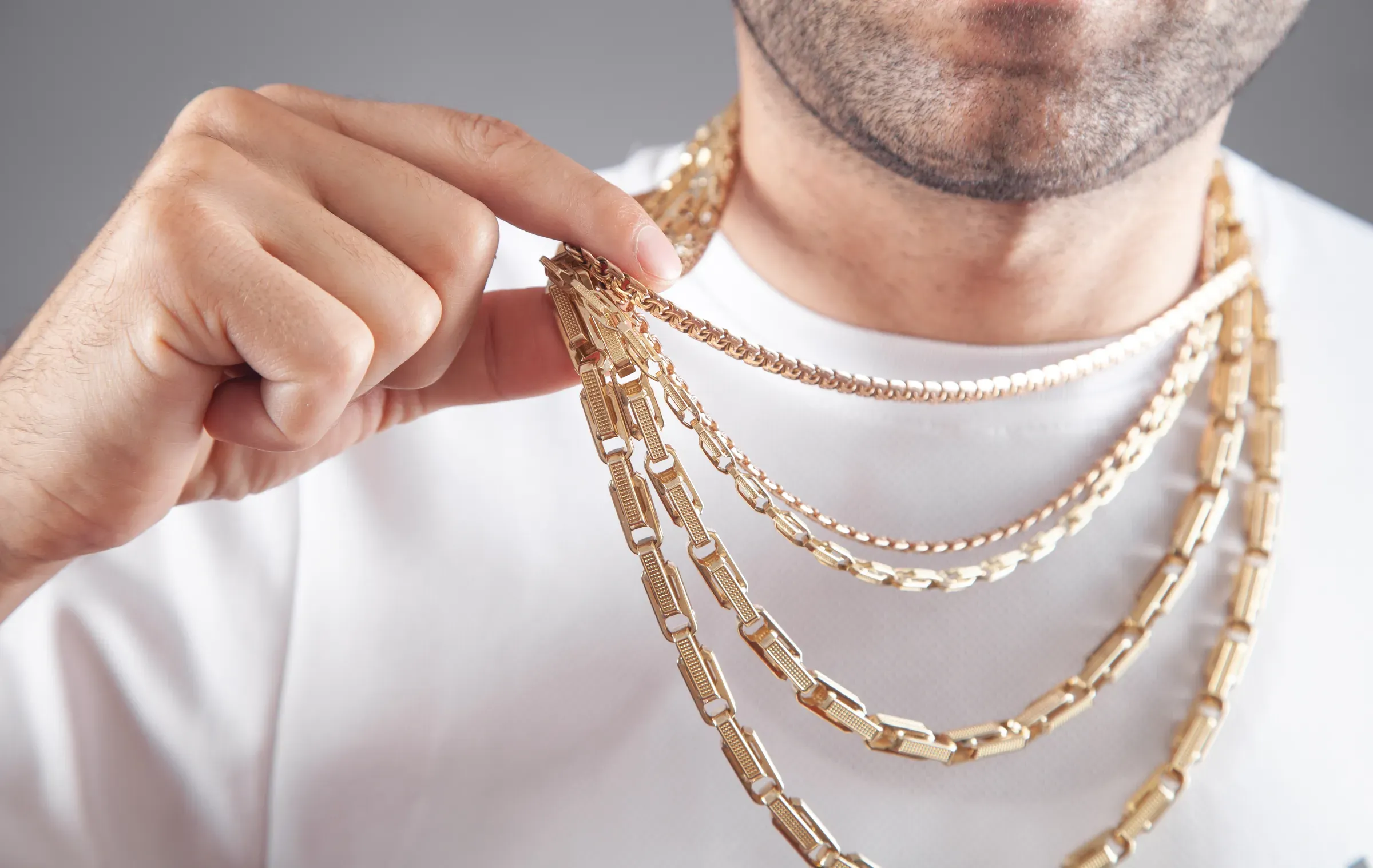
Man with a expensive necklace. Fashion accessories and jewelry, men's jewelry ecommerce
Men's jewelryMen buying for themselves, often first-time jewelry buyers who check chain width, length and clasp type, material and how to wear it, and partners and family buying gifts who check sizing help, packaging, delivery dates and the exchange policy.

How men's jewelry makes money

Four levers, and what limits each one here

Revenue is traffic times conversion rate times order value times purchase frequency. In this niche each lever has its own ceiling.

Traffic

Traffic: chain styles by width, bracelets by wrist, rings by finger

Men search jewelry by construction: 5mm cuban link chain, 22 inch rope chain, tennis chain silver, mens signet ring gold, beaded bracelet 8mm, leather bracelet stainless clasp. Gift buyers search by relationship and occasion: gifts for husband jewelry, mens bracelet for boyfriend, graduation gift necklace for son. Most men's ranges live as a collection inside a women's store with a grid and no copy, so both sets of queries go to marketplaces. We build style pages by chain type and width, bracelet pages by material and size, ring pages by style, and gift pages by relationship and occasion, each with copy on how to wear the piece, how to size it and what it goes with.

Conversion

Conversion: a size guide that works with string, and a gift path that does not need one

The wearer's objection is fit and how it will look: the page needs chain lengths shown on a chest for a few heights, widths shown next to a coin or a finger, wrist measurement with a strip of paper or string, and ring sizing with a printable guide. The giver's objection is different: they do not have the wrist and cannot ask, so the page needs adjustable options, a size-later or exchange promise, gift packaging shown, and a delivery date. A short how-to-wear section, one paragraph and one photo, converts first-time buyers who are unsure whether a chain or a signet ring suits them. Reviews from men, with photos, answer the question the giver is actually asking, which is whether he will wear it.

Order value

Order value: the chain and the pendant, the bracelet stack, the metal upgrade

Order value in men's jewelry grows through pairing and through metal. A chain page that shows the pendant that fits the width, a bracelet page that shows the second bracelet worn with the first, and a ring page that suggests the chain in the same finish turn one piece into two. The same design offered in stainless steel, sterling silver and solid gold, with the price difference shown as a number, moves the wearer up a metal more often than a discount moves them to buy. For givers, a set in a single box, engraving on a bar bracelet or the inside of a signet ring, and gift wrap at checkout add to a purchase that is already emotional.

Frequency

Frequency: the wearer builds a collection, the giver has a calendar

A man who buys one chain and wears it daily becomes a collector when the store shows him the next piece. Frequency work for the wearer is a sequence: the bracelet that matches the chain, the ring that matches the bracelet, the second chain in a different width for layering. Care reminders and a cleaning cloth in the box keep the first piece in use. For the giver, frequency is the calendar: the occasion and recipient captured at checkout come back before the next Father's Day, birthday or anniversary with a suggestion that matches what was given. A referral card in the box works because men's jewelry is asked about by friends.

Search visibility

Search: construction vocabulary for wearers, relationship vocabulary for givers

Men's jewelry ranks on pages that speak the buyer's language. For wearers, that language is construction: chain type (cuban, rope, figaro, box, wheat, tennis), width in millimeters, length in inches, clasp type, bracelet material (stainless, silver, gold, leather, beads) and size, ring style (signet, band, spinner) and size. Each chain type deserves a page with widths compared on a body, lengths shown at chest and collarbone, and a paragraph on how to wear it with a pendant or layered. Bracelet and ring pages follow the same pattern.

For givers, the language is relationship and occasion: jewelry gifts for husband, bracelet for boyfriend, graduation necklace for son, Father's Day gifts. These pages are curated by price band and include sizing help for someone who cannot ask, gift packaging, and delivery dates for the occasion in question.

Technically, a chain in four widths and three lengths is one product with variants; a men's range inside a broader store needs its own navigation, collection copy and internal links so it is not treated as a filter on the women's catalog. Product structured data carries material, size and the gender attribute where the platform supports it.

Queries that matter

  • 5mm cuban link chain silver
  • 22 inch rope chain gold
  • mens signet ring gold
  • mens beaded bracelet 8mm
  • how to measure wrist for bracelet
  • jewelry gifts for husband
  • graduation gift necklace for son

Chain, bracelet and ring pages organized by construction with worn photography and sizing, and gift pages curated by relationship and price, rank here. A Men's collection that is a filter on a women's catalog does not.

AI answers

AI answers: what length, what width, will he actually wear it

Men and their partners ask assistants what length a chain should be for a man of a given height, what width looks right, how to measure a wrist for a bracelet, which hand and finger a signet ring goes on, and what jewelry to buy a boyfriend who has never worn any. The stores that get named have sizing and how-to-wear guides that answer those questions in plain text, state material, width, length and clasp on every product page, and keep the exchange policy readable without a pop-up. We write the guides answer-first, keep the sizing numbers consistent across the guide, the product page and the feed, and give the gift pages copy an assistant can summarize.

What length chain should a man wear?
How do I measure my wrist for a bracelet without a tape measure?
Which finger does a man wear a signet ring on?
What jewelry should I buy my boyfriend who has never worn any?

Questions shoppers put to assistants. A store gets named when its pages answer them in plain text.

Google Shopping and Merchant Center

Google Shopping for men's chains, bracelets and rings

Men's jewelry feeds win on the attributes the shopper types. Titles carry the product type, the chain or bracelet style, the width, the length or size and the material, in that order: cuban link chain 5mm 22 inch sterling silver. The gender attribute is set to male so the listing appears for men's queries and in the filters shoppers use. Material is stated precisely (stainless steel, 925 sterling silver, 14k gold, gold vermeil), size carries the length or ring size with size_system, and product_detail carries the width, clasp type and weight. Variants by width and length share an item_group_id. Own-brand pieces set identifier_exists to false; resold branded pieces carry their GTIN.

Policy risk is modest but real: gold stated for a plated piece is misrepresentation, and gift-season promotions create price mismatches when the feed lags the page. Images for the main slot should show the piece alone; the worn shots go in additional images.

Campaigns are split by role and by metal: wearer campaigns by chain and bracelet style bid to margin, gift campaigns by occasion given their own budget that rises before each date, solid gold pieces in a campaign with a longer window, and free listings on throughout.

Feed attributes that decide eligibility

  • gender set to male
  • material stated precisely
  • size with size_system for length and ring size
  • product_detail for width, clasp and weight
  • item_group_id
  • custom_label for wearer versus gift

Disapprovals we see in this niche

  • Gold in the title or material for a plated or steel piece
  • Price mismatch during Father's Day or holiday promotions
  • Length submitted in the title only, with no size attribute
  • Main image showing the chain worn or with text overlays

Meta and social ads

Meta and social ads: the chain on a chest, the box in a hand

Men's jewelry creative has to be made twice, because the two buyers respond to different things. The wearer responds to the piece on a body in daylight, worn with normal clothes, with the width and length named, and to short how-to-wear clips that answer whether it will look right on him. The giver responds to the box being opened, the reaction, the sizing promise and the delivery date. Styling content that shows one chain with three outfits does well for prospecting; a comparison of widths on the same chest does well for retargeting.

Audiences start with customers and site visitors split by whether they bought for themselves or as a gift, which the checkout can record. Prospecting for wearers is broad with creative doing the selection; prospecting for givers is timed to the occasions and again led by creative rather than by targeting a relationship. Catalog ads retarget with the exact chain viewed. UGC from men wearing the pieces needs rights and is more persuasive to givers than any studio shot.

  • A chain on a chest with three outfits, width and length on screen
  • Three widths of the same chain compared on one body
  • The gift box opened by the recipient, with permission
  • How to measure a wrist with a strip of paper, in ten seconds
  • The same design in steel, silver and gold with the price of each

Policy line

No gold claims for plated or steel pieces, no delivery-by-date promises after the occasion cut-off, and no personal attributes in gift copy that address the viewer as a spouse or a parent.

Conversion and the store

The store: one product page that serves the man and the person buying for him

The men's product page has to work for two readers. For the wearer: width and length selectors with a worn image for each, a size guide that opens inline with the string method, a how-to-wear paragraph, the clasp and weight stated, and reviews from men with photos. For the giver: an adjustable or size-later option, an exchange promise stated beside the add-to-cart, gift packaging shown, a gift note field, and a delivery date for the occasion. We build the page with a wearer section and a giver strip rather than two pages, so the search and ad traffic lands in one place and the platform keeps one URL.

Navigation matters more than usual here: a men's range inside a broader store needs its own entry point, its own collection structure and its own cart suggestions, or male shoppers leave when they see a women's homepage. On mobile, the width comparison image and the sticky add-to-cart with the delivery date carry the sale.

Objections the page must answer

  • “What length and width should I get for my build”
  • “Will I look like I am trying too hard”
  • “I do not know his wrist size and cannot ask”
  • “Is this real silver or gold and will it discolor”
  • “Can he exchange it if it does not suit him”

Email, SMS and retention

Email and SMS: the next piece for the wearer, the next date for the giver

The flows split at the first order. A wearer flow starts with how to wear and care for the piece, then suggests the bracelet or ring that matches the chain at three to five weeks, then the second chain for layering later. A giver flow starts with a delivery and gift-note confirmation, then an exchange window reminder, then a return before the next occasion for that recipient with a suggestion that matches what was given. The checkout captures which flow to run with a single is-this-a-gift question.

Gifting campaigns run to the occasion calendar with order-by dates for Father's Day, the December holidays and Valentine's Day, and switch to gift cards after the cut-off. SMS carries shipping and delivery for both readers and the last order-by reminder for givers. Win-back flows reference the specific chain or bracelet and suggest the piece that goes with it, not a discount.

  1. Wear and care

    On delivery

  2. The matching piece

    Three to five weeks after a wearer's first order

  3. Gift confirmation and exchange window

    At order and at delivery for gift orders

  4. Next occasion for the recipient

    Three weeks before the captured occasion, yearly

  5. Order-by countdown

    Two weeks, one week and the last day before each occasion cut-off

Where revenue leaks

The leaks we find in men's jewelry stores

The Growth Analysis ranks these against your own numbers and says which to close first.

Get a Growth Analysis for your men's jewelry brand
  • One size guide written for women's rings

    The men's ring page links to a sizing chart that stops at the sizes men wear, the ring comes back, and the second attempt is bought elsewhere.

  • The men's range hidden inside a women's store

    Men arrive from a chain search, see a homepage built for someone else and leave before finding the collection.

  • Gift orders treated as wearer orders

    The giver receives a how-to-wear email and a suggestion to buy a second chain for themselves, and never hears from the store before the next occasion.

  • Chains photographed only on white

    Every listing shows a chain on a white background at no scale, so the width question is never answered and the click goes to a listing that shows it on a body.

Platform notes

Where the platform changes the work

Shopify

Width, length and metal are variants under one product with a worn image per variant; a gift flag captured at checkout or in the cart tags the order so email flows branch between wearer and giver; the men's range gets its own collection tree, navigation and cart recommendations rather than a tag on the main catalog.

WooCommerce

Variable products carry width, length and metal; global attributes for chain style and material power indexable archives; a checkout field plugin records the gift flag and passes it to the email platform, and the feed plugin must send gender and size_system.

BigCommerce

Options handle width, length and metal on one URL, custom fields carry clasp and weight, and a separate category tree for men's with its own landing copy keeps the range discoverable inside a broader store.

Questions

Men's jewelry owners ask us

By CartKernel · Last reviewed

How do we reach men on Meta when most jewelry audiences are women?

By letting the creative select the audience. Broad prospecting with the chain worn on a man in everyday clothes, the width named and a how-to-wear clip, finds male buyers better than interest targeting. Gift buyers are reached separately with creative built around the box and the occasion. We split the two in the account and read each against its own orders.

Should a men's line be a separate store from the main brand?

Usually not. A separate store splits authority, ad accounts and customer data. A men's range inside the main store needs its own navigation entry, collection structure, landing copy and cart recommendations so a male shopper never sees a page built for someone else. We build that separation inside one platform and report the range as its own line.

Which chain queries actually matter for a men's jewelry brand?

The ones with a construction in them: chain type, width in millimeters, length in inches and material. Those are searched by men who know what they want and convert well. Generic mens chain queries are large but contested and vague. We map the construction queries to style pages with the width and length shown on a body and measure organic revenue by page.

How do you handle groomsmen and group gift orders?

With a bundle path that lets one buyer order several of the same design, with engraving where offered, in one cart and one shipment with individual gift boxes. Groomsmen orders arrive on a wedding timeline and lift the average order considerably, so the bundle carries its own production estimate and the order confirmation lists every engraving.

How do you reduce returns caused by sizing?

By putting the measurement on the page in a form a man will use: wrist measured with a strip of paper, chain length shown on chests at a few heights, ring size with a printable guide and a note on which finger. Adjustable lengths and a size-later option for gifts remove the guess. We track return reasons by product and fix the page that causes them.

When should gifting campaigns for men's jewelry start?

Two to three weeks before each occasion for ads, and about a month before for email, with order-by dates stated plainly. Father's Day and the December holidays are the largest, Valentine's Day and graduation follow. Budgets rise toward the cut-off, stop when delivery can no longer be promised, and shift to gift cards and ready-to-ship pieces for the last days.

Grow your men's jewelry store.

A free Growth Analysis ranks what your store should fix first, by revenue at stake, in about a week.