Skip to content

Jewelry · ecommerce growth

Pearl jewelry marketing agency

Pearls are chosen by type long before they are chosen by price. A shopper wants to know whether the strand is akoya, freshwater or Tahitian, how big each pearl is in millimeters, whether it is knotted between every bead, and then wants it to arrive looking like a gift. We build the store around those questions: type and quality pages that rank, length and diameter guidance that removes the guess, feeds that use grading language honestly, and flows timed to graduations, weddings and anniversaries.

The buyer, in brief

Consideration
One to three weeks, longer when the piece is tied to a ceremony date
Purchase frequency
Once every few years for the same buyer, with earrings or a pendant following an earlier strand
Seasonality
Graduation in spring, wedding season through summer, Mother's Day and the December holidays, with bridal party orders placed months ahead of the date
Price band
Wide, from accessible freshwater strands to South Sea pieces priced like fine jewelry
Return risk
Low in volume and concentrated on color and size, because a pearl reads differently in daylight than under a lamp, with clasp difficulty a quiet second reason
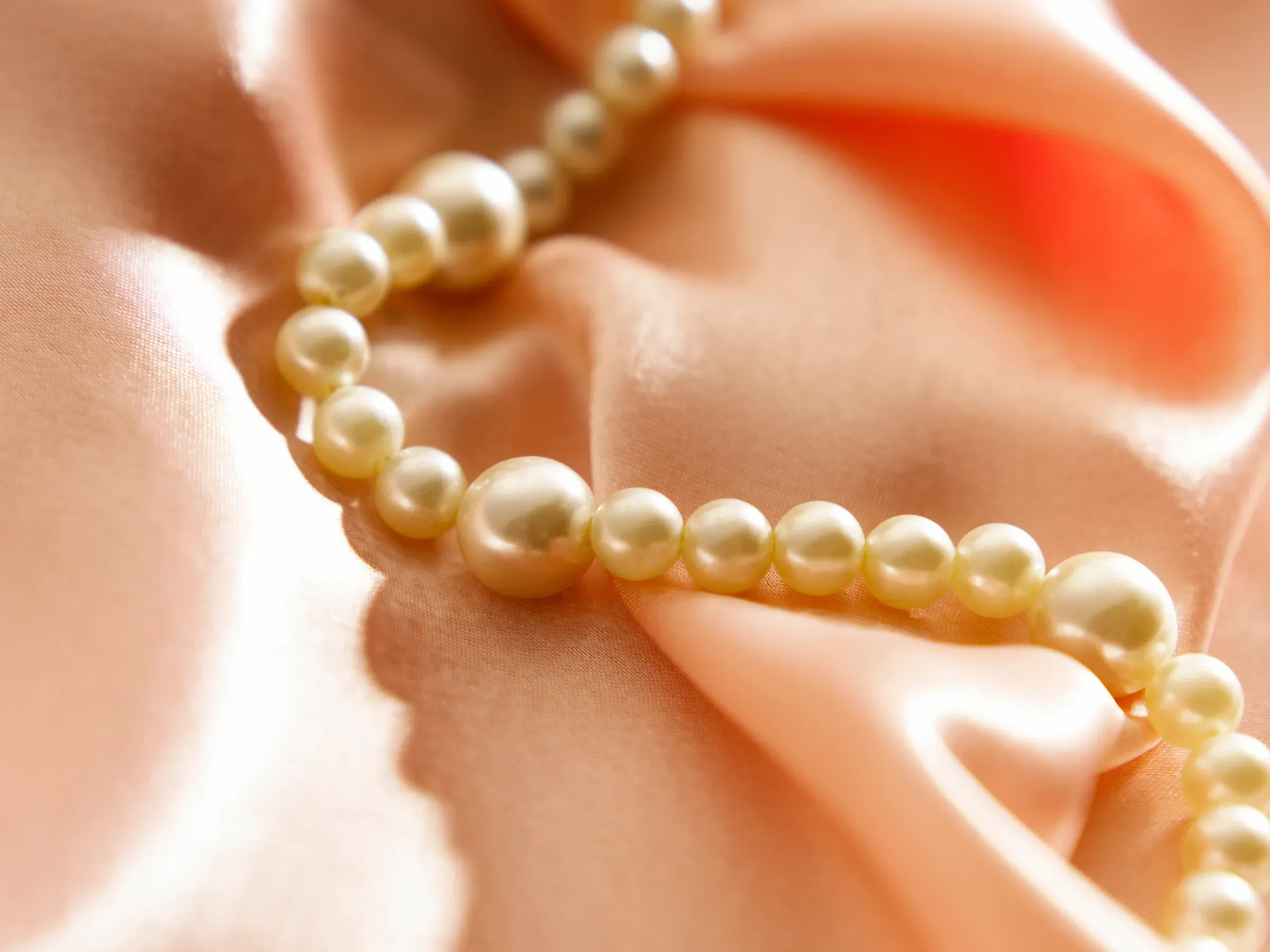
Close up pearl necklace on the satin, pearl jewelry ecommerce
Pearl jewelryGift buyers and self-purchasers across a wide age range, often shopping for a graduation, a wedding party or a milestone birthday, who check the pearl type, the diameter, the surface and luster description, the strand length and whether the piece is hand knotted before they trust a price.

How pearl jewelry makes money

Four levers, and what limits each one here

Revenue is traffic times conversion rate times order value times purchase frequency. In this niche each lever has its own ceiling.

Traffic

Traffic: type, diameter and length carry the demand

Almost nobody searches for pearl jewelry and buys from that first page. They search for a type, a size or a traditional length: akoya pearl necklace, 8mm freshwater studs, princess length strand, Tahitian pendant. Around those sit the education searches that decide who gets trusted, led by how to tell whether pearls are real and what separates freshwater from akoya. Most pearl stores publish one collection called Pearls, sort it by price, and hand every one of those queries to marketplaces and department stores. The traffic work is a catalog organized the way pearls are actually described, with a page for each type, each standard length and each diameter band, and education pages that link into them.

Conversion

Conversion: proving the pearl is what the listing says

A pearl shopper cannot judge luster from a lit product photograph and they know it. So they look for the type stated plainly, the diameter in millimeters, the shape, the surface and nacre description, the clasp metal and whether the strand is knotted. When those are missing they assume the worst, because imitation pearls sit in the same search results at a fraction of the price. The work is to put the whole description on the page as text rather than inside a table image, to show the strand turning under ordinary room light on video, to define the store's own grading scale in words, and to say clearly that the pearls are cultured, which is what nearly every pearl sold today is.

Order value

Order value: the matched set, the extra millimeter, the clasp

Basket size in pearls moves three ways and none of them is a markdown. The first is the matched set, a strand with studs and a bracelet drawn from the same pearls, presented together so the saving reads as a set price rather than a discount on the brand. The second is diameter, since the same strand one millimeter larger is a materially different piece, and showing the sizes side by side on a neck lets a shopper choose up instead of guessing down. The third is the finish, where a longer length or a gold clasp is a small addition on an already large order. All three belong on the product page, not in a follow-up email.

Frequency

Frequency: restringing, the second piece and the next ceremony

Pearls are not a replenishment product, so repeat purchase has to be built from how they are owned. A knotted strand worn regularly needs restringing after a few years, and a store that takes that work by mail turns a one-time gift buyer into a customer with a reason to return and a piece that stays wearable. The second driver is the set finished over time, where a graduation strand is joined by studs at the next birthday. The third is the household calendar, since pearl buyers are usually buying for someone else and the occasion that prompted the order tends to come round again. Capturing that date at checkout is worth more than any monthly newsletter.

Search visibility

Search: pearl types, quality words and the lengths people ask for

Pearl demand is organized by type and by size, so the catalog should be too. Freshwater, akoya, Tahitian and South Sea each deserve a collection with real copy explaining where the pearl is grown, its usual size range and color, and what it costs relative to the others. Underneath sit length pages for the traditional names buyers still use, choker, princess, matinee and opera, and diameter pages for the sizes that actually sell in volume.

The second layer is education, and in pearls it is unusually valuable because the questions are practical and endlessly repeated. How to tell whether pearls are real, what cultured means, whether pearls can get wet, how grading letters work, how to store a strand. These pages earn links, settle the doubt that stops a purchase, and give product pages somewhere to be linked from. Write them to what is actually true, including the honest point that pearl grading scales are set by sellers rather than by one standards body.

The technical work is variant control and image weight. One necklace offered in four lengths and three clasp metals is a single product with variants and a single indexable address, not twelve near-identical pages competing with each other. Strand pages need Product markup that validates and carries size and material, and photography detailed enough to show luster without making the page crawl on a phone.

Queries that matter

  • akoya pearl necklace
  • freshwater vs akoya pearls
  • how to tell if pearls are real
  • tahitian pearl earrings
  • 18 inch pearl necklace length
  • south sea pearl strand
  • graduation pearl necklace gift

Type and length collections with genuine explanation, education pages about testing and grading, and product pages that state diameter, shape, nacre and clasp are what rank in pearls. A single Pearls collection sorted by price, and grade letters offered with no scale to explain them, do not.

AI answers

AI answers: real, cultured, and the right pearl for the occasion

Assistants are asked whether a pearl is real, what cultured means, which type suits a budget and how to look after a strand. Those have factual answers, which is exactly the kind of question an engine will summarize and attribute. A store gets named when its type and care pages state the facts in plain sentences, when the grading scale it uses is defined on the site instead of implied by a letter, when the Organization details say who the seller is and how long they have traded in pearls, and when the same type, size and material data appears on the page, in the structured markup and in the product feed without contradiction.

How can I tell if a pearl necklace is real or imitation?
What is the difference between freshwater and akoya pearls?
Are cultured pearls real pearls?
What length pearl necklace suits a graduation gift?
Can pearls be worn in the shower?

Questions shoppers put to assistants. A store gets named when its pages answer them in plain text.

Google Shopping and Merchant Center

Google Shopping and Merchant Center for graded pearls

Pearl feeds are decided by the attributes that describe the pearl, not by the title alone. Material should name the pearl type, size should carry the diameter in millimeters with the correct unit, and product_detail should hold shape, surface, nacre, luster and whether the strand is hand knotted. Strands assembled in house rarely carry a retail barcode, so identifier_exists is set to false rather than a code being borrowed from somewhere else. Length and clasp variants belong in one item group so a necklace does not compete against itself.

The policy risk here is description rather than category. Describing a cultured pearl as natural is a misrepresentation issue, and nearly every pearl on the market is cultured. Grade letters in a title imply a standard the industry does not share, so the safer approach is to describe luster and surface in words and keep the store's own scale defined on the landing page. Promotional pricing over graduation or the December run has to move in the feed at the same moment it moves on the site.

Campaign structure follows the price bands, which are further apart here than in most jewelry. Freshwater volume runs in one campaign judged on efficiency, Tahitian and South Sea in another judged on contribution, and free listings are watched as a separate line because pearl queries skew toward browsing.

Feed attributes that decide eligibility

  • material naming the pearl type
  • size carrying the pearl diameter in millimeters
  • product_detail for luster, nacre, shape and surface
  • item_group_id across lengths and clasps
  • identifier_exists for strands assembled in house
  • custom_label by pearl type and price band

Disapprovals we see in this niche

  • Cultured pearls described as natural in the title or description
  • Grade letters used where the landing page defines no scale
  • Price mismatch when a graduation promotion runs on the site only
  • Images carrying grade badges or promotional overlays

Meta and social ads

Meta and social ads: luster in real light, and the gift it is for

Pearl creative has one job a still photograph cannot do, which is show luster moving. A strand rotating slowly in daylight, filmed without a ring light, tells a shopper more than any grade letter, and it keeps working because it is the thing they cannot check from a screen. Around it sit the practical films: how to spot an imitation, how a strand is knotted by hand, what three lengths look like on the same neck. This audience responds to plain product footage with the price said out loud, so captions stay short and the type is named on screen.

Audiences start with customers and site visitors, then broad prospecting, because interest targeting for pearls tends to reach people shopping costume jewelry. Gifting periods get their own campaigns with delivery dates in the creative and a hard stop at the shipping cut-off. Any customer photograph or story needs written permission, and any claim in the ad has to match the product page, since the brand carries responsibility for whatever runs in its account.

  • A strand turning slowly in daylight with type and size named on screen
  • How to spot an imitation pearl, demonstrated plainly
  • A strand being knotted between every pearl at the bench
  • Three lengths shown on the same neck with the price of each
  • A restrung heirloom returned to its owner, used with permission

Policy line

Cultured pearls are never described as natural, grading letters never appear in ad copy the landing page does not define, and gifting creative avoids personal attributes that address the viewer as a bride, a mother or a grandmother.

Conversion and the store

The store: what a pearl product page has to settle

Five things decide a pearl order and most templates hide three of them. The type, and whether the pearls are cultured. The diameter and the strand length, shown on a body rather than as a line diagram. The clasp material and how it opens, which matters because a fiddly clasp is the most common reason a piece is never actually worn. The stringing, knotted or not. And the return window, since a piece bought in April for a June ceremony falls outside most policies. Put all five in view on mobile and the questions stop arriving in the inbox.

The second job is the gift path. Pearl orders are usually for someone else, so a gift message, a presentation box option, a delivery date choice and shipping to a third address belong inside the cart rather than in a notes field at the end. On a phone, a sticky bar that carries the length and clasp choice next to the price does more for revenue per session than any redesign of the homepage.

Objections the page must answer

  • “Are these real pearls or imitation, and what does cultured mean”
  • “How long is this strand on someone my height”
  • “Will the clasp be easy to open with stiff hands”
  • “Is the strand knotted between each pearl”
  • “Can I return it if the ceremony is still months away”

Email, SMS and retention

Email and SMS: care on delivery, restringing later, the date next year

Pearl flows follow the way pearls are owned rather than a replenishment clock. The care email arrives with the parcel and carries the rule every pearl owner needs, that pearls go on last and come off first, along with storage away from harder stones and what to keep them clear of. That one email prevents most damage complaints and most disappointed second wearings.

After that the calendar does the work. Ceremony countdowns for graduation and wedding season run against real order-by dates. A restringing note goes out a few years after a knotted strand is bought, which is a service and a reason to open the store again in one message. Occasion capture at checkout lets the birthday and anniversary flows run yearly for the recipient rather than the buyer. SMS stays reserved for order-by dates and dispatch, because this audience is quicker to unsubscribe from promotional texts than from email.

  1. Care and storage

    On delivery, before the first wearing

  2. Ceremony countdown

    Four weeks, two weeks and the final order-by date

  3. Complete the set

    Six to ten weeks after a first strand order

  4. Restringing service

    Two to three years after a knotted strand

  5. Occasion reminder

    Three weeks before the captured date, every year

Where revenue leaks

The leaks we find in pearl jewelry stores

The Growth Analysis ranks these against your own numbers and says which to close first.

Get a Growth Analysis for your pearl jewelry brand
  • Grade letters with no scale behind them

    The listing says AAA and the site never explains what AAA means here. Shoppers who look it up discover pearl grading is not standardized, and the claim costs more trust than it earns.

  • The word cultured written nowhere

    The page avoids it, so a cautious buyer assumes either that the pearls are imitation or that the store is implying they are natural. Both readings lose the order.

  • A separate product for every length

    The same necklace published as four products for four lengths splits the ranking signals, duplicates the feed, and asks the shopper to choose between listings that look identical.

  • Luster shown only under studio lights

    Every image is lit to make the pearls glow, so the strand looks flatter at home than on screen, and the return arrives worded as a complaint about color.

  • Gift orders with no delivery date control

    A piece bought for a ceremony arrives whenever the carrier arrives, and the support cost of that lands in the two weeks when the store has the least time to absorb it.

Platform notes

Where the platform changes the work

Shopify

Pearl type, diameter, shape, nacre and clasp live in metafields so they render on the product page, feed the structured data and map into product_detail instead of being buried in a description. Length and clasp are variants of one product, and restringing is sold as its own product with its own shipping profile.

WooCommerce

Global attributes for type, diameter and length power the filters and the attribute archives that can be set to index, which is how type and length pages get built without hand-making dozens of collections. The feed plugin has to map those attributes rather than flattening them into the description.

BigCommerce

Custom fields hold the grading language and clasp detail, and faceted search needs canonical rules so length and clasp combinations do not multiply in the index.

Questions

Pearl jewelry owners ask us

By CartKernel · Last reviewed

Should we publish the grading letters we use on our pearls?

Only alongside a page that defines them. Pearl grading is set by sellers rather than by one standards body, so a letter on its own reads as marketing to anyone who checks. Explain what your scale measures, luster, surface, matching, shape and nacre thickness, then describe each piece in those same words. Buyers trust the description far more than the letter.

Do we have to say our pearls are cultured?

Yes, and it helps rather than hurts. Nearly every pearl sold today is cultured, and saying so plainly separates you from listings that leave the question hanging. It also keeps the feed and the ad account clear of misrepresentation problems, since calling a cultured pearl natural is a claim that cannot be supported. Explain what culturing is on the page and the objection disappears.

How can a specialist compete for pearl searches against department stores?

By being more specific than a generalist can be. A large retailer lists pearls by price and color. A specialist can hold a page for each pearl type, each traditional length and each diameter band, with genuine explanation and inventory behind it. Those pages match how people actually search, and they collect the education queries too, which is where most pearl buyers begin.

How should pearls be photographed for the feed and for ads?

Shoot the main feed image on plain white with no props or overlays so it clears review, then shoot a second set on skin in daylight for the product page and the ads. Add a short video of the strand rotating. Luster is movement, and no still image carries it, which is why that video usually outperforms every other asset in the account.

Is it worth offering restringing and repair through the site?

Usually. Knotted strands worn regularly need restringing over time, and taking that work by mail gives a one-time gift buyer a reason to come back and gives the store a reason to email them. Sell it as a product with its own page and posting instructions, and it will also collect search demand from people who bought their strand elsewhere.

When should pearl gifting campaigns start?

Earlier than most stores plan for. Graduation buying opens weeks ahead of ceremonies, wedding party orders are placed months out, and the December run begins before the first holiday sale lands. We set the order-by dates first, work backward to a campaign start, and put those dates in the ads, the emails and the product pages so nothing promises what shipping cannot deliver.

Grow your pearl jewelry store.

A free Growth Analysis ranks what your store should fix first, by revenue at stake, in about a week.