Skip to content

Sports & outdoors · ecommerce growth

Ski and snowboard marketing agency

A snow season is short, weather dependent and unforgiving of a store that was not ready in August. Skis are sized by height, weight and ability, boards by rider weight and boot size, boots by a fit process most shoppers assume cannot happen online, and bindings carry a mounting and setting question that a website has to address honestly. We build snow stores for that compressed year: sizing and mounting answered before the cart, a pre-season that opens well before the first snowfall, oversize shipping that does not lose money, and a clearance plan made in advance rather than in March.

The buyer, in brief

Consideration
Weeks in early season while comparing models, then hours once snow is forecast and the trip is booked
Purchase frequency
Skis and boards every few seasons, boots more often, with outerwear, tuning supplies and accessories bought every year
Seasonality
Brutally short. Pre-season buying from late summer, a surge with the first significant snowfall, a peak through the holidays, then a steep decline into a clearance window in late winter
Price band
High for hardgoods, with the same customer buying a wax kit and a full setup in the same season
Return risk
Concentrated in boots and in sizing errors on hardgoods, and expensive because skis and boards ship oversize in both directions
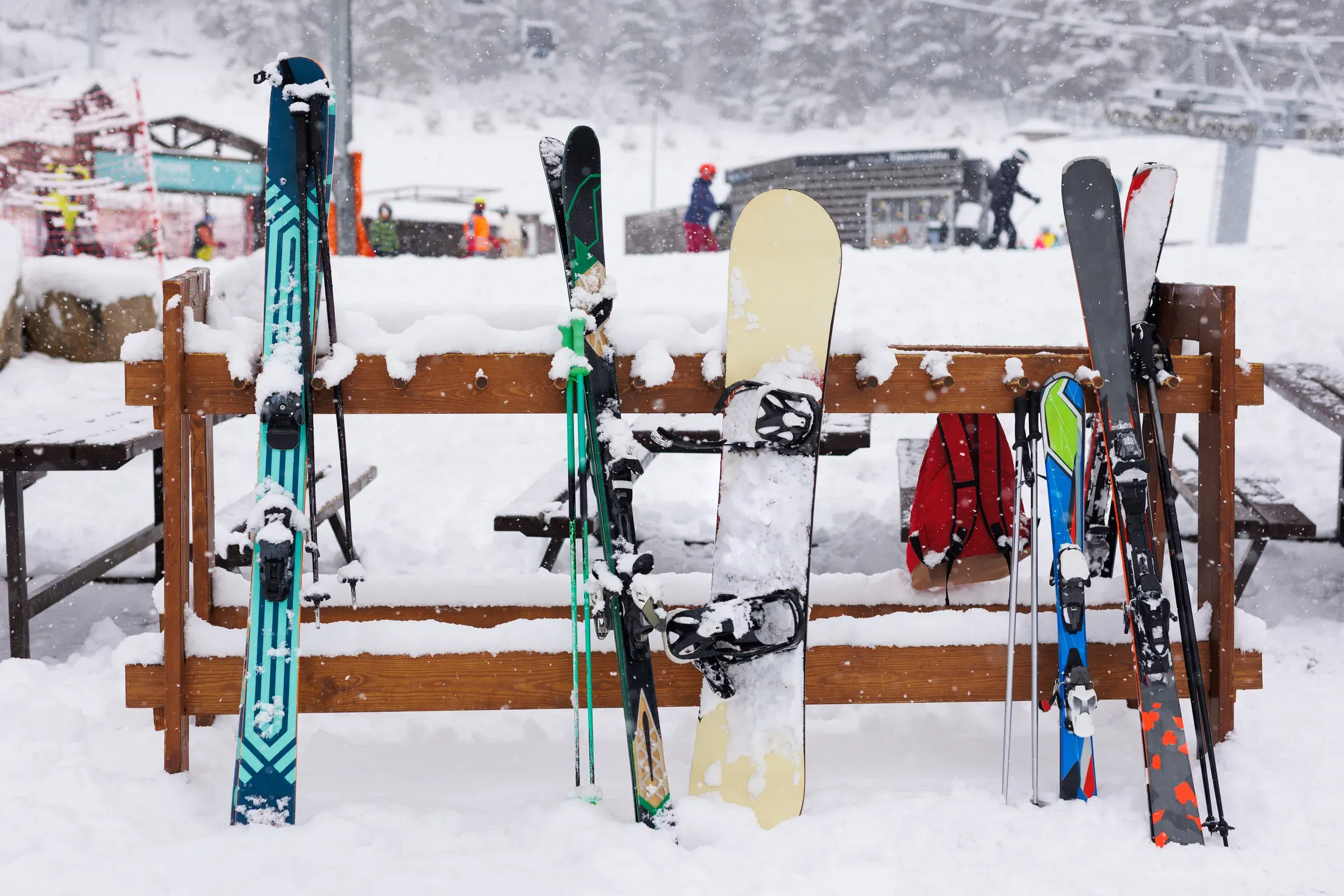
Skis, ski poles and snowboards are fully equipped on snow-covered mountain top during the ski season, ski & snowboard ecommerce
Ski & snowboardRiders and skiers replacing gear or moving up from rentals, who size by height, weight and ability, know their boot sole length, ask how bindings will be mounted and set, and check whether last season's model is the same ski before they pay a lower price for it.

How ski & snowboard makes money

Four levers, and what limits each one here

Revenue is traffic times conversion rate times order value times purchase frequency. In this niche each lever has its own ceiling.

Traffic

Traffic: length, ability and the model that changed graphics

The searches that convert are sizing questions and model questions. What length ski for a person of a given height, weight and ability. What board width for a given boot size. Whether this season's version of a model is actually different from last season's or only the topsheet. Those questions are asked constantly and answered mostly by forums. A store that publishes a proper sizing framework, and a page per model that survives from one season to the next carrying the changes each year, captures both the researcher in September and the person comparing last season's price in January. Terrain and conditions searches sit alongside them, since people shop by where they ride rather than by category.

Conversion

Conversion: boots, bindings and what happens after it ships

Two objections stop online snow sales. The first is boot fit, which shoppers rightly believe needs a bootfitter, and the honest answer is a combination of detailed last and volume information, a shell fit method explained clearly, a generous fit exchange and a plain statement about which fits are best done in person. The second is bindings, where the questions are whether the store will mount them, whether the ski and binding combination can be mounted at all, and what the setting will be. Answering that on the page, including where the store will decline to mount a combination it should not, converts better than silence and prevents the returns that silence produces.

Order value

Order value: the setup, the mount and the maintenance kit

Snow gear is bought as a system and a store that sells one part of it is leaving most of the order on the table. A ski without bindings is unusable, a board without bindings is a decoration, and both need boots. Presenting complete setups with the mounting service included, priced so the package is obviously simpler than assembling it piece by piece, raises the average order substantially and reduces the compatibility errors that cause returns. Beyond the setup, the accessory list is long and genuinely needed: wax, edge tools, straps, goggles with a spare lens for flat light, a bag that fits the length bought. Sold on the product page rather than in a follow-up, they attach at a high rate.

Frequency

Frequency: one short window and a long summer

The challenge is not repeat purchase, it is the eight months when nobody is thinking about snow. Hardgoods turn over slowly, but boots, outerwear, goggles, wax and tuning supplies do not, and a store that stays in contact through spring and summer with tuning content, storage advice and early pre-season access starts each season with an audience already warmed rather than reacquiring it. The other lever is the trip. People buy gear because they have booked something, so a customer who mentions a destination or a trip date is telling you when they will spend, and that is worth far more than knowing what they bought last year.

Search visibility

Search: sizing frameworks, model pages that survive the season change, and terrain guides

Sizing is the foundation and it needs to be more than a chart. Explain how height, weight, ability and terrain interact for ski length, how boot sole length and board waist width relate, how a shell fit is performed and what flex ratings mean in practice. These pages are searched all year, they earn links, and they are the reason a shopper trusts a store enough to buy a hardgood without touching it.

Model pages are the second build and the structural decision that matters most. A ski or board that returns each season with minor changes should keep one page that carries its history, noting what changed each year, rather than a new page every autumn that starts from nothing. That page then serves both the person buying this season's version and the far larger group looking for last season's at a lower price, which is a substantial share of all snow demand.

The third layer is terrain and conditions, written for how people actually describe their riding. Powder, groomers, ice, park, backcountry, resort. Add trip content for the destinations your customers visit and the calendar becomes a content plan. Technically, oversize items need their shipping surfaced early, sizes belong to one product, and clearance pages should be planned and built before the season rather than assembled in a panic in February.

Queries that matter

  • what length skis for a 5 foot 10 intermediate
  • snowboard width for size 11 boots
  • how to shell fit ski boots at home
  • is last season's version of this ski the same
  • all mountain skis for icy east coast conditions
  • can you mount bindings on skis bought online
  • beginner snowboard package with bindings

Sizing frameworks that explain the interaction rather than showing a chart, model pages that carry several seasons of changes, and honest terrain guides rank here. A Skis collection filtered by length, and a new page for every model year, do not.

AI answers

AI answers: what length, what width, and can it be mounted

Assistants field the same questions every autumn: what ski length suits a rider of a certain height and ability, which board width a boot size needs, whether boots can be fitted without a shop, whether a store will mount bindings bought online and what a setting depends on. These have real answers with real safety implications, so accuracy matters and hedging is appropriate where a professional should be involved. Stores get cited when they publish the reasoning rather than a number, name the factors that change the answer, and say clearly which parts of the process should be handled by a qualified technician. That honesty reads as expertise and is also simply correct.

What length skis should I buy for my height and ability?
What snowboard waist width do I need for my boot size?
Can ski boots be fitted properly without visiting a shop?
Will a shop mount bindings on skis bought from another store?
Is last season's model of a ski different from this season's?

Questions shoppers put to assistants. A store gets named when its pages answer them in plain text.

Google Shopping and Merchant Center

Merchant Center for a short season and an oversize catalog

Two structural problems dominate. The first is shipping, since skis, boards and poles exceed normal parcel dimensions and attract length surcharges that a standard weight-based rate will not capture. Those rates have to be built per item and reflected in the feed, or the store discovers the gap on the carrier invoice and the shopper discovers it at checkout, which is also a shipping mismatch.

The second is the season change. Every autumn, model years turn over while last season's stock is still selling, and the feed has to keep both straight. Product_detail should carry the model year, the length, the flex and the terrain the item suits, and item groups should hold the lengths of one model rather than publishing each as a separate product. Sale pricing during the late-season clearance needs effective dates set, because that window involves frequent price changes and it is where mismatches cluster.

Availability deserves particular attention because size-level stock disappears quickly in a category this seasonal, and a popular length selling out during a snowfall week is the single most common source of wasted spend. Where bindings and skis are sold as a package that requires mounting, the listing should make the service and its lead time visible rather than leaving a buyer to discover it after paying.

Feed attributes that decide eligibility

  • shipping configured per item for oversize length surcharges
  • product_detail for model year, length, flex and terrain
  • item_group_id holding every length of one model
  • size and size_system for boots and outerwear
  • gtin per length and size
  • sale_price with effective dates through the clearance window
  • custom_label for model year and season stage

Disapprovals we see in this niche

  • Parcel rates on skis and boards that carry a length surcharge
  • Size and length availability mismatch during a snowfall week
  • Previous model year listed under the current year's title
  • Sale pricing that ends on the site before it ends in the feed

Meta and social ads

Meta and social: the first turns, the shell fit and the storm

Snow creative has a rhythm that follows the season. Late summer is for pre-season access and gear planning. Autumn is for education, and the shell fit demonstration is the single most useful video a snow store can make because it converts the objection that keeps boots out of carts. Winter is reactive, and a storm is a reason to post the same day rather than a week later. Spring is clearance, told honestly as last season's gear rather than dressed up as an event.

Policy limits are modest but real. Any footage in avalanche terrain or in the backcountry has to model correct practice, since creative showing riders without safety equipment attracts serious criticism and does damage no ad budget repairs. Safety and protection claims for helmets and armor stay within the certification the product carries. Manufacturer names and imagery follow whatever the dealer agreement allows. Customer footage is abundant in this sport and needs written rights before it appears in the brand account.

  • A shell fit performed on camera with the liner out and the measurement explained
  • The same ski ridden on hardpack and in soft snow in one clip
  • Bindings mounted on the bench with the setting explained by the technician
  • A storm day filmed the morning it happens rather than a week later
  • Last season's model and this season's held side by side with the changes named

Policy line

Backcountry and avalanche terrain footage must show correct safety practice, protection claims limited to the certification the product carries, manufacturer imagery used within the dealer agreement, and written rights secured for customer footage.

Conversion and the store

The store: sizing, mounting and a delivery date before the trip

Lead the hardgood page with the sizing logic rather than a chart, and let the shopper enter height, weight, ability and boot size to get a recommended length with the reasoning shown. Then answer the binding question in full: whether the store mounts, what it costs, how long it adds, what setting information is needed and where the store will decline a combination for safety reasons. Saying no in the right places builds more trust than an unqualified yes.

Boots need their own treatment. Publish last shape and volume, explain the shell fit method, offer a fit exchange that survives a first day indoors on a carpet, and be direct that some feet are better served in person. Then handle the deadline, because most snow purchases are attached to a trip. Show the delivery estimate including the mounting time, and put a visible cutoff before holiday weeks. On mobile, the size selector, the mounting option and the delivery date all belong above the fold together.

Objections the page must answer

  • “What length and width do I actually need”
  • “Will you mount the bindings and what will the setting be”
  • “Can I get boots to fit without visiting a bootfitter”
  • “Is this last season's model and what changed”
  • “Will it arrive before my trip with the mounting done”

Email, SMS and retention

Email and SMS: pre-season in August, storms in January, storage in April

The season is short, so the list has to be kept warm through the long part of the year when nobody is buying. Spring is for tuning and storage content, which is genuinely useful and keeps the store present. Late summer is when the money starts, and early access to pre-season pricing is the offer this audience actually responds to, well before any snow falls.

Once the season opens, timing beats content. A storm in a region is a reason to send that day, and it is the one moment SMS is welcome in this category. Trip dates are the other trigger worth collecting, since a customer with a booked trip has a deadline you can work backward from for mounting and delivery. Post-purchase, a setup and first-day message reduces the returns caused by a binding setting or a boot problem discovered on a chairlift. And clearance is planned as a sequence from late winter rather than fired off as a single panic discount in March.

  1. Pre-season early access

    Late summer, before the first snow reports

  2. Setup and first day

    On delivery, covering settings and boot break-in

  3. Storm alert by region

    The day significant snowfall is forecast locally

  4. Trip countdown

    Worked backward from a booked trip date, allowing for mounting

  5. Spring tuning and storage

    Within two weeks of the local season ending

  6. Clearance sequence

    Staged across late winter rather than sent once

Where revenue leaks

The leaks we find in ski & snowboard stores

The Growth Analysis ranks these against your own numbers and says which to close first.

Get a Growth Analysis for your snow sports store
  • A new page for every model year

    Each autumn the catalog replaces pages that had finally started ranking, so the store restarts its search history annually and hands the last season searches to everyone else.

  • Length surcharges absorbed silently

    Skis and boards ship at a parcel rate that no carrier honors for those dimensions, and the difference only becomes visible on the invoice at the end of the busiest month of the year.

  • The mounting question left unanswered

    The page says nothing about whether bindings will be mounted or how, so a shopper who does not want to solve that themselves buys where it is offered as part of the package.

  • Pre-season spending that starts with the first storm

    By the time snow falls, every competitor is bidding on the same terms and the cheapest weeks of the year have already passed unused.

  • Clearance improvised in March

    With no plan, the discount goes deeper than it needed to, the feed lags the site through repeated price changes, and margin that could have been protected disappears in three weeks.

Platform notes

Where the platform changes the work

Shopify

Lengths belong to one product with per-item shipping profiles carrying oversize surcharges, and mounting is best sold as a service product tied to the ski and binding in the same order so the workshop sees it. Model year should live in a metafield rather than in the title, so one page can carry several seasons without being rewritten.

WooCommerce

Table rate shipping needs dimension-aware rules for skis, boards and poles, and global attributes for length, terrain and ability build both the filters and the indexable archives. Add-on fields collect boot sole length and rider weight at checkout, which the workshop needs before it can mount anything.

BigCommerce

Variant rules handle price differences between lengths without duplicating products, and product option rules attach the mounting service and its lead time. Shipping zones need per-item oversize surcharges so a wax kit and a pair of skis are never quoted from the same rule.

Questions

Ski & snowboard owners ask us

By CartKernel · Last reviewed

How should model year changes be handled on product pages?

Keep one page per model and let it carry its history, noting what changed each season. Creating a new page every autumn discards whatever search authority the previous one built and leaves the large last season market unserved. A single page that explains this year's version and links to remaining stock of the previous one serves both buyers from one address.

Can ski and snowboard boots realistically be sold online?

Yes, with the right support and honest limits. Publish last shape and volume, explain the shell fit method with video, size by measurement rather than street shoe size, and offer an exchange that allows indoor try-on. Also say plainly which feet and which issues are better handled by a bootfitter in person, because that honesty earns more orders than it costs.

Should a store offer binding mounting on online orders?

Where it is set up to do so safely, yes, and it should be a clearly priced option with a stated lead time. It raises order value, reduces compatibility errors and removes the objection that sends the sale to a local shop. Where a particular combination should not be mounted, say so on the page rather than accepting the order and dealing with it afterward.

When should a snow store start its season campaigns?

Late summer, weeks before any snow appears in a forecast. Pre-season traffic is the cheapest of the year and the buyers are the most considered. Waiting for the first storm means competing for the same clicks at the highest cost of the season, with less time to recover if the weather is poor.

How do you plan an end-of-season clearance?

Before the season starts, not in February. Decide the stages, the dates and the depth in advance, build the clearance pages early so they have time to rank, and set sale effective dates in the feed so prices never disagree with the site. An improvised clearance always discounts deeper than a planned one and does it during the weeks when attention is lowest.

How do you keep customers engaged through the off season?

With content that is useful when there is no snow: tuning, storage, repair, trip planning and early access to pre-season pricing. The list you keep warm through summer is the list that buys in September at a lower acquisition cost. Collecting trip dates is the other high-value habit, because a booked trip is a purchase deadline you can plan around.

Grow your ski & snowboard store.

A free Growth Analysis ranks what your store should fix first, by revenue at stake, in about a week.