Skip to content

Automotive & powersports · ecommerce growth

Car detailing brand marketing agency

Detailing is bought by people learning a process. They watch someone remove a swirl mark, they want the same result on their own paint, and the product they buy is whichever one the method called for. That makes technique content the storefront and the bottle almost incidental. We build the how-to library that owns those searches, the coverage and dilution information that makes a concentrate look like value rather than a risk, and the refill rhythm that turns a first kit into a standing order.

The buyer, in brief

Consideration
Minutes for a repurchase, longer for a first coating or polishing system where technique and risk are being weighed
Purchase frequency
Consumables run out on a wash cadence, so a committed owner reorders several times a year and a working detailer reorders monthly
Seasonality
Spring cleaning after winter, a summer peak around shows and warm weekends, autumn protection before the salt, and gifting in December
Price band
Low to mid per bottle, considerably higher for machine polishers, coating kits and professional volumes
Return risk
Low, since most products are opened and consumed, which puts the pressure on describing results accurately before the sale
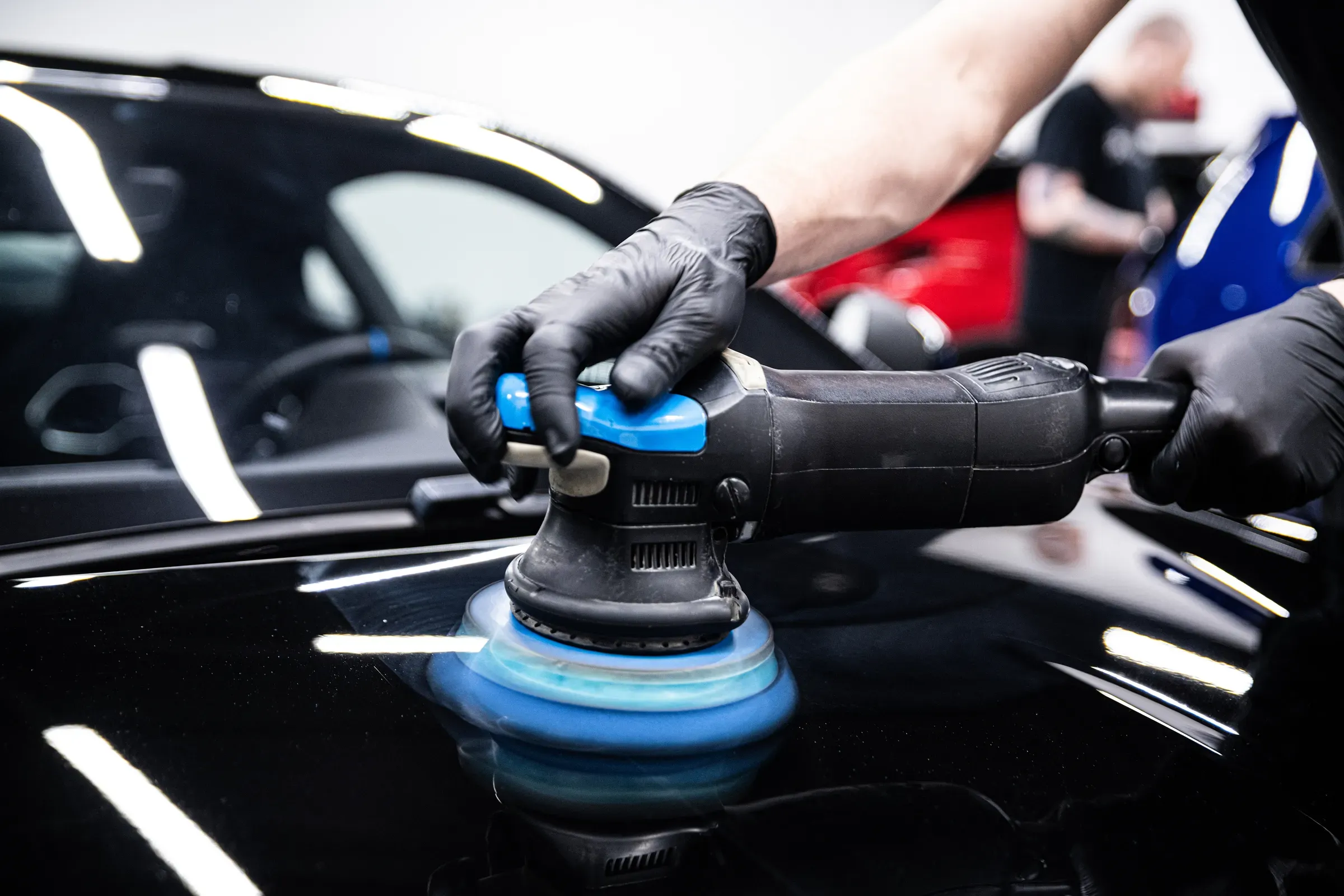
Mechanic wearing black gloves polishing car paint with a machine in a detailing studio, car detailing products ecommerce
Car detailing productsEnthusiast owners who care about their paint and increasingly mobile detailers running small businesses, both of whom judge a product by the process it belongs to and by results they can see in daylight rather than in a studio.

How car detailing products makes money

Four levers, and what limits each one here

Revenue is traffic times conversion rate times order value times purchase frequency. In this niche each lever has its own ceiling.

Traffic

Traffic: people search the mark on the paint, not the chemical

Almost nobody wakes up wanting to buy an iron remover. They notice orange specks on white paint, or water spots that will not wipe off, or a haze under the streetlight, and they search a description of what they can see. Detailing brands that publish a proper library of those problems, each page explaining what causes the mark, how to identify it, the safe sequence for removing it and what prevents it coming back, capture the entire top of this category. The products appear inside the method where they belong. Competing on product category terms alone means bidding against every general retailer, while the problem pages face far less competition and bring readers who are ready to act.

Conversion

Conversion: dilution ratios and coverage turn price into value

A shopper comparing two bottles cannot see which is better value unless the store does the arithmetic. A concentrate at a higher price that dilutes many times over is cheaper per wash than a ready-to-use product, but only a customer who already knows the category works that out. Stating the dilution ratios for each use, the approximate coverage per bottle and the cost per application removes the main objection to premium pricing. Alongside that, conversion depends on honest expectations: what the product will do on neglected paint, what it will not do, and where a machine and more time are genuinely required. Photographs taken in daylight rather than under a light designed to flatter matter more than any claim.

Order value

Order value: sell the process, and give it somewhere to live

A detailing job needs several products, applicators, towels and something to put them in, and a customer following a method will buy the whole list if the store presents it as one. Kits assembled around a job, such as a first full decontamination or a two-stage correction, outperform a generic bundle discount because they are what the reader was already assembling manually. Machine polishers, pads and lighting raise the ceiling further for buyers stepping up. Towels and applicators are the quiet contributor: they are consumed constantly, they attach to almost any order, and most stores treat them as an afterthought rather than as the second item in every basket.

Frequency

Frequency: consumables are the whole business model

This is one of the few automotive niches with genuine replenishment economics. A shampoo, a drying aid and a spray sealant get used on a schedule, and the customer will buy them again from somebody. Reorder timing can be estimated from the size purchased and the wash frequency the customer describes, which makes a reminder useful rather than intrusive. Larger refill sizes for products someone has already committed to raise both retention and margin. Working detailers behave differently and should be handled as an account, with volume pricing, standing orders and availability commitments, because their reorder cycle is measured in weeks and their loyalty follows reliability rather than promotions.

Search visibility

Search: defects, techniques and the product comparison

The defect library is the foundation. One page per visible problem, written the way an owner would describe it, explaining what it is, how to confirm it, the safe removal sequence and the prevention. These pages rank because they answer a specific question and because they are genuinely difficult to fake, and they bring readers at the exact moment they are ready to buy the products the method requires.

Technique guides sit above them. How to wash without adding swirls, how to decontaminate paint, how to prepare a surface for a coating, how to use a dual action polisher without causing damage. Written with real photographs and honest warnings, these become the pages a whole community links to, and they support the product pages beneath them with internal links and context. Video is a natural companion here, and the page should carry the written method as well as the embed so search engines and assistants have something to read.

Comparison content converts unusually well in this category because the differences are technical and confusing. Ceramic coating versus sealant versus wax, foam cannon versus pump sprayer, cutting compound versus polish, and which machine suits a beginner. Honest answers that recommend the cheaper option where it is right build the credibility that makes the expensive recommendation believable later. Technically, keeping the guides linked into the catalog rather than isolated in a blog is the main structural task.

Queries that matter

  • how to remove water spots from car paint
  • what causes swirl marks
  • ceramic coating vs sealant
  • best beginner dual action polisher
  • iron fallout remover how to use
  • two bucket wash method
  • car shampoo dilution ratio

Defect pages, technique guides with real photography and honest product comparisons rank in this niche. Product pages that only list ingredients or a marketing paragraph, and category grids without method content, do not.

AI answers

AI answers: process questions with a right order of operations

Detailing questions suit assistants unusually well because most have a correct sequence: decontaminate before polishing, polish before protecting, never dry-wipe a dusty panel. Owners ask what order to do things in, whether a product is safe on a particular surface, and what to use for a specific mark. Stores become citable by publishing those sequences as written steps rather than only as video, by stating surface compatibility and dilution in text, and by being clear about what needs a machine. We write the technique library answer-first, keep safety notes accurate for acids, solvents and coatings, and make sure the product data agrees with what the guides recommend.

What order should I do a full detail in?
Is this product safe on matte paint or plastic trim?
What dilution should I use for a maintenance wash?
Do I need a machine to remove light swirls?
How long does a ceramic coating realistically last?

Questions shoppers put to assistants. A store gets named when its pages answer them in plain text.

Google Shopping and Merchant Center

Shopping feeds, chemical shipping and honest claims

Two things separate a detailing feed from an ordinary consumables feed. The first is that a meaningful share of the catalog is regulated for transport. Aerosols, flammable solvents and some acids carry shipping restrictions, which means ground-only handling, carrier limitations and sometimes regions that cannot be served at all. Those restrictions belong in the shipping configuration and, where relevant, in the product data, because promising a delivery that a carrier will refuse produces both a disapproval and a cancelled order.

The second is claim discipline. Durability statements about coatings and sealants are the most common source of trouble, since a figure that cannot be substantiated reads as a misrepresentation rather than as marketing. Describing the chemistry, the application method and the maintenance requirement is both more accurate and more persuasive to an audience that has heard every claim already. Size and volume attributes matter more here than in most categories because the same product sells in several bottle sizes, and item grouping keeps them together rather than competing.

Campaigns follow margin and reorder value. Entry products that begin a relationship can accept a thinner return because the reorder rate is high, kits and machines are bid to their order value, and professional volumes justify their own campaign aimed at a different buyer entirely.

Feed attributes that decide eligibility

  • size and unit_pricing_measure for volume
  • item_group_id for bottle sizes of one product
  • gtin for branded consumables
  • product_detail for dilution ratio and coverage
  • product_detail for surface compatibility
  • shipping_label for ground-only and restricted items
  • custom_label for entry, kit and professional volume

Disapprovals we see in this niche

  • Durability claims on coatings that cannot be substantiated
  • Restricted chemicals offered into regions a carrier will not serve
  • Missing volume attributes so the same product competes with itself
  • Before and after images with heavy editing that misrepresents the result

Meta and social ads

Meta and social: the result has to be filmed, not described

Detailing is the most naturally social category in this industry because the transformation is visible and immediate. Short clips of a panel changing under a light, a foam cannon covering a car, contamination lifting out of paint, and a machine pass revealing gloss all perform without any need for a hard offer. The audience is used to seeing this footage from creators, so the production standard is set by hobbyists with good lighting rather than by studios.

What matters is honesty about conditions. Footage shot under a light that flatters, or edited to exaggerate a correction, damages a brand quickly in a community that films the same processes daily. Creator partnerships carry this category more effectively than brand-produced content, and agreements should cover what may be claimed about durability and results, not only usage rights. Audiences build well from customers, from lookalikes of repeat buyers rather than first-time buyers, and from the communities around specific vehicles and show culture. Working detailers are a separate audience with entirely different creative needs.

  • A single panel corrected in one continuous shot with the light visible
  • Contamination lifting during a decontamination stage, filmed close
  • The same car before and after, shot in daylight without editing tricks
  • A beginner using a machine polisher for the first time with guidance
  • A working detailer explaining what they use daily and why
  • Water behaviour on a protected panel weeks after application

Policy line

Keep durability and protection claims to what can be substantiated, avoid editing that misrepresents a result, and make sure creators are held to the same claim standards as the brand.

Conversion and the store

The store: the method on the page and the maths in the open

A detailing product page has an unusual job because the buyer is often mid-method. It should say what stage of the process the product belongs to, what comes before and after it, the dilution for each use, the approximate coverage, the surfaces it is safe on and the ones it is not, and what result is realistic on paint in average condition. Linking directly to the technique guide that uses it keeps the reader in the process rather than sending them back to search.

Kits should be presented as a job rather than as a discount, with the reason each item is included stated in a line. On mobile, dilution information needs to be readable in a garage with wet hands, which means a simple table near the top rather than a paragraph at the bottom. Reorder should be effortless: a visible repurchase path from the account, larger refill sizes offered on the product page of the size someone already bought, and a subscription option placed after the first successful use rather than in front of a first-time buyer who does not yet know whether they like it.

Objections the page must answer

  • “Will this actually fix the mark I can see on my paint”
  • “How much do I get and how far does it go”
  • “Is it safe on my trim, wheels or matte finish”
  • “Do I need a machine or will hand application work”
  • “What do I need to buy alongside it to finish the job”
  • “How long will the protection realistically last”

Email, SMS and retention

Email and SMS: the wash cadence, the refill and the trade account

Replenishment is the core of this programme and it works when the timing is estimated rather than guessed. A five hundred millilitre shampoo used fortnightly runs out on a fairly predictable schedule, and a reminder that arrives just before that point, offering the larger refill size, converts far better than a monthly newsletter. Asking how often somebody washes at the first order makes the estimate accurate.

The education flow does the other half of the work. A new customer who has bought a first kit needs the method, in order, spread over a few weeks, because a good result makes them a customer for years and a poor one makes them assume the product failed. Seasonal sequences fit naturally: decontamination and correction as spring arrives, protection before winter salt, and interior care in the weeks when nobody wants to work outside. Working detailers need a separate list entirely, with volume availability, standing order options and restock notices rather than technique content they already know. SMS suits restock alerts and short seasonal windows.

  1. Method series after a first kit

    Sequenced over the three weeks after delivery

  2. Refill reminder by size and cadence

    Estimated from bottle size and stated wash frequency

  3. Spring correction sequence

    As washing weather returns, focused on decontamination

  4. Pre-winter protection

    Before road treatment begins in the customer's region

  5. Trade account restock

    Monthly for working detailers, built from order history

  6. Step up to a machine

    After repeat purchases of hand-applied correction products

Where revenue leaks

The leaks we find in car detailing products stores

The Growth Analysis ranks these against your own numbers and says which to close first.

Get a Growth Analysis for your detailing brand
  • Guides that stop before the shopping list

    A detailed method is published and never names the products or quantities it requires, so a reader who has decided to do the job has to work out what to buy and often buys elsewhere.

  • Dilution and coverage left off the page

    A concentrate looks expensive next to a ready-to-use rival because nothing on the page shows how many washes it makes. The better product loses on a comparison that was never fairly presented.

  • Restricted chemicals sold into regions carriers refuse

    The order is taken, the carrier declines the shipment and the customer is refunded a week later, having already formed an opinion about the store.

  • Refill sizes hidden behind a separate product

    Somebody who has finished a bottle is shown the same bottle again rather than the larger refill, which costs the store both margin and the retention that a bigger commitment brings.

  • Acquisition judged on the first small basket

    Paid campaigns look unprofitable because a first order is a single bottle, and the reorder revenue that makes the channel work is never brought into the calculation.

Platform notes

Where the platform changes the work

Shopify

Bottle sizes belong as variants of one product with unit pricing set so value comparisons are visible, and subscriptions suit consumables once a customer has bought twice. Kits need a bundling approach that decrements the individual components so stock stays honest.

WooCommerce

Variable products handle sizes well, and shipping classes are essential for separating restricted chemicals from ordinary parcels. Guide content should live in the same navigation as the shop rather than in a detached blog.

BigCommerce

Price lists suit a store selling to both enthusiasts and working detailers from one catalog, and product rules can express size and scent options without cloning products.

Questions

Car detailing products owners ask us

By CartKernel · Last reviewed

How do you ship products with transport restrictions?

By configuring them properly rather than hoping. Restricted items need their own shipping classes, ground-only handling where required, region exclusions where a carrier will not serve, and clear labelling in the checkout so nobody is surprised. It is worth reviewing this against current carrier rules regularly, since the classifications and the surcharges do change.

Should a detailing brand sell subscriptions?

For genuine consumables, yes, but offered after a customer has bought at least twice rather than on a first visit. Somebody who has not used the product yet cannot commit to receiving it repeatedly. Offering the larger refill size at the point of reorder often works better than a subscription and carries less churn risk.

How much can we claim about coating durability?

As much as you can support with testing or the manufacturer's own data, stated with the maintenance conditions attached. Durability depends heavily on preparation, climate and washing habits, and saying so is more credible than a bare figure. Unsupported longevity claims are a common cause of both feed problems and customer disputes in this category.

Is it worth working with detailing creators?

Usually, because the format they already make is exactly the format that sells these products. The agreement should cover what can be claimed as well as image rights, since the brand carries responsibility for statements in its own ad account. Long relationships with a small number of creators tend to outperform a wide spread of one-off posts.

How do you serve hobbyists and professional detailers from one store?

With separate paths rather than a single averaged experience. Professionals need volume sizes, account pricing, reliable stock and fast reordering; enthusiasts need method content and smaller sizes. That can be two customer groups on one storefront, but the pricing, the email programme and often the navigation need to differ, otherwise both audiences see something written for the other.

Why does our paid traffic look unprofitable when repeat rates are strong?

Because the measurement stops at the first order. In a consumables category with a high reorder rate, judging acquisition on a single small basket will always underrate it. We measure contribution across a customer's first several orders, reconciled to platform data, and set bidding against that figure rather than against the first transaction alone.

Grow your car detailing products store.

A free Growth Analysis ranks what your store should fix first, by revenue at stake, in about a week.