Skip to content

Automotive & powersports · ecommerce growth

Golf cart parts marketing agency

Half the work in this niche happens before a part is chosen, because the owner often does not know exactly what they have. Carts change hands with badges missing, bodies swapped and no paperwork, and the same manufacturer built several very different models in the same years. A store that helps someone identify their cart first has already won the order. We build that identification layer, the model-level catalog behind it, and the logistics to move batteries and body panels without losing money.

The buyer, in brief

Consideration
Quick for a known consumable, longer for batteries, controllers and lift kits where the model must be confirmed first
Purchase frequency
Steady maintenance across the year with a battery replacement cycle measured in years and a burst of accessory buying after purchase
Seasonality
Year-round in warm regions, sharply seasonal further north with a spring wake-up and an autumn storage period, and a gifting lift for accessories in December
Price band
Low for consumables and trim, high for battery sets, controllers, motors and lift kits
Return risk
Moderate and mostly caused by model misidentification, plus the occasional battery or freight item where the return cost exceeds the value
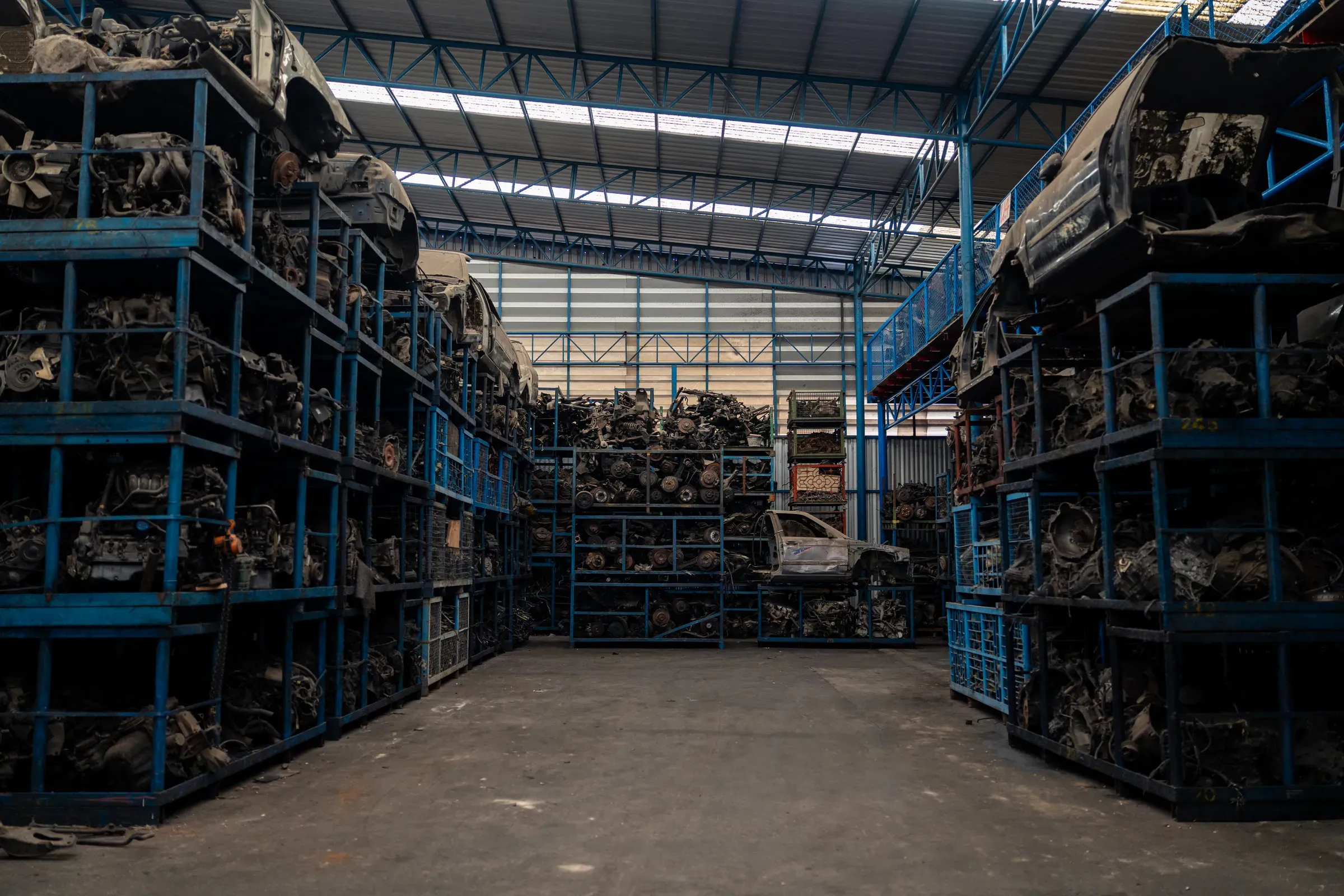
Large industrial warehouse filled with stacked metal shelves containing used automotive parts, engines, and, golf cart parts ecommerce
Golf cart partsOwners of personal carts used around neighbourhoods, farms, campuses and courses, plus small repair and refurbishment businesses, many of whom bought a used cart with no documentation and are working out what it is.

How golf cart parts makes money

Four levers, and what limits each one here

Revenue is traffic times conversion rate times order value times purchase frequency. In this niche each lever has its own ceiling.

Traffic

Traffic: identification content comes before catalog content

The searches that lead this category are not part searches. They are questions like where the serial number is, what year a cart was built, how to tell one model from another and whether a cart is electric or gas. Most owners bought used and have no documentation, so identification is the genuine first problem. A store that publishes proper identification guides for each manufacturer, showing where the serial plate is, how to read it, and what visually separates the models, captures the audience at the moment they are most receptive. Model and year pages then sit beneath, listing what fits, and the reader arrives at them already confident about which one applies to them.

Conversion

Conversion: decode the cart on the page, then confirm the part

The conversion problem is uncertainty about the machine rather than about the product. A page that includes a short serial decoder, photographs of the distinguishing features and a plain statement of which models and years a part covers turns hesitation into an order. Voltage matters just as much: a store selling into a market of thirty-six and forty-eight volt systems, plus gas models, has to make the electrical configuration unmissable, because a controller or charger bought for the wrong system is an expensive mistake. Photographs against a reference and an honest note about whether an accessory needs drilling or bracket work do the rest.

Order value

Order value: refurbishment projects and the personalisation habit

Two things lift the basket well above a single part. The first is the refurbishment project, since a used cart typically needs batteries, tires, seat covers, a windshield and lights at roughly the same time, and presenting those as a coherent refresh for a specific model is far more useful than listing them separately. The second is personalisation, which is unusually strong in this niche: owners fit custom seats, sound systems, light kits, wheels, lift kits and body colours because a cart is a hobby object as much as a vehicle. Battery packs and lithium conversions are the high-value end, and they attach chargers, cabling and sometimes a controller upgrade.

Frequency

Frequency: batteries set the long cycle, accessories the short one

The predictable long cycle is the battery pack, which reaches the end of its useful life after a number of years that depends on use, charging habits and climate. A store that records the pack type and the purchase date can reach an owner before the replacement becomes urgent, which is worth a great deal because that order is one of the largest in the catalog. The short cycle is accessories and consumables, driven by personalisation and by wear on tires, brushes, belts and bushings. Seasonal storage and wake-up services in colder regions add two more predictable touchpoints each year for the customers who need them.

Search visibility

Search: identify the cart, then find the part that fits it

Identification pages are the top of the structure and the least contested content in the niche. One page per manufacturer explaining where the serial plate is located, how the code translates to a year and model, and what visual differences separate similar models will attract steady traffic from owners who cannot proceed until they know what they have. These pages age well and they lead directly into the catalog.

Model and year pages are the commercial layer. For each model and its production range, a page listing the parts and accessories the store supplies, the voltage and drivetrain variations within it, and the things that commonly need replacing on that model. Written with real specifics they rank easily, because the search competition is mostly marketplaces with no model-level content at all.

How-to and upgrade content is the third layer and it drives the larger orders. Battery replacement and charging guidance, lithium conversion explained honestly including what else has to change, lift kit and tire size compatibility, speed and controller upgrades, and street legal considerations. That last topic needs regional care, since rules for low speed vehicles differ by jurisdiction. Technically, the work is keeping model taxonomy consistent across the catalog so a part appears on every page it genuinely fits, and not on any it does not.

Queries that matter

  • where is the serial number on a club car
  • how to tell a ds from a precedent
  • ezgo txt 36 volt battery replacement
  • golf cart lithium conversion kit
  • what size tires fit with a 6 inch lift
  • yamaha drive 2 solenoid location
  • are golf carts street legal in my state

Identification guides, model and year pages with real fitment detail and honest upgrade content rank here with relatively little competition. Generic golf cart accessory grids and product pages without model coverage do not.

AI answers

AI answers: identification and compatibility, asked plainly

Owners ask assistants exactly the questions they cannot answer themselves: what model this cart is, what the serial number means, whether a part fits, what voltage the system runs at, whether a conversion is practical. The stores that get named are the ones whose identification and compatibility information exists as readable text rather than as a photograph of a decoder chart or a lookup tool that renders after load. We publish serial decoding, model differences and voltage guidance in plain language, keep the model and year coverage explicit on part pages, and make sure any statement about street legality is scoped to the jurisdictions named rather than generalised.

What model and year is my cart based on its serial number?
Is this cart thirty-six or forty-eight volts?
Will this controller work with my motor and battery pack?
What is involved in converting to lithium batteries?
Can I legally drive a cart on a public road where I live?

Questions shoppers put to assistants. A store gets named when its pages answer them in plain text.

Google Shopping and Merchant Center

Merchant Center with batteries, freight and model-specific fitment

Batteries define the logistics of this feed. Lead acid and lithium packs are heavy, regulated for transport and often restricted by carrier, region or shipping method, and a feed that promises delivery a carrier will refuse creates cancelled orders alongside disapprovals. Shipping classes need to reflect what can actually be moved, regions that cannot be served should be excluded rather than quoted, and freight items such as body kits and roofs need real dimensions and proper rules.

Fitment lives in the title and in product detail attributes because there is no compatibility field. Titles that lead with the manufacturer, the model, the year range and the voltage match how these searches are typed, and product detail carries the drivetrain, the voltage, the model coverage and any bracket requirement. Most of this catalog is aftermarket without barcodes, so brand and MPN identify products and identifier_exists is set honestly.

Campaign structure separates the value tiers. Consumables and accessories run efficiently at volume with tight bidding. Battery packs, controllers and motors carry the margin and involve a longer decision, so they deserve their own campaign and a longer measurement window. In seasonal regions, budget releases with the spring wake-up rather than running flat through a winter when carts are stored.

Feed attributes that decide eligibility

  • brand and mpn
  • identifier_exists on unbranded aftermarket parts
  • title carrying manufacturer, model, year range and voltage
  • product_detail for drivetrain and voltage
  • shipping_label for batteries and freight items
  • shipping_weight and dimensions
  • custom_label for consumable, accessory and high-value lines

Disapprovals we see in this niche

  • Batteries offered into regions or shipping methods carriers will not accept
  • Shipping mismatch on body panels, roofs and battery sets
  • Missing identifiers on aftermarket components with no barcode
  • Titles listing many models at once to catch more searches

Meta and social ads

Meta and social: personalised carts are genuinely watchable

This category performs better on social than most people expect, because a customised cart is visual, the transformations are dramatic and the community around them is enthusiastic and highly connected. Refurbishment sequences from a tired used cart to a finished one, lift kit and wheel changes, lighting and sound installations, and neighbourhood cruising footage all earn engagement without a hard offer. Owners share their own builds readily, which gives a store a steady supply of content when rights are handled properly.

Audiences concentrate geographically in a way few categories match, since cart ownership clusters in specific communities, resort areas and regions where local rules permit road use. That makes location targeting unusually effective. Safety and legality are the areas to handle carefully: speed upgrade content should not encourage unsafe use, street legal claims must be accurate for the places being targeted, and any modification affecting braking or lighting deserves a straightforward note rather than an enthusiastic one.

  • A used cart refurbished from tired to finished across a few weeks
  • A lift kit and wheel change shown before and after
  • A lighting and sound installation done step by step
  • What owners in one community actually fit to their carts
  • Battery replacement explained without jargon
  • Seasonal storage and wake-up shown on a real cart

Policy line

Keep street legal statements accurate for the specific regions targeted, avoid encouraging unsafe speed modifications, and describe any change affecting braking or lighting plainly rather than casually.

Conversion and the store

The store: confirm the cart before confirming the part

The single most valuable element on these pages is a way for an uncertain owner to become certain. A short decoder, photographs of the identifying features and an explicit list of the models and years a part covers do more for conversion than any design change, because the hesitation is about the machine rather than the product. Voltage and drivetrain need to be stated at the top of any electrical item, in a way that cannot be skimmed past.

Battery purchases deserve their own treatment because they are the largest orders and the most logistically complicated. The page should explain what is included, whether cables and a charger are needed, what the core or old pack arrangement is, how it ships, and what to expect on delivery. On mobile, the identification tools have to work properly and the model coverage should sit near the top. A saved cart profile in the account, holding model, year and voltage, removes the identification problem entirely from every future visit, which is why it is worth prompting for after the first order.

Objections the page must answer

  • “Am I sure which model and year I actually have”
  • “Is my cart thirty-six or forty-eight volts”
  • “Will this part fit without modification or drilling”
  • “How does a heavy battery set get delivered and what happens to the old one”
  • “Do I need anything else for this upgrade to work”
  • “Is this modification allowed where I drive the cart”

Email, SMS and retention

Email and SMS: the cart on file, the battery clock and the season

Everything useful in this programme depends on knowing the cart. Once the model, year and voltage are recorded, recommendations stop being generic and start being right, which changes the response rate completely. The battery clock is the highest-value flow: knowing the pack type and roughly when it was bought allows a well-timed conversation before a failure forces a rushed purchase, and it is the largest single order most of these customers will place.

The refurbishment sequence follows a first purchase from a used cart owner, walking through the refresh in a sensible order rather than pushing everything at once. Seasonal flows suit colder regions, with a storage and charging guide in autumn and a wake-up checklist in spring, and both should be excluded for customers in year-round climates. Personalisation ideas work as inspiration content rather than promotion, since this audience genuinely enjoys the hobby. SMS is best kept for freight and battery delivery coordination and for restock alerts on model-specific items.

  1. Cart profile capture

    Immediately after the first order, recording model, year and voltage

  2. Refurbishment sequence

    Paced across the weeks after a used cart owner's first purchase

  3. Battery replacement window

    Estimated from pack type, purchase date and climate

  4. Autumn storage and charging

    Before storage season, for cold-region customers only

  5. Spring wake-up checklist

    As the season returns, with the consumables that go with it

  6. Battery delivery coordination

    When a heavy or freight shipment is scheduled

Where revenue leaks

The leaks we find in golf cart parts stores

The Growth Analysis ranks these against your own numbers and says which to close first.

Get a Growth Analysis for your golf cart parts store
  • Catalogs that assume the owner knows their model

    Fitment selectors ask for a model the buyer cannot confirm, so the session ends in a search for identification help on somebody else's site and the order follows it there.

  • Voltage buried in a specification list

    A charger or controller bought for the wrong system is an expensive return and an avoidable one, since a single prominent line on the page prevents nearly all of it.

  • Battery orders taken where they cannot be delivered

    Carrier restrictions on heavy or regulated shipments are discovered after the payment, producing a cancellation on the highest-value order in the catalog.

  • No record of the cart after the first order

    Every subsequent email is generic because the store never asked what the customer owns, which forfeits the battery replacement conversation entirely.

  • Street legal questions answered vaguely

    Owners have a real and specific legal question, and a general national answer helps nobody. Clear regional content earns both the trust and the accessory orders that follow a compliance upgrade.

Platform notes

Where the platform changes the work

Shopify

Model, year range and voltage belong in metafields so one dataset drives the fitment display, the model pages and the feed titles. Battery and freight items need their own shipping profiles with regional exclusions, and a saved cart profile on the customer record makes retention flows possible.

WooCommerce

Manufacturer, model and voltage as global attributes give both filtering and indexable archives, which suits a catalog organised around machines. Shipping classes are essential to keep regulated battery shipments separate from ordinary parcels.

BigCommerce

Custom fields carry model coverage and voltage, and per-product shipping settings handle a catalog where a set of batteries and a set of seat covers have nothing in common logistically.

Questions

Golf cart parts owners ask us

By CartKernel · Last reviewed

Why does identification content matter more here than in other parts niches?

Because most owners bought used, badges and body panels are frequently changed, and manufacturers built visually similar models with different components. A car owner knows what they drive; a cart owner often genuinely does not. Solving that first makes everything else in the catalog usable, and it is content almost nobody publishes properly.

How should battery shipping be handled online?

By configuring it around what carriers will actually accept. Regulated and heavy shipments need their own classes, realistic rates, and region exclusions where delivery is not possible. It is better to say a region cannot be served than to take an order that gets cancelled a week later, which costs the store the margin and the customer relationship at once.

Is lithium conversion content worth publishing?

Yes, provided it is honest about what a conversion involves. Charger compatibility, cabling, weight distribution, and whether the existing controller and charger can stay all matter, and owners searching this topic are researching a large purchase. Content that explains the trade-offs rather than only the benefits earns the order more reliably than a product page alone.

How do you handle street legal questions responsibly?

By writing regionally, dating the content and pointing at the official source. Rules for low speed vehicles differ substantially between jurisdictions and change over time. Scoped, accurate guidance builds trust and leads naturally to the lighting, mirror, belt and signalling products a compliance upgrade requires, without the store making claims it cannot stand behind.

Is this niche seasonal or year round?

Both, depending on the customer's location. Warm regions buy all year while colder ones concentrate into a season with storage and wake-up peaks. Running one national calendar serves neither well. We split campaigns and flows geographically so the spring sequence reaches the people who actually stored a cart and skips the ones who never did.

How do you compete with marketplaces on common consumables?

By being better where marketplaces are weak: model-level fitment certainty, identification help, upgrade guidance and honest availability. A marketplace listing cannot tell an owner which model they have. A store that solves that owns the relationship, and the consumables follow the trust rather than the other way around.

Grow your golf cart parts store.

A free Growth Analysis ranks what your store should fix first, by revenue at stake, in about a week.