Skip to content

Automotive & powersports · ecommerce growth

Tire and wheel marketing agency

A tire purchase starts with a code on a sidewall and ends with an appointment somebody has to keep. In between sit questions about load rating, speed rating, whether the set will arrive before the weather does, and who is going to mount them. Wheels add bolt pattern, offset and hub bore to the same problem. We build the size and vehicle pages that catch the searches, the installer logic that makes checkout finishable, and campaign pacing that respects two peaks a year rather than a flat monthly plan.

The buyer, in brief

Consideration
A few days for a routine replacement, longer for wheel and tire packages where appearance and offset are being decided
Purchase frequency
Every few years per set, twice a year for drivers running a separate winter set, plus occasional single replacements after road damage
Seasonality
Two sharp peaks around autumn changeover and spring changeover, with the autumn one compressing into a few weeks when the first cold snap arrives
Price band
Mid to high per order because almost nobody buys one, and wheel packages sit well above the average basket in this industry
Return risk
Low once mounted and effectively impossible after fitting, so almost every problem has to be prevented at the sizing step
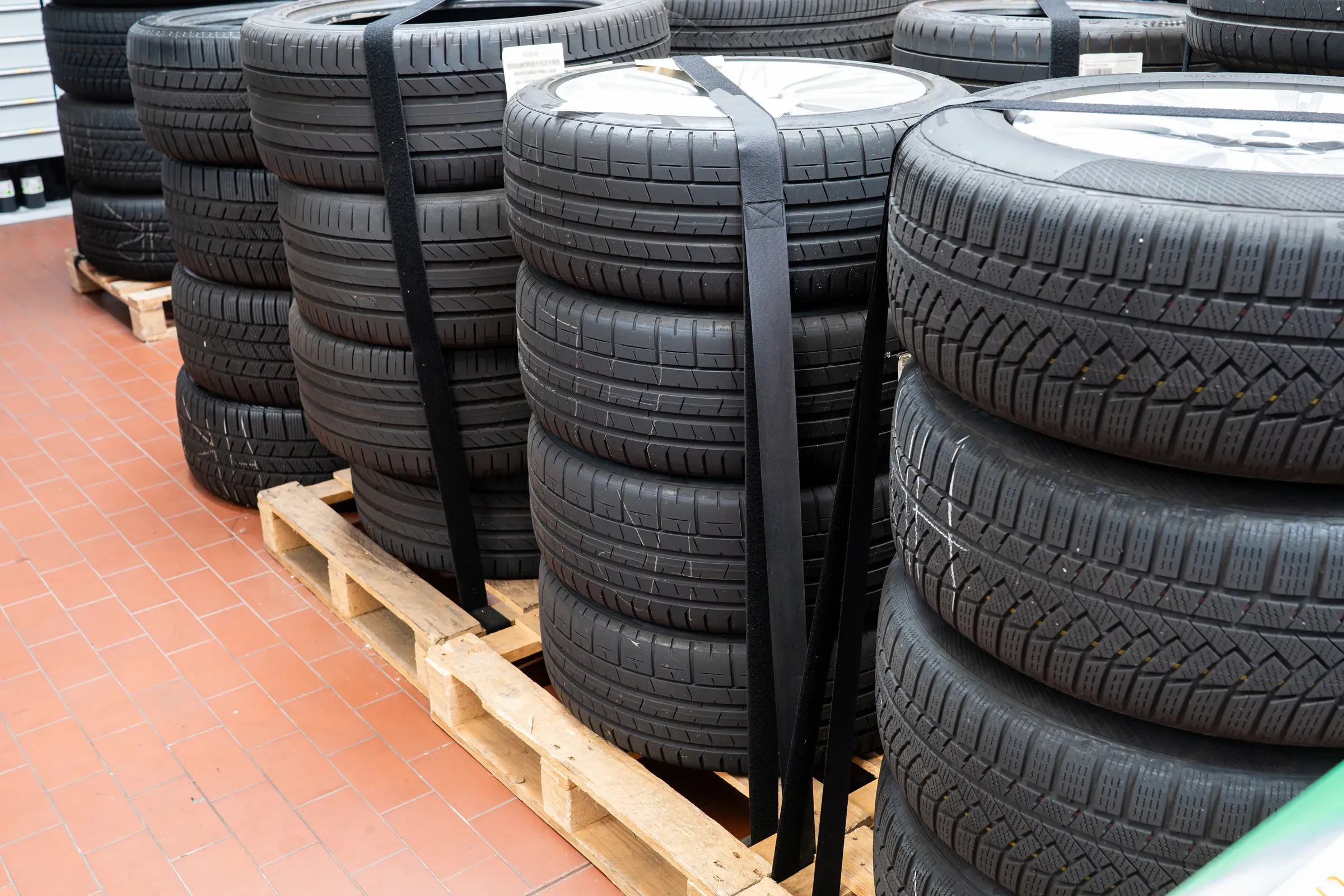
New car tires mounted on alloy wheels stacked inside a car repair shop. Close up, wide angle view, no people, tires & wheels ecommerce
Tires & wheelsDrivers replacing a worn or damaged set, plus enthusiasts buying wheels by look and fitment, who verify the size against the sidewall or the door jamb sticker before they trust any recommendation.

How tires & wheels makes money

Four levers, and what limits each one here

Revenue is traffic times conversion rate times order value times purchase frequency. In this niche each lever has its own ceiling.

Traffic

Traffic: size codes and vehicle pages are two separate audiences

Some people search a size and some search a car, and a store needs pages for both. The size searcher types the full code from the sidewall and wants every option in that size ranked by price, season and rating. The vehicle searcher types a year, make and model and wants to know which sizes the car came with, including staggered setups and the plus-size options that fit without rubbing. Most retailers build a selector tool and let it swallow both audiences behind a form. The traffic lever is publishing both page families as crawlable pages, with the size code in the heading, the vehicles that use it listed as text, and links across to the wheel fitment pages that share the same specification.

Conversion

Conversion: the appointment is part of the product

A set of tires in a cart is not a finished purchase until the buyer knows what happens to them. Stores lose orders at the point where a shopper realises they will receive four heavy boxes and still need to find somebody to mount and balance them. Conversion work here is largely logistics made visible: showing installers near the delivery postal code with their fitting fee, offering shipment direct to a chosen shop, stating clearly whether valve stems, TPMS service kits and disposal are included, and giving a delivery estimate the buyer can compare against the forecast. Where a road hazard programme exists, its terms belong on the page rather than in a policy link.

Order value

Order value: the package beats the individual tire

Baskets grow when the store sells a mounted and balanced package rather than four loose tires. A wheel and tire package that arrives assembled, with the TPMS sensors already installed and the correct lug hardware in the box, is worth substantially more than the same parts sold separately and it removes the fitting problem at the same time. Even without wheels, attaching alignment vouchers through installer partners, nitrogen or seasonal storage where offered, and the second set for a driver who runs winters, all lift the order. The page that carries this is the package configurator, and it needs to explain the offset choice in plain terms rather than assuming everyone reads specification sheets.

Frequency

Frequency: two visits a year for anyone running winters

Purchase frequency in a tire store is decided by whether the second set exists. A driver with one all-season set returns in three or four years; a driver running a dedicated winter set is a customer twice a year for changeover services and again when either set wears out. Building that behaviour means capturing the vehicle and both fitments at the first order, then reaching out ahead of each changeover with the specific size on file. The other repeat driver is the wheel enthusiast who changes appearance more often than function, and who stays with the retailer that remembers their bolt pattern, offset and centre bore.

Search visibility

Search: a page per size, a page per vehicle, and the wheel specification

Tire search demand is unusually structured, which makes it unusually winnable. A size page for a specific code carries a heading with the code, an explanation of what each element of it means, the vehicles commonly fitted with it, the seasonal options available, and the load and speed ratings within it. Those pages compound because there are hundreds of sizes and most retailers publish none of them. Vehicle pages sit alongside, listing original equipment sizes by trim, the alternatives that fit, and the notes that matter such as whether a staggered setup rules out rotation.

Wheels need a parallel structure built on a different specification. Bolt pattern, offset, centre bore and load rating decide fitment, and shoppers search by pattern as often as by vehicle. A page per bolt pattern that lists compatible vehicles and available wheels catches searches that a product grid never will, and it gives the store somewhere to explain hub-centric rings, the effect of offset on stance and clearance, and when a spacer is and is not appropriate.

Informational content earns links and answers the questions that stall a purchase: reading a sidewall, what happens if you fit a higher speed rating, whether all four have to match, when winter tires are legally required in a given province. Technically, the same faceted navigation warning applies as in any parts catalog. Width, aspect ratio, diameter, brand and season combine into a very large URL space, so the indexable facets have to be chosen deliberately and the rest blocked.

Queries that matter

  • 225 45r17 all season tires
  • what size tires fit a 2019 rav4
  • 5x114.3 wheels 18 inch
  • winter tire and wheel package
  • can i put a wider tire on my stock rim
  • load range e vs load range d
  • tire size meaning explained

Size pages, bolt pattern pages and vehicle fitment pages with genuine explanation rank well because so few retailers publish them. Brand landing pages copied from the manufacturer, and a single tires collection with a filter panel, do not.

AI answers

AI answers: sizing and legality questions move to assistants first

The questions people bring to an assistant in this category are specification questions with a right answer, which is exactly the kind an engine will attempt: what size does my car take, can I fit this width on that rim, does this wheel clear my brakes, when do I legally need winter tires where I live. Stores get cited when the specification reasoning is written out in text, with the size code, the bolt pattern and the vehicle names spelled out rather than rendered by a script. We write the sizing and fitment explanations answer-first, keep the seasonal and regulatory notes accurate for the provinces and states the store serves, and make sure the structured data on the product agrees with what the feed says about size and load rating.

What tire size does my car use from the factory?
Can I fit a wider tire on the wheel I already own?
Will these wheels clear the brake calipers on my car?
When are winter tires required by law where I live?
Do all four tires have to be the same brand?

Questions shoppers put to assistants. A store gets named when its pages answer them in plain text.

Google Shopping and Merchant Center

Google Shopping when the size code is the query

The single largest gain in a tire feed comes from writing titles that contain the full size code in the form people type it, followed by the brand, the model and the season. A shopper searching a size will not click a listing that leads with a marketing name, and a feed exported straight from the platform usually leads with exactly that. Load index, speed rating, season and construction belong in product_detail so the listing can match more specific queries, and size or size_type should be populated rather than left to inference.

Wheels need the same treatment with different fields: diameter, width, bolt pattern, offset and finish all belong in the structured attributes, and finish variants of the same wheel should sit in one item group rather than compete as separate products. Weight and dimensions matter on both, because a set of four is heavy enough that any generic shipping rule will misquote it and produce the shipping mismatch disapproval that quietly removes the highest-value items.

Campaigns are paced to the calendar rather than to the month. Winter inventory needs budget released before the first cold snap and cut sharply once the peak passes, all-season lines carry the base load, and wheel packages usually justify their own campaign because the order value and the consideration window are both much larger. Free listings deserve their own reporting line, since size searches frequently convert there.

Feed attributes that decide eligibility

  • size and size_type carrying the full code
  • gtin
  • brand and mpn
  • product_detail for load index, speed rating and season
  • item_group_id for finish variants of one wheel
  • shipping_weight and dimensions for a set
  • custom_label for season and changeover pacing

Disapprovals we see in this niche

  • Shipping cost mismatch when four heavy items are priced by a flat rule
  • Availability drift during changeover week when stock moves faster than the feed
  • Missing GTIN on branded tires that carry one
  • Image failures where the supplier photograph includes a promotional overlay

Meta and social ads

Meta and social: wheels sell on appearance, tires sell on timing

The two halves of this catalog need completely different creative. Wheels are a visual purchase and behave like fashion: photography of the wheel on the actual vehicle, finish comparisons, before and after shots of a car on stock wheels and then on the new set, and customer builds shared with permission. That creative earns attention cold and can prospect successfully because people browse wheels for pleasure long before they buy.

Tires do not work that way. Nobody wants tires until they need them, so the tire half of the account is mostly retargeting, seasonal reminders geared to weather, and content that answers a question the viewer already has, such as how to read tread depth or what happens to grip below seven degrees. Geographic targeting matters more here than in almost any other category, because changeover timing, legal requirements and installer coverage all vary by region. Any safety claim has to stay within what the manufacturer publishes, and anything implying a guarantee about stopping distance or accident avoidance should not run at all.

  • The same car photographed on stock wheels and on the new set
  • Finish comparison in daylight, since screens flatter dark finishes
  • How to read tread depth with a coin, filmed in a driveway
  • A short explanation of what changes below seven degrees
  • Customer builds reposted with written permission
  • What arrives in the box on a mounted and balanced package

Policy line

Keep grip, braking and safety statements inside what the manufacturer documents, avoid any claim implying protection from a collision, and make regional legal requirements accurate for the audience being targeted.

Conversion and the store

The store: removing the two things that stop a tire order

Two objections end most tire sessions. The first is uncertainty about size, and it is solved by letting the shopper verify from either direction, entering the sidewall code or the vehicle, then confirming what they chose in the same words they will read on the door jamb sticker. The second is the fitting problem, and it is solved by showing installers with their fees and availability before checkout rather than after, along with an option to ship straight to a shop. Where the store cannot offer installers in a region, saying so early is better than discovering it at the payment step.

Wheel purchases stall on a different set of doubts, mostly about appearance and clearance. Vehicle visualisers help, but honest photography of the wheel on real cars helps more, and a plain explanation of what offset will do to the stance prevents the returns that mounted wheels cannot absorb. On mobile, a sticky quantity selector defaulting to four, a delivery estimate near the button, and hardware inclusions stated on the page rather than in a policy tab all carry more revenue than any redesign.

Objections the page must answer

  • “Am I certain this is the right size for my car”
  • “Who is going to mount and balance these, and what will that cost”
  • “Will they arrive before the weather turns”
  • “Do I need new TPMS sensors, valve stems or lug nuts”
  • “Will these wheels rub or sit wrong on my vehicle”
  • “What happens if one gets damaged by a pothole”

Email, SMS and retention

Email and SMS: the changeover calendar written for each vehicle

Retention in this niche runs on the seasonal calendar and on the specification held in the account. Once the store knows the vehicle and both fitments, the autumn message can name the exact winter size on file and the spring message can do the same for the summer set. That specificity is what makes the send worth opening, and it is impossible without capturing the fitment at the first order. Storage reminders, rotation prompts at a plausible mileage, and a tread depth check before a long weekend all fit the same pattern.

The transactional flows matter more here than in most categories because delivery is heavy and time-sensitive. A dispatch message that names the carrier, the number of boxes and the installer if one was chosen prevents most support contacts. A post-fitting message asking whether the appointment went well catches problems while they can still be solved. SMS earns its place for delivery windows on a heavy shipment, for a weather-triggered changeover reminder in a specific region, and for back-in-stock alerts during the weeks when popular sizes sell out.

  1. Fitment capture and confirmation

    Immediately after the first order, saving vehicle and both sizes

  2. Delivery and installer coordination

    At dispatch, naming carrier, box count and appointment if booked

  3. Autumn changeover reminder

    Weather-triggered rather than date-fixed, by region

  4. Spring changeover and storage

    Once overnight temperatures settle above the winter compound threshold

  5. Tread and rotation check

    Annually from the purchase date, adjusted for reported mileage

  6. Size back in stock

    Immediately during peak weeks, for a specific requested size

Where revenue leaks

The leaks we find in tires & wheels stores

The Growth Analysis ranks these against your own numbers and says which to close first.

Get a Growth Analysis for your tire and wheel store
  • A size finder that leaves nothing to index

    Hundreds of size codes are searched every month and the store answers all of them with one selector page. The demand goes to retailers that publish a page per size and explain what the code means.

  • Checkout that never mentions fitting

    The shopper reaches payment before realising four boxes are coming to their door with no appointment attached. Installer options shown on the product page recover orders that otherwise stall at the last step.

  • Flat shipping rules on a set of four

    A rule written for small parcels underprices a heavy set in the feed and overprices it at checkout, which produces both a Merchant Center mismatch and an abandoned cart.

  • Budget spread evenly across a two-peak year

    Monthly budgets ignore that autumn changeover concentrates demand into a few cold weeks. The account is capped exactly when the searches arrive and idles through the quiet months.

  • Wheel finishes competing as separate products

    The same wheel in four finishes is listed as four unrelated items, which splits reviews, splits ranking signals and shows Shopping four near-identical listings instead of one grouped product.

Platform notes

Where the platform changes the work

Shopify

Size, load index and speed rating are best held as metafields so they can drive both the size pages and the feed, and package products need a bundle approach that keeps stock accurate on the individual tire and wheel. Installer selection usually needs a custom step, since standard checkout has nowhere to attach an appointment.

WooCommerce

Global attributes for width, aspect ratio, diameter and bolt pattern can power indexable archives as well as filters, but the facet count in this catalog makes query performance and index control an early decision rather than a later cleanup.

BigCommerce

Complex rules can express the hardware and TPMS options that belong with a package without creating a separate product for every combination, and canonical settings need attention before size facets multiply.

Questions

Tires & wheels owners ask us

By CartKernel · Last reviewed

Is it worth publishing a page for every tire size we stock?

For the sizes with genuine search volume and stock behind them, yes. A size page can explain the code, list the vehicles that use it, show the seasonal and rating options, and answer the questions that size attracts. Rare sizes with two products and no demand belong on a broader page instead, because a page with nothing specific to say will not rank and still costs crawl budget.

How should an online tire store handle installation?

Make it visible before checkout. That can be a partner network with published fitting fees, shipment direct to a shop the buyer chooses, or a clear statement that fitting is arranged locally. What loses orders is silence, because the shopper has to imagine the logistics themselves and often decides to buy from a local shop instead.

How do you pace advertising around changeover season?

By separating seasonal inventory into its own campaigns and releasing budget on weather rather than on a calendar date. The first sustained cold week moves demand far more reliably than a chosen launch day. We also cap the all-season spend while the peak runs, since the same budget earns much more against winter searches in those weeks.

What causes shipping disapprovals on tire feeds?

Almost always a shipping rule written for light parcels applied to a set of four. Weight and dimensions need to be on every product, shipping settings need rules that reflect what a heavy multi-box shipment actually costs by region, and any free shipping threshold has to be expressed the same way in the feed as it is at checkout.

Should wheel finishes be separate products or variants?

Variants of one product, grouped with item_group_id in the feed. Separate products split reviews and internal links, give search engines several near-identical pages to choose between, and show Shopping a set of competing listings. One product with finish and size options keeps the signals together and matches how people shop for a wheel.

Can a tire retailer compete with the large national sellers?

On specific ground, yes. National sellers cover breadth; a focused retailer can win on depth of explanation, regional installer relationships, honest availability during peak weeks and niche fitments the large catalogs treat as an afterthought. The strategy is to be unmistakably better on a defined set of sizes, vehicles and regions rather than broadly similar everywhere.

Grow your tires & wheels store.

A free Growth Analysis ranks what your store should fix first, by revenue at stake, in about a week.