Skip to content

Fashion & apparel · ecommerce growth

Modest fashion marketing agency

Modest fashion is searched in words most apparel stores never use and bought against a calendar that moves every year. A shopper looks for a specific garment by name, checks sleeve and hem length, opacity and whether the fabric clings, and often needs it in hand before a date that shifts earlier each year. We build for that: garment-name and length collections that rank, product pages that answer coverage questions before they are asked, ad creative that respects the platform rules on personal attributes, and a calendar built around the occasions this customer actually shops for.

The buyer, in brief

Consideration
Days for everyday pieces, several weeks for occasion wear ordered ahead of a fixed date
Purchase frequency
Regular everyday purchases with concentrated buying before religious and family occasions
Seasonality
Peaks before Ramadan and the two Eids, which move about eleven days earlier each year, plus wedding seasons, pilgrimage travel and the return to school or work
Price band
Wide, from everyday jersey basics to occasion pieces at several hundred dollars
Return risk
Driven by length and opacity rather than by size, and reduced sharply when measurements and lining details are published
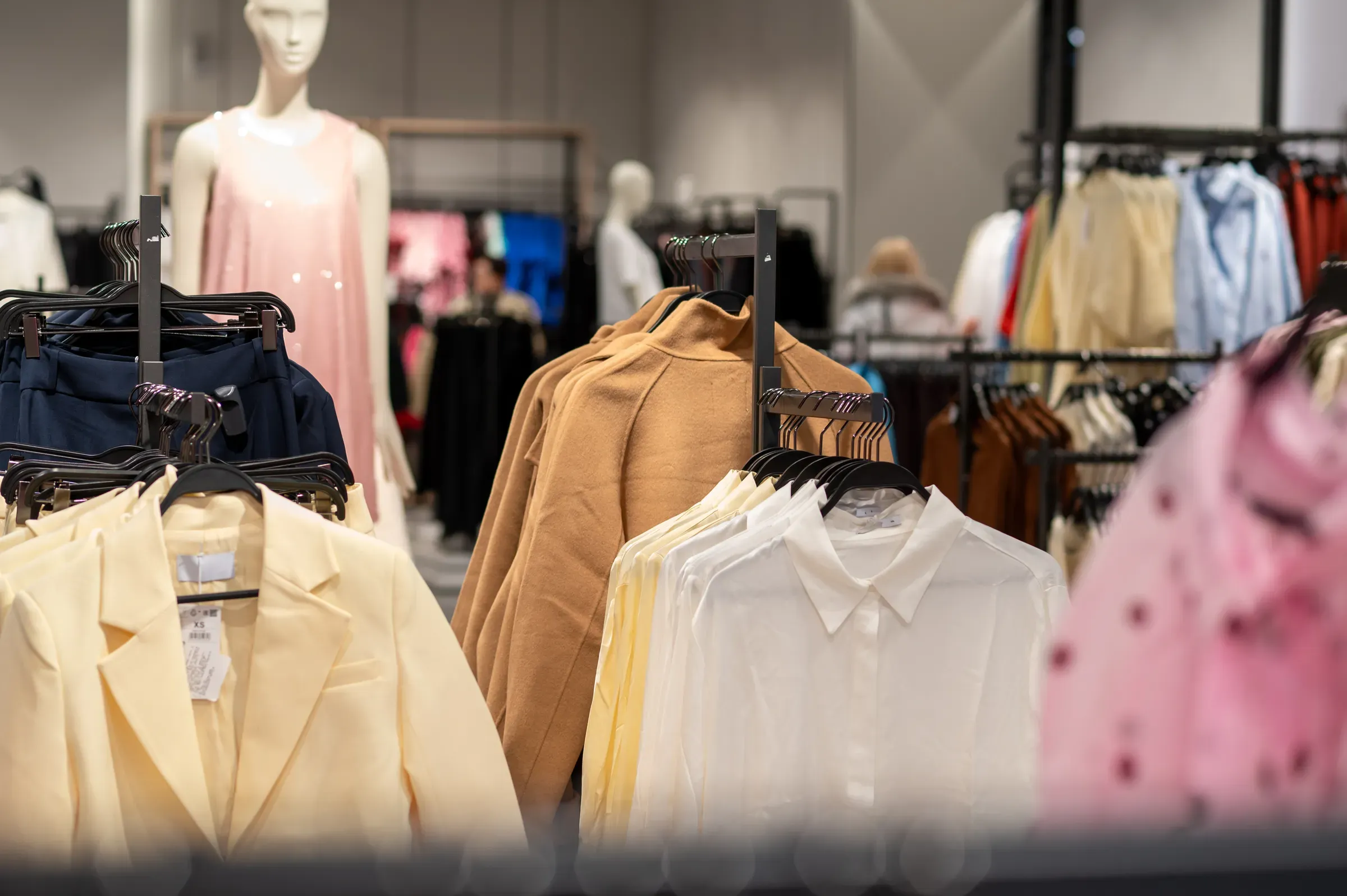
Fashion Retail Store Interior with Pastel Blazers and Shirts on Racks in Modern Clothing Boutique, modest fashion ecommerce
Modest fashionShoppers who search by garment name rather than by category, check sleeve and hem length, lining and opacity in the description, look for photographs on someone styled the way they dress, and trust recommendations from within their own community.

How modest fashion makes money

Four levers, and what limits each one here

Revenue is traffic times conversion rate times order value times purchase frequency. In this niche each lever has its own ceiling.

Traffic

Traffic: the garment name is the query

This customer searches for abaya, khimar, jilbab, hijab, kaftan, thobe, tichel and modest swimwear, and adds a fabric, a length or an occasion. Those are precise product terms with real volume, and a store that files everything under dresses and tops captures none of them. The traffic work is a collection for each garment type with copy that describes the cut, the coverage and the fabric, then length and fabric collections beneath, since an abaya is bought by height and a hijab by material. Occasion pages for Eid, weddings and travel carry the seasonal demand, and a size and length guide answers a steady informational stream.

Conversion

Conversion: coverage answered before it is asked

The questions that decide this purchase are about coverage, not size. Is the fabric see-through, is it lined, does it cling, how far past the wrist does the sleeve reach, where does the hem fall on someone my height, and does the neckline sit high enough. A product page that answers all six in the description, with garment measurements including full length and sleeve length, an opacity note and a photograph taken in bright light, converts far better than one that relies on styling images. Photographs on a model whose height is stated, styled the way the customer dresses, do the rest. Where a garment comes in several lengths, saying which height each suits prevents the return.

Order value

Order value: the complete outfit, not the single piece

This is an outfit purchase more often than a garment purchase. A dress needs an underscarf, a hijab in a matching shade, a slip or lining layer and sometimes sleeves, and presenting those together as a styled set raises the basket without discounting. Colour matching across categories is the mechanic that makes it work, so the store needs shade data that lets a hijab be matched to a dress reliably. Multi-buy pricing on everyday hijabs and underscarves suits how they are actually bought, and occasion pieces support a higher-value addition such as a coordinated look for a family event.

Frequency

Frequency: a calendar that moves and a wardrobe that builds

Repeat buying follows two rhythms. The first is the cultural calendar, which shifts each year, so a store that sends its Eid campaign on last year's dates will be weeks late. Planning back from the moving date, with production and shipping lead times counted honestly, is the difference between selling the range and marking it down. The second rhythm is wardrobe building: everyday pieces are replaced and added to steadily, so colour restocks, new fabric arrivals and basics replenishment carry the months between occasions. Recording the lengths and colours a customer buys makes both rhythms specific rather than broadcast.

Search visibility

Search: garment names, lengths and occasions in the customer's words

The vocabulary is the opportunity. Abaya, jilbab, khimar, kaftan, thobe, burkini, tichel and modest swimwear are searched directly, and each deserves a collection that explains the garment, its cut and coverage, the fabrics it comes in and how it is usually worn. Writing those pages in the customer's own language, without translating everything into generic apparel terms, is what separates a store that ranks from one that does not.

Beneath the garment types, length and fabric collections capture the specific demand. Abayas are shopped by height in inches or centimetres, hijabs by fabric such as jersey, chiffon, modal or georgette, and occasion pages cover Eid, weddings, graduation and travel. A sizing and length guide that explains how to choose by height and how much a fabric drapes answers informational queries and reduces returns at the same time.

Technically, colourways stay as variants on one canonical product URL, and length options belong as variants rather than as separate products. Where a store sells into several markets, sizing conventions and currency need handling without duplicating the catalog, and occasion pages should stay published year round so their authority accumulates instead of resetting every season.

Queries that matter

  • open front abaya black
  • jersey hijab set
  • modest swimwear burkini sizes
  • long sleeve maxi dress with lining
  • abaya 58 inch length
  • eid outfit ideas for women
  • non see through white shirt

Garment-type collections written in the customer's vocabulary, length and fabric pages, and occasion content published early enough to be indexed rank here. A generic dresses grid with a modest tag does not.

AI answers

AI answers: coverage, length and where to buy a specific garment

Assistants are asked which stores carry a particular garment in a particular length, whether a fabric is see-through, what the difference between a khimar and a jilbab is, and what to wear to a specific occasion. A store gets named when its pages use the garment names people actually say, when length, lining and opacity are written as plain text rather than shown only in photographs, and when shipping times to the relevant markets are stated clearly, since this customer often orders internationally. We write the garment and length pages answer first and keep the measurement and fabric wording identical across the page, the feed and the structured data.

What is the difference between a jilbab and a khimar?
Which abaya length suits someone five foot six?
Is this fabric see-through in sunlight?
Where can I buy modest swimwear that ships to Canada?

Questions shoppers put to assistants. A store gets named when its pages answer them in plain text.

Google Shopping and Merchant Center

Google Shopping and Merchant Center across sizing conventions

The apparel attributes apply as usual, and this category adds two demands. Size often means a length in inches or centimetres rather than a dress size, so size and size_system have to be set so the number is read correctly, and the page must explain the same convention. Where a store sells into markets using different conventions, the feed needs the right system per country rather than one set of labels for everyone. Material matters because fabric is a primary buying factor, and product_detail is the place for full length, sleeve length, lining and opacity.

Titles should use the garment name people search for, with the fabric, the colour and the length after it, rather than translating an abaya into a long dress. Item_group_id groups colours and lengths so one listing serves the query. Shipping settings need to reflect real international rates and delivery times, since a large share of orders cross borders and a delivery estimate that misses an occasion is worse than no listing at all.

Campaigns are paced to the moving calendar rather than to the month, with occasion budgets planned back from the date and the stock, and free listings carrying the long tail of garment and colour combinations.

Feed attributes that decide eligibility

  • size expressed as garment length where relevant
  • size_system by market
  • material for jersey, chiffon, modal and georgette
  • product_detail for full length, sleeve length and lining
  • item_group_id across colours and lengths
  • shipping with accurate international rates

Disapprovals we see in this niche

  • Size or size_system mismatched to the market being served
  • Shipping cost or delivery time errors on cross-border orders
  • Missing required apparel attributes on new occasion ranges
  • Availability mismatch when an occasion range sells through quickly

Meta and social ads

Meta and social ads: styled the way the customer dresses

Creative works here when it shows the garment worn completely and in motion. Full-length video showing the drape, the sleeve length and how the fabric moves when walking answers the coverage question directly. Styling content that shows one piece worn three ways, and colour matching between a dress and a hijab, performs strongly because that is how the wardrobe is actually assembled. Community creators are the most effective route, since recommendation carries more weight in this category than any studio campaign.

The policy line is about personal attributes. Ad copy must not assert or imply knowledge of a person's religion or beliefs, so the language describes the garment, the coverage and the occasion rather than addressing the viewer's faith. Targeting options based on religious practice are limited or unavailable in many places, which makes broad prospecting with unmistakably relevant creative the more reliable approach anyway.

  • Full-length walking shot showing drape and sleeve length
  • One piece styled three ways for different occasions
  • Colour matching a hijab to a dress on camera
  • Fabric held to bright light to show opacity honestly
  • A community creator sharing an occasion look

Policy line

Ad copy must not assert or imply the viewer's religion or beliefs, targeting on religious practice is restricted in many markets, and creative should describe the garment and the occasion instead.

Conversion and the store

The store: length, lining and light

The product page has to publish what the photograph cannot prove. Full garment length, sleeve length past the wrist, hem position on a stated model height, whether the piece is lined and how opaque the fabric is in bright light are the facts that convert. A photograph taken in strong daylight, alongside the studio image, is the most persuasive single asset for a fabric people worry about. Where several lengths exist, a short table matching length to wearer height removes the guesswork entirely.

The second job is the outfit. Matching hijabs, underscarves and slips shown on the product page with accurate colour, and a styled set that can be added in one action, raise the basket and reduce the risk of a mismatched order. For occasion buying, a delivery date promise that accounts for international shipping needs to be visible before checkout, because arriving after the occasion is the failure this customer fears most.

Objections the page must answer

  • “Is the fabric see-through and is it lined”
  • “How long is it and where will the hem sit on me”
  • “Do the sleeves cover past the wrist”
  • “Will the colour match the hijab I already have”
  • “Will it arrive before the occasion”
  • “Can I return it if the length is wrong”

Email, SMS and retention

Email and SMS: the moving calendar and the wardrobe between occasions

The calendar drives the programme and it has to be planned back from dates that move each year. A Ramadan and Eid sequence starts earlier than most retail calendars suggest, states shipping cut-offs by market, and finishes before delivery becomes impossible rather than after. Wedding season, travel for pilgrimage and the return to school or work each carry their own shorter sequences.

Between the peaks, the wardrobe flows carry the revenue. Colour restock alerts for everyday hijabs, new fabric arrivals, and basics replenishment sent to customers whose purchase history shows what they wear are all specific and welcome. A styling series that shows how to wear pieces already owned keeps the list engaged without constant selling. SMS suits shipping cut-off reminders during an occasion window and restock alerts in a specific colour and length, where timing genuinely matters.

  1. Occasion sequence planned back from the date

    Starting six to eight weeks before, with shipping cut-offs by market

  2. Colour and length restock alert

    When the exact variant returns, by SMS where opted in

  3. Styling series for pieces already owned

    Monthly, segmented by past purchases

  4. Everyday basics replenishment

    Three to four months after a basics order

  5. Post-delivery fit and coverage check

    Seven days after delivery

Where revenue leaks

The leaks we find in modest fashion stores

The Growth Analysis ranks these against your own numbers and says which to close first.

Get a Growth Analysis for your modest fashion brand
  • Garment names translated away

    An abaya is filed as a long dress and a khimar as a scarf, so the precise searches that would have found the store land somewhere else entirely.

  • Occasion campaigns planned on last year's dates

    The calendar moves about eleven days earlier each year, so a campaign built on the previous year's schedule arrives after the buying window has closed.

  • Opacity left to the photograph

    Nobody says whether a fabric is see-through or lined, so cautious shoppers do not order and the ones who do often return the piece.

  • Shipping cut-offs published too late

    International orders placed close to an occasion arrive afterwards, which turns a good campaign into a wave of refunds and lost trust.

  • Occasion pages unpublished after the season

    Pages that were building authority are taken down each year, so the store starts from zero every time the date comes round again.

Platform notes

Where the platform changes the work

Shopify

Length, lining and opacity live in metafields so they appear on the page and in product_detail, and Shopify Markets handles currency, sizing conventions and delivery estimates per country without duplicating the catalog.

WooCommerce

Global attributes for garment type, fabric and length drive filters and indexable archives, and multi-currency and shipping zone setup has to reflect real international rates rather than a flat estimate.

BigCommerce

Custom fields carry the coverage detail, and channel and currency settings let one catalog serve several markets while keeping the feed's size_system correct for each of them.

Questions

Modest fashion owners ask us

By CartKernel · Last reviewed

Should we use garment names like abaya and khimar or plain English descriptions?

Use the names your customer uses, with a short plain description alongside. The specific terms carry the search demand and signal that the store understands the category, while a supporting line helps anyone unfamiliar and helps assistants summarise the page. Filing everything under generic apparel categories gives up the traffic that is easiest to win.

How far ahead should Ramadan and Eid campaigns be planned?

Further ahead than most retail calendars assume, and against the dates for the coming year rather than the last one, since they move about eleven days earlier annually. Work back through delivery times by market, production or restock lead times, and the point at which shipping can no longer arrive in time. Content and collection pages should be live and indexed weeks before the paid push begins.

What reduces returns for modest clothing specifically?

Publishing coverage facts. Full garment length and sleeve length in the measurements, a clear statement about lining and opacity, a photograph taken in strong daylight, and a table matching available lengths to wearer heights. Length and see-through fabric cause more returns here than size does, and none of them are visible in a standard studio photograph.

How do we advertise on Meta without running into the personal attributes rules?

By writing about the garment and the occasion rather than about the person. Copy should never assert or imply that the viewer holds a particular faith, and targeting based on religious practice is limited or unavailable in many markets. Broad prospecting with creative that is unmistakably relevant reaches the right people more reliably than narrow targeting would.

We ship internationally. How should that be handled on the site and in the feed?

With real numbers per market rather than one global estimate. Shipping rates and delivery windows configured by country, sizing conventions and size_system set correctly for each, prices shown in local currency, and a visible cut-off date during occasion periods. The delivery promise matters more than the price when someone is buying for a fixed date.

How do we work with community creators without it feeling like an ad campaign?

By briefing on the garment rather than on the script, agreeing rights in writing, and letting the creator style the piece the way they actually dress. Content that shows real wearing and honest fabric detail outperforms polished production in this category, and it stays useful for months as organic content as well as paid creative.

Grow your modest fashion store.

A free Growth Analysis ranks what your store should fix first, by revenue at stake, in about a week.