Skip to content

Fashion & apparel · ecommerce growth

Plus-size fashion marketing agency

The plus-size shopper arrives with a history of being let down. She has bought a 22 that fit like an 18, watched a brand photograph its largest size on its smallest model, and read size charts that stop where her measurements begin, so she now checks three things before she trusts a store: the garment measurements, a photo on someone her size, and reviews from people who named theirs. We build for that scrutiny: size-number and occasion pages that rank, casting and creative in the sizes sold, feeds that mark extended sizing correctly, and flows that tell her when her size is back.

The buyer, in brief

Consideration
Longer than straight-size fashion, with reviews and measurements checked before a first order; fast for repeat orders in a style that fit
Purchase frequency
Several orders a year once trust is established, with occasion purchases and basics replenishment driving the rhythm
Seasonality
Wedding-guest season, holiday parties, summer dresses and back-to-work in September, with occasion demand rising weeks before the event
Price band
Mid, with occasion wear and outerwear at the upper end and basics bought in multiples
Return risk
High where grading is inconsistent across the range; low once a brand's fit is trusted, which makes the fit data the retention asset
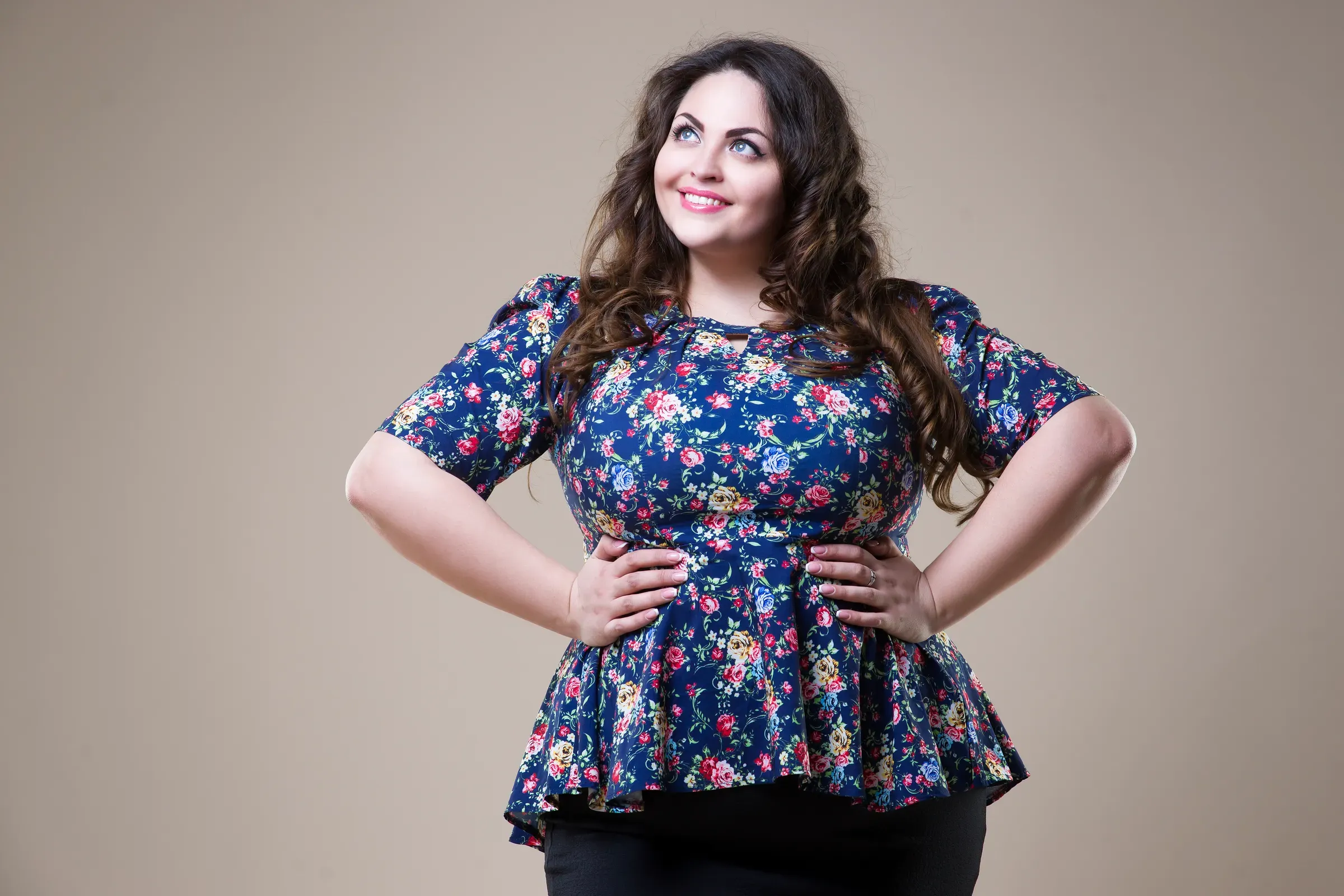
Plus size fashion model in casual clothes, fat woman on beige studio background, overweight female body, plus-size fashion ecommerce
Plus-size fashionWomen wearing sizes 14 to 32 who search by size number and occasion, read reviews for the reviewer's height, size and where the garment pulled, and trust a brand only when they see the item photographed on a body like theirs with measurements to match.

How plus-size fashion makes money

Four levers, and what limits each one here

Revenue is traffic times conversion rate times order value times purchase frequency. In this niche each lever has its own ceiling.

Traffic

Traffic: size numbers and occasions are the queries, and few brands answer them

Plus-size search demand is specific and under-served. Plus size wedding guest dress with sleeves, size 24 jeans with stretch, plus size winter coat that closes, 3X swimsuit, size 28 work trousers. Most brands hold the range as a filter on a general collection, which means the size query lands on a page that shows every size and the shopper has to hunt. The traffic lever is a set of indexable pages built for size ranges and occasions, with copy that describes the fit, the grading and the model's size, plus a Shopping feed that sets size_type to plus so Google understands the range. This demand is where the brand can rank quickly, because the competition is thin and the intent is exact.

Conversion

Conversion: photographs and measurements in her size

A plus-size shopper converts when the page proves the garment exists in her size on a body like hers. What limits conversion is a single model in the smallest size of the range, a size chart in dress sizes with no garment measurements, a fabric described without its stretch, and reviews that cannot be filtered by size. We photograph or source imagery for every style on at least two sizes across the range, state each model's size and height, publish garment measurements for bust, waist, hip and length per size, describe stretch and where the garment is cut generously, and surface reviews from her size first. The exchange promise sits beside the button, because the fear is not the price, it is the disappointment.

Order value

Order value: the occasion outfit, not the single dress

Order value grows when the store dresses the occasion. A wedding-guest dress carries a cover, a shaping slip and a bag; a work capsule carries the trousers, the blouse and the blazer in matching sizes. The limits are a product page with no outfit context, a cart that never suggests the piece that completes the look, and basics that are only ever sold one at a time. We build shop-the-look on every occasion piece with each item selectable in the shopper's size, multi-buy pricing on basics that holds all year, and a size-matched bundle for the capsule so she can buy the outfit as one order without adjusting each size separately.

Frequency

Frequency: back in stock in her size is the message that brings her back

Repeat purchase in plus-size fashion follows trust, and trust is built one kept order at a time. The limits are a customer file that never records the size she kept, launch emails that send everyone to a page where the extended sizes sold out first, and no path to tell her when a style she wanted returns in her size. We record the kept size by style from orders and exchanges, gate new-style emails on availability in that size, run a back-in-stock flow by size and style, and time a fit survey after the first order so the grading data goes back to the product team and the next order is safer than the first.

Search visibility

Search: size-specific collections, occasion pages and the fit-model question

The category queries cluster into size numbers (size 24 jeans, 3X dress, size 20 swimsuit), occasion (plus size wedding guest, holiday party dress, plus size workwear), fit problems (jeans that do not gap at the waist, dress that skims the tummy, coat that closes over the bust) and fabric (with stretch, non-clingy, structured). Each cluster needs a collection page built from product data with copy that describes the grading, the fit and the models' sizes, so the size query lands on a page that only shows what is available in that size.

The second layer is the fit guide, which in this niche is a ranking asset because so few brands publish one that goes past a 16. A guide that states the fit model's size, how the brand grades between sizes, garment measurements per size for every style and how the brand's 22 compares to common references answers the true-to-size query and the questions assistants get asked. Occasion pages, wedding guest by season and dress code, earn links and rank for demand that rises weeks before the event.

Technically, the extended range lives on the same product URL as the rest of the range where the brand sells both, with size as a variant; size-filtered views stay out of the index; and reviews carry the reviewer's size and height as structured fields so they can be filtered and marked up.

Queries that matter

  • plus size wedding guest dress with sleeves
  • size 24 jeans with stretch
  • plus size winter coat that closes over bust
  • 3X swimsuit tummy control
  • plus size work trousers size 28
  • is brand name plus size true to size
  • plus size dress non clingy fabric

Size-range and occasion pages that show only what is available in that size, fit guides with garment measurements past a 16, and reviews filterable by size rank in this niche. A general collection with a plus filter and one model in a 14 does not.

AI answers

AI answers: true-to-size, grading and which brands go to a 30

Assistants get asked whether a brand runs true to size in its plus range, which brands stock a 30 in jeans, what size to order in a wrap dress for a size 22 with a larger bust, and whether a fabric will cling. The stores that get named publish their fit model's size and grading rules, list the sizes they actually stock per style, describe fabric behaviour in words, and keep the sizing language identical between the fit guide, the product page and the Shopping feed. We write the fit guide and the size-range pages answer-first, make sure garment measurements exist as text rather than as an image, and check that review data with reviewer sizes is visible in the HTML an assistant crawler reads.

Does this brand's plus range run true to size?
Which brands stock a size 30 in jeans with stretch?
What size should I order in a wrap dress if I am a 22 with a larger bust?
Is this dress fabric clingy on the stomach?
Which plus-size brands photograph every style on a model over a size 20?

Questions shoppers put to assistants. A store gets named when its pages answer them in plain text.

Google Shopping and Merchant Center

Google Shopping and Merchant Center with size_type set to plus

The attribute that matters most in this niche is size_type, which Google accepts as plus for extended sizing, alongside the apparel requirements of age_group, color, gender and size. When size_type is set correctly and size carries the numeric or lettered value the brand uses, Shopping can match a size 24 query to the right variant. Item_group_id ties the full range to one product, and the image for each variant should show the garment on a model in a size the shopper will recognise, because the thumbnail is the first proof the range exists. Product_detail carries the stretch, the fit and the garment length; size_system states US or UK, since plus sizing differs between them.

Policy trouble comes from the body, not the garment. Descriptions that promise a slimmer look or that frame the shopper's body as a problem to hide drift into personal-attribute and misrepresentation territory. Describing a fit as cut generously through the hip, or a fabric as structured, is fine; promising an outcome is not. Images with text overlays or before-and-after framing are rejected.

Campaigns are split by role: occasion styles in a seasonal campaign that opens weeks before wedding season and the holidays, basics in a volume campaign bid to margin, and extended sizes that the brand stocks in depth in their own campaign so budget is not spent on sizes that sell out first.

Feed attributes that decide eligibility

  • size_type set to plus
  • size with the brand's numeric or lettered value
  • size_system for US or UK plus sizing
  • item_group_id across the full range
  • image_link showing the size on a matching model
  • product_detail for stretch, fit and length

Disapprovals we see in this niche

  • Personal-attribute or misrepresentation flags from body-outcome language
  • Availability mismatch when extended sizes sell out before the feed refreshes
  • Missing size_type, so a 24 is treated as a straight size and mismatched
  • Image policy rejections for text overlays on model shots

Meta and social ads

Meta and social ads: casting in the size sold, and the personal-attribute line

The creative that works in plus-size fashion is the proof. A try-on that states the wearer's size and height, the same dress on three sizes across the range, a movement test that shows what the fabric does when she sits and walks, and a measurement walk-through that puts the tape on the garment. Creator content works when the creator wears the size she is showing and the rights are secured in writing, and catalog ads retarget well when the feed images show the garment on a body the audience recognises.

Policy is about personal attributes. Ads must not imply the viewer's size, weight or shape, must not frame the body as a problem, and must not promise a slimmer look. Copy that says designed for sizes 14 to 32 is a product fact; copy that says finally look slim is a rejection and a lost audience. Audiences start with customers and site visitors, then broad prospecting with the proof-led creative, because interest targeting for this niche is coarse and often insulting.

  • One dress, three sizes, with each size stated on screen
  • Try-on that names the wearer's size and height and where the garment skims
  • Tape measure on the garment: bust, waist, hip and length per size
  • Movement test: sitting, walking and reaching in the piece
  • Creator in her own size with rights secured in writing

Policy line

No personal attributes that imply the viewer's size or weight, no body-as-problem framing, no slimming or shape-outcome promises, and no before-and-after imagery; size range stated as a product fact only.

Conversion and the store

The store: per-size photography, garment measurements and reviews by size

The plus-size product page has to prove the garment in her size before it can sell it. We put imagery on at least two sizes from the range with each model's size and height stated, garment measurements per size as a text table, a fit note that says where the garment is cut generously and where it is fitted, stretch described in words, and reviews filtered by the reviewer's size at the top rather than the bottom. The exchange promise sits beside the button, and the size selector shows stock per size so she does not add a 24 to find out at checkout that it is gone.

The collection page needs a size filter that persists across the session and hides what is not available in her size, quick-add with size selection, and shop-the-look with every item selectable in her size. On mobile, the measurement table has to be readable without pinching, the size selector needs to show the full range without scrolling off screen, and the fit note should sit above the fold rather than inside a tab. The fit survey after the first order feeds all of this back to the product team.

Objections the page must answer

  • “Does this actually come in my size or is it a filter that shows everything”
  • “What does it look like on someone my size, not on a 14”
  • “What are the garment measurements for a 24, not the dress size”
  • “Will the fabric cling or ride up”
  • “If it is graded wrong, can I exchange it without a fight”

Email, SMS and retention

Email and SMS: size-in-stock alerts, occasion calendars and the fit survey

The first flow is the fit survey. Ten days after delivery it asks what size she kept, where the garment fit well and where it pulled, and it records the answer against the style. That data drives two things: every later email is gated on her kept size being in stock, and the product team receives grading feedback by style rather than an averaged return rate. A back-in-stock flow by size and style is the second flow, because the extended sizes sell out first and the customer who missed them is the most motivated buyer on the list.

The occasion calendar runs ahead of wedding season, the holidays and the September return to work, with outfit-led content that shows the pieces on models in the sizes sold and links to the shop-the-look in her size. Basics replenishment runs on the customer's own reorder pattern where there is one. SMS carries the size restock and the occasion cut-off, and nothing else. Win-back names the style and size she kept, because a generic discount says the brand has forgotten her.

  1. Fit survey

    Ten days after delivery

  2. Back in stock by size and style

    The moment the variant returns

  3. New styles by kept size

    At launch, gated on availability in her size

  4. Occasion calendar

    Four to six weeks before wedding season, the holidays and September

  5. Basics replenishment

    On the customer's own reorder pattern

Where revenue leaks

The leaks we find in plus-size fashion stores

The Growth Analysis ranks these against your own numbers and says which to close first.

Get a Growth Analysis for your plus-size brand
  • The range as a filter, not a page

    Plus sizes exist only as a size filter on the general collection, so the size-number query lands on a page full of things she cannot buy and the brand never ranks for the demand it could win.

  • Photographed on the smallest size

    Every style is shot on a 14, the 26 is never shown, and the shopper who needs the proof most leaves to find a brand that gives it.

  • Extended sizes gone before the launch email

    The new style sends to the whole list, the 22 and 24 sold out in the first hour, and the customers who trusted the brand learn to shop elsewhere on launch day.

  • Grading errors averaged into a return rate

    A style that fits at an 18 and fails at a 26 is reported as one return rate, so the grading problem is never found and the same mistake ships in the next season.

Platform notes

Where the platform changes the work

Shopify

Garment measurements per size, model size and height, fit notes and stretch live in metafields so they render as a table and flow into product_detail; the review app must capture reviewer size and height as fields, and the back-in-stock app must notify by variant, not by product.

WooCommerce

Variable products carry the full size range with per-size stock, global attributes for occasion and fit power indexable archives, and the feed plugin must export size_type as plus and size_system per market.

Headless

The measurement table, the size-filtered collection and the size-filtered reviews are the components most likely to render client-side only, so all three need server-rendered HTML for search and assistant crawlers.

Questions

Plus-size fashion owners ask us

By CartKernel · Last reviewed

Should the plus range have its own pages or sit inside the main collections?

Both, when the brand sells straight and extended sizes. The product stays on one URL with size as a variant, and the extended range also gets its own indexable size-range and occasion pages built from product data, so the size-number query lands on a page that shows only what is available in that size.

How do you handle the cost of photographing every style on multiple sizes?

By prioritising. Hero styles and occasion pieces are shot on at least two sizes across the range with each model's size stated; basics can share imagery within a fabric group; creator and customer imagery with rights fills gaps. The measurement table and the fit note carry the proof where a second photo does not yet exist.

What does size_type do in a Google Shopping feed for plus sizes?

It tells Google the size value belongs to an extended range, so a size 24 is matched to plus-size queries rather than treated as an unusual straight size. It is set to plus on every variant in the range, alongside size_system so a US 24 and a UK 24 are not confused.

How do you write ad copy for plus-size fashion without tripping Meta's rules?

By stating product facts and not personal attributes. The size range, the fit, the fabric and the model's size are facts; anything that implies the viewer's body or promises a slimmer look is a personal-attribute violation. We review every asset and caption against the current policy text before launch.

Which metric shows whether fit is improving for a plus-size brand?

Return rate by style and by size, reported separately from the overall rate, alongside the kept-size data from the fit survey. A style whose returns cluster at the top of the range has a grading problem; one whose returns are spread evenly has a description problem. Each has a different fix.

Grow your plus-size fashion store.

A free Growth Analysis ranks what your store should fix first, by revenue at stake, in about a week.