Skip to content

Fashion & apparel · ecommerce growth

Activewear marketing agency

Activewear shoppers order two sizes and send one back. They search for a legging by what it has to do, squat-proof, high-waisted, pocketed, for running or for lifting, then read the reviews for the words sheer, compression and true to size before they commit. We build the growth system around that habit: activity and fabric collections that rank, creative that shows the garment moving, product pages that make one size the obvious choice, and reporting that treats the return rate as the margin line it is.

The buyer, in brief

Consideration
A few days for a first order, with heavy review reading; near instant for repeat colourways of a fit that already works
Purchase frequency
Two to four orders a year for regulars, driven by new colourways and worn-out favourites rather than by a fixed cycle
Seasonality
A January peak, a spring lift and a back-to-routine lift in September, with sports bras and shorts rising in summer and layers in autumn
Price band
Mid to premium, with leggings as the hero and the first order often a legging plus a bra
Return risk
High and mostly fit-driven: bracketing, compression too tight or too loose, and sheerness under stretch are the usual reasons
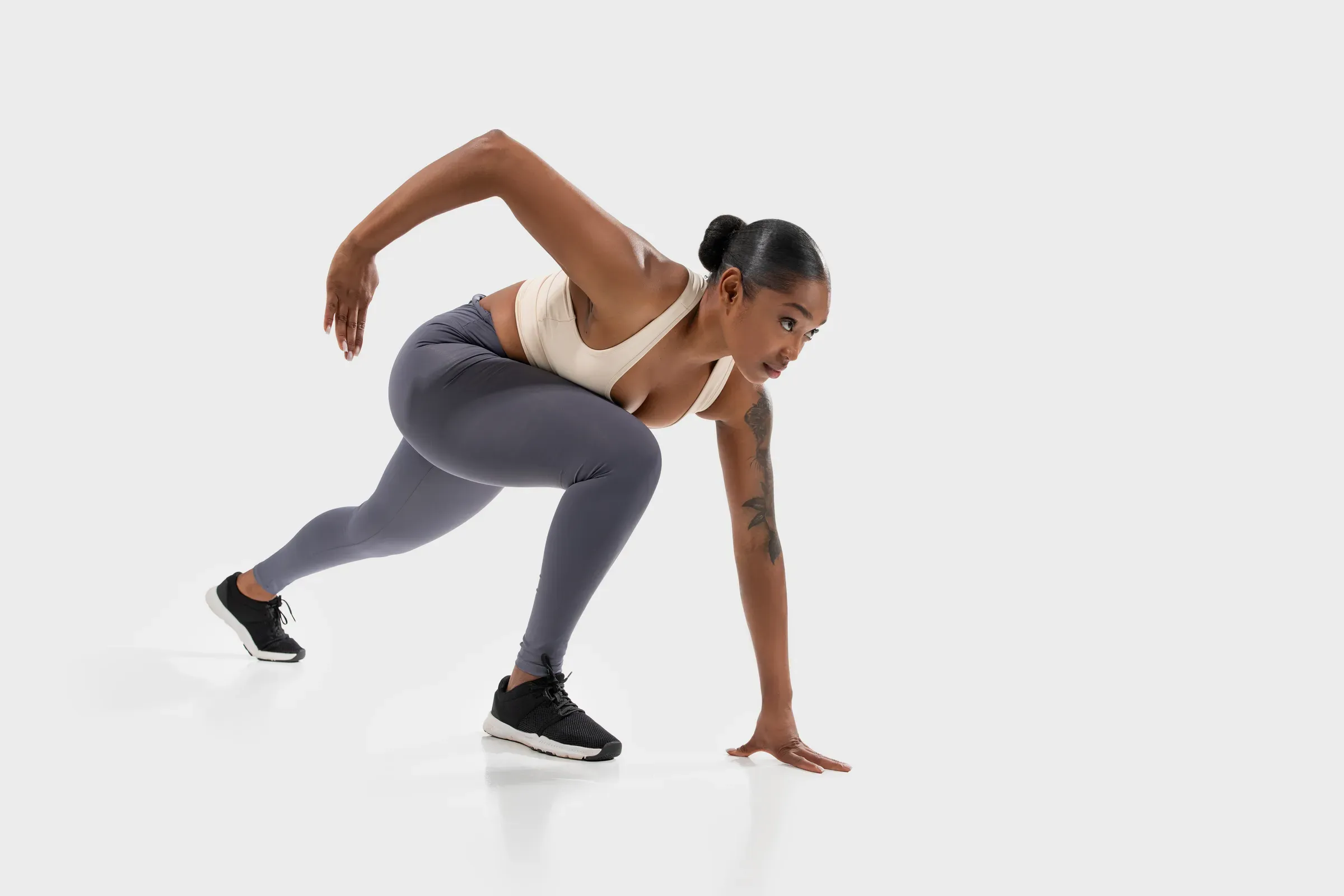
Woman in Gray Leggings and Sports Bra in Starting Position, women's activewear ecommerce
Women's activewearWomen who train regularly and buy for a specific activity, who trust a brand once a legging has survived a squat test and a wash, and who check reviews for sheerness, compression and whether the reviewer is their height and size before ordering.

How women's activewear makes money

Four levers, and what limits each one here

Revenue is traffic times conversion rate times order value times purchase frequency. In this niche each lever has its own ceiling.

Traffic

Traffic: activity and fabric queries own the category

Activewear demand is written as a job to be done. Leggings for running, high impact sports bra for large bust, squat-proof leggings with pockets, 7/8 length for petite. A brand with one Leggings collection ranks for none of it. The traffic lever is a collection architecture built from the activity, the support level, the rise, the length and the fabric, each as an indexable page with copy that explains what the garment does under load, plus Shopping listings that carry the same attributes in product_detail. Fabric names the brand invented need a page too, because once a fabric earns a reputation it becomes a search term on its own.

Conversion

Conversion: make one size the obvious answer

Bracketing is a conversion problem disguised as a returns problem. The shopper orders two sizes because the page did not give her enough to choose one. What limits conversion is a size chart in inches with no garment measurements, a compression scale nobody explains, no note on whether the fabric is opaque when stretched, and reviews that cannot be filtered by the reviewer's size. We add a fit finder that asks for height, usual size and preferred compression, show the model's size and measurements on every product, state the opacity and compression in words, and surface reviews from people of the same size first. Fewer double orders, fewer returns, better conversion on the size that stays.

Order value

Order value: the set, the second colourway and the bra

Activewear is bought as an outfit, and the order grows when the page sells the matching bra or the second colourway of a legging that already fits. The limits are a product page that shows the legging alone, a cart with no complete-the-set suggestion, and set pricing that only exists in a promotion. We build shop-the-set on every product with live stock, a colourway carousel that lets a returning customer add a second pair of a known fit without leaving the page, and a bundle price for legging plus bra that holds all year rather than only in a sale.

Frequency

Frequency: new colourways to a customer whose fit you know

Repeat purchase in activewear runs on fit loyalty. Once a legging has passed the squat test and three washes, the customer wants the same cut again in a new colour, and she wants to hear about it before it sells out in her size. The limits are a customer file that does not record the size and fit she kept, a launch email that goes to everyone regardless of size availability, and no signal about when a legging is due for replacement. We record kept size by style from returns and exchanges, send colourway launches segmented to customers whose size is in stock, and time a replacement nudge to the wear the fabric can take.

Search visibility

Search: activity, support level, rise, length and fabric as collections

The queries that convert in activewear describe the garment's job and its construction. Activity terms (leggings for running, yoga pants, lifting shorts), support terms (high impact sports bra, medium support), construction terms (high-waisted, 7/8 length, pocketed, squat-proof) and fabric terms (buttery soft, compression, sweat-wicking). Each cluster needs a collection page with real copy that explains what the garment does under load, which body types and activities it suits, and how the sizing runs, with the product grid filtered by the attribute rather than a parameter URL that Google ignores.

The second layer is the brand's own fabric and fit names. A signature fabric earns its own page that explains the weight, stretch, opacity and care, links to every product made from it and answers the questions reviewers keep asking. Fit guide pages, one per silhouette, rank for is brand name true to size and carry the model measurements and garment measurements that the product page summarises.

Technically, colourways stay as variants on one product URL, size filters are never indexed on their own, and reviews are marked up with Product and AggregateRating data that validates. Video of the garment in motion belongs on the product page with a transcript so the sheerness and compression answers exist as text.

Queries that matter

  • squat proof leggings with pockets
  • high impact sports bra for large bust
  • high waisted 7/8 leggings petite
  • leggings that are not see through when bending
  • is brand name true to size
  • compression leggings for running
  • seam-free workout set

Activity and construction collections with substantial copy, fabric pages, and fit guides that answer the sheerness and sizing questions rank. A single Leggings collection with a filter sidebar does not, and neither does a blog about wellness.

AI answers

AI answers: sheerness, support and true-to-size questions

Shoppers ask assistants whether a legging is see-through when squatting, which sports bra is right for running with a large bust, and whether a brand runs small. The stores that get named have those answers in plain text on the product page and the fit guide, with the compression level, the opacity under stretch and the size the model wears stated rather than implied by a photo. We write the fit guides and fabric pages answer-first, keep the sizing language identical across the site, the reviews and the Shopping feed, and check that the pages render as static HTML so the crawlers behind the assistants read the fit notes and not an empty component waiting for a script.

Are these leggings see-through when I squat?
Which sports bra from this brand is high impact enough for running?
Does this brand run small or true to size?
What is the difference between compression and buttery soft leggings?
Which leggings have a pocket big enough for a phone?

Questions shoppers put to assistants. A store gets named when its pages answer them in plain text.

Google Shopping and Merchant Center

Google Shopping and Merchant Center for leggings, bras and sets

Activewear is apparel in Google's eyes, so every item needs age_group, color, gender and size, with item_group_id grouping colourways and sizes into one product. Beyond the required set, the attributes that win the query live in product_detail: rise, inseam length, compression level, pocket, and support level for bras. Titles should read the way the query reads, brand, garment, construction, activity, colour, so a search for high waisted pocket leggings for running finds a title that says exactly that. Material carries the fabric blend, and size_type marks petite or tall lengths where they exist.

Policy trouble in this niche comes from imagery and claims rather than from the garment. Product images must show the garment without promotional overlays, and lifestyle images that crop tightly on the body can be flagged. Descriptions that promise slimming, sculpting or body-shaping results move the listing toward the personal-attribute and misrepresentation policies; describing compression and support is fine, describing a body outcome is not.

Campaigns are split by margin and by role: hero leggings and sets in a campaign bid to margin, sports bras and shorts in their own campaigns because their queries and seasons differ, and clearance colourways in a campaign that accepts a lower return to clear stock before the next launch.

Feed attributes that decide eligibility

  • age_group, color, gender, size
  • item_group_id across colourways
  • product_detail for rise, inseam, compression and support level
  • material for the fabric blend
  • size_type for petite and tall
  • custom_label for hero, bra, clearance

Disapprovals we see in this niche

  • Missing gender or age_group on a bulk colourway upload
  • Body-shaping or slimming language in descriptions
  • Image policy flags on tightly cropped lifestyle shots
  • Price mismatch when a set price applies on the page but not in the feed

Meta and social ads

Meta and social ads: the squat test, the try-on and the wash

The creative that sells activewear shows the garment doing its job. A squat test filmed from behind in real light answers the sheerness question in three seconds. A try-on that states the wearer's height and size and shows three sizes side by side answers the fit question. A wash-and-wear sequence answers the durability question. Creator content works when the creator trains for real and the rights are secured in writing, and catalog ads work for retargeting when the feed images show the colourway being served rather than a generic shot.

Policy is about the body, not the garment. Ads cannot imply the viewer has a body problem, cannot use before-and-after framing, and cannot promise weight loss or a changed shape. Fitness results belong to the customer's own words, not to the brand's claims. Audiences start from the customer file and site visitors, then move to broad prospecting with strong creative, since interest targeting for fitness is crowded and expensive during the January peak.

  • The squat test from behind with the compression level on screen
  • Three sizes on three bodies with height and size stated
  • Wash test: the legging after twenty washes next to a new one
  • One garment, three activities, filmed in a real session
  • Creator training in the set with rights secured in writing

Policy line

No before-and-after bodies, no weight-loss or body-shaping claims, no personal attributes that imply the viewer's fitness or shape, and no tightly cropped imagery that focuses on a body part rather than the garment.

Conversion and the store

The store: fit, sheerness and support on the product page

The activewear product page has to settle fit before anything else. The shopper wants to know her size in this cut, whether the fabric is opaque when stretched, how much compression to expect, and, for a bra, what impact level it holds. Most templates give her a generic size chart, a fabric name and a photo. We add a fit block with the model's height, size and measurements, a stated compression and opacity, a support-level scale for bras, a fit finder that asks for height and usual size, and reviews filtered by the reviewer's size so she reads the ones that apply to her. Exchange-first returns, stated on the page, take the fear out of choosing one size.

The collection page carries revenue too, because activity shoppers compare across a grid. Quick-add with size selection, colourway swatches that swap the image, and a filter that shows only her size in stock keep her on the site. On mobile, the sticky add-to-cart with the size selected, the shop-the-set block below the fold and a video that plays muted without a heavy player decide more than any redesign.

Objections the page must answer

  • “Which size do I take in this cut and rise”
  • “Will these be see-through when I bend or squat”
  • “How much compression is this, really”
  • “Is this bra supportive enough for running or HIIT”
  • “If I get the size wrong, is exchanging easy and free”

Email, SMS and retention

Email and SMS: the exchange path, the colourway launch and the wear clock

The first flow to fix in activewear is the exchange path. A post-delivery email that asks how the fit worked and offers a one-click size exchange keeps the order that would otherwise become a refund, and it records the size the customer kept. From that point, colourway launches go only to customers whose kept size is in stock, which lifts launch revenue and stops the disappointment of a sellout email with nothing in her size.

The second layer is timed to wear rather than to a calendar. Leggings worn several times a week lose their recovery over months, and a replacement nudge for the same cut lands well when it arrives before the waistband gives up. Activity content earns the right to keep sending: a short series on training in the heat, layering for autumn, or caring for compression fabric. SMS is reserved for restocks in the customer's size, the launch window for a new colourway, and shipping updates. Win-back names the cut and size the customer bought rather than offering a generic code.

  1. Fit check and exchange

    Five to seven days after delivery

  2. Colourway launch by kept size

    At launch, only to sizes in stock

  3. Set completion

    Two weeks after a single-item first order

  4. Wear-based replacement

    Several months after purchase, tuned by product and reorder data

  5. Restock in your size

    The moment the variant returns to stock

Where revenue leaks

The leaks we find in women's activewear stores

The Growth Analysis ranks these against your own numbers and says which to close first.

Get a Growth Analysis for your activewear brand
  • Returns reported as a footnote

    Revenue is celebrated at checkout and the returns arrive three weeks later in a different report, so a hero legging with a grading problem keeps getting ad budget while it quietly loses money.

  • The size chart that causes bracketing

    A chart with tag sizes and no garment measurements, compression or opacity notes forces the shopper to order two sizes and turns the second into return shipping and inspection cost.

  • Launch emails sent regardless of size stock

    Every customer hears about the new colourway, half of them find their size gone, and the brand has spent its best moment of attention teaching them to shop elsewhere.

  • Construction attributes missing from the feed

    Rise, inseam, compression and support level never reach product_detail, so Shopping shows the legging for the generic query and not for the specific one the brand would win.

  • Body-outcome claims in ad copy

    A description that promises sculpting or slimming trips the personal-attribute and misrepresentation policies on Meta and in Merchant Center during the January peak, when review queues are longest.

Platform notes

Where the platform changes the work

Shopify

Rise, inseam, compression, opacity and support level live in metafields so they render in the fit block and flow into product_detail. A fit-finder app or a native quiz records the recommended size, and the exchange flow runs through a returns app that writes the kept size back to the customer record.

WooCommerce

Global attributes for activity, rise, length and support level power both the filters and the attribute archives that can be indexed, and the feed plugin must map them to product_detail rather than dropping them at export.

Headless

Video of the garment in motion and the fit finder are the two components most likely to render client-side only, so both need server-rendered fallbacks with the fit text in the HTML.

Questions

Women's activewear owners ask us

By CartKernel · Last reviewed

How do you bring down the return rate on leggings without hurting sales?

By giving the shopper enough to pick one size. Garment measurements alongside tag sizes, the model's height and size on every page, compression and opacity stated in words, a fit finder that asks for height and usual size, and reviews filtered by the reviewer's size. Exchange-first returns then keep the order when the guess is slightly off.

Can activewear ads show bodies in motion without policy problems on Meta?

Yes. Showing the garment worn during training is allowed. What gets rejected is framing that implies the viewer has a body problem, before-and-after comparisons, weight-loss or body-shaping promises, and images that crop tightly on a body part. We plan creative around the squat test, the try-on and the wash test, which show the product rather than a body outcome.

What should our Shopping feed include beyond the required apparel fields?

Rise, inseam, compression level and pocket details in product_detail for leggings, support level and impact rating for bras, the fabric blend in material, size_type for petite or tall lengths, and a custom label separating hero styles, bras and clearance so campaigns can be bid by margin.

Is a fit finder quiz worth building for an activewear store?

Usually, when it asks for height, usual size in a common brand and preferred compression, and returns one size with a reason. A quiz that ends on a generic collection adds friction. We test the finder against the improved size block alone and keep the version that produces more kept orders per visitor.

How do you handle January, when everyone advertises workout clothes at once?

By loading the activity and construction campaigns early with copy that names the specific feature, protecting the brand terms from competitors, and keeping the creative to try-ons and squat tests that stand apart from generic gym imagery. Email and SMS carry the returning customers so paid budget goes to new ones.

How long does it take for activity and fabric collections to rank?

The technical and structural work shows in crawl and indexation data within weeks. Activity and construction collections typically start ranking over three to six months depending on competition, and fabric or fit-guide pages often move sooner because few brands build them properly.

Grow your women's activewear store.

A free Growth Analysis ranks what your store should fix first, by revenue at stake, in about a week.