Skip to content

Fashion & apparel · ecommerce growth

Hat brand marketing agency

Hats sell on silhouette and stall on sizing. Someone sees a shape on a person, searches for the style name they half remember, then hesitates because they have no idea whether their head is a 7 1/4 or a large. We build hat brands around those two facts: style and material collections that catch the search, a sizing path built on head circumference rather than guesswork, shipping and bundle economics that make a low-ticket order profitable, and a custom embroidery route for the team and event orders that quietly carry the margin.

The buyer, in brief

Consideration
Minutes to a couple of days for a single hat, one to three weeks for a custom or team order
Purchase frequency
One or two hats a season for style buyers, plus a replacement when a favourite wears out or is lost
Seasonality
Beanies and felt from autumn, straw, bucket and sun hats from spring, with festival, race day and gifting peaks layered on top
Price band
Low to mid on a single hat, which makes shipping cost and basket size the margin question
Return risk
Low overall but almost entirely about fit, which a circumference guide and an adjustable option can prevent
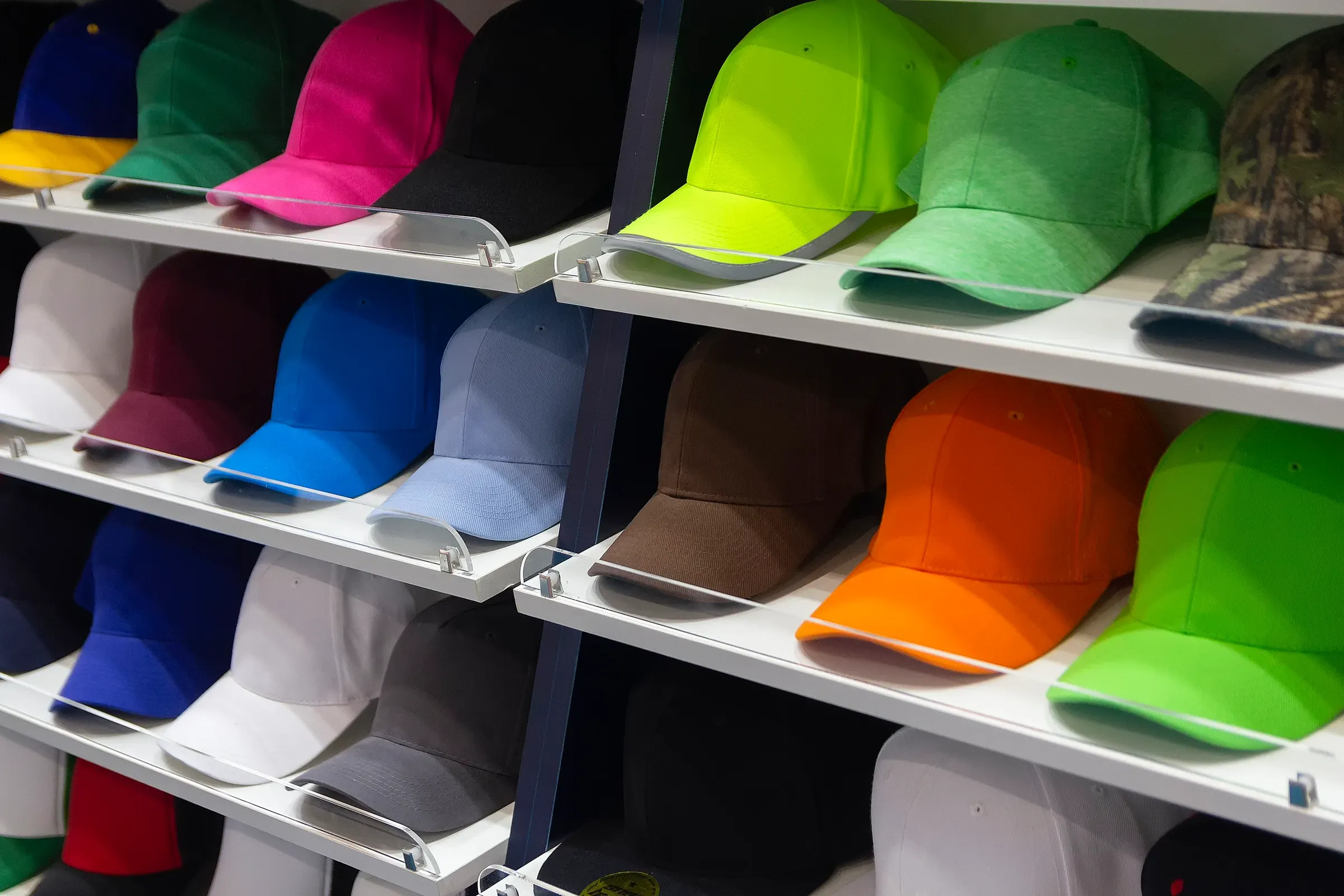
Colorful caps neatly displayed on shelves in an shop, hats & headwear ecommerce
Hats & headwearStyle-led buyers who found the shape on social and do not know their hat size, repeat buyers who know their fitted size exactly, and team, event and business buyers ordering the same cap with a logo on it.

How hats & headwear makes money

Four levers, and what limits each one here

Revenue is traffic times conversion rate times order value times purchase frequency. In this niche each lever has its own ceiling.

Traffic

Traffic: the style name is the whole search

Hat demand is expressed as style names and materials: five panel cap, trucker hat, dad hat, bucket, wool felt fedora, waxed canvas cap, ribbed beanie, wide brim sun hat. Shoppers use those terms with confidence even when they cannot describe their own size, and each one deserves a collection that explains the shape, the crown height, the brim and who it suits, with the products that qualify beneath it. Most hat stores publish one hats page and a colour filter, which hands every style query to marketplaces. Material and occasion pages sit alongside them, since straw for a wedding and wool for winter are different searches by different buyers.

Conversion

Conversion: turn head size into a number

The single biggest conversion problem in this niche is that people do not know their hat size. A fitted cap is sold in fractions of an inch, a flexfit in small, medium and large, and a snapback in one size, and the shopper holds none of those numbers. The fix is a measuring instruction with a picture, a conversion table between head circumference in centimetres and inches, fitted sizes and alpha sizes, and a clear statement of which of your styles adjust and by how much. Placing that beside the size selector rather than behind a footer link is what moves the add-to-cart rate, and it is also what prevents the return.

Order value

Order value: the basket has to carry the shipping

A single hat plus a shipping charge is a thin order, and free shipping on one low-priced item is thinner still. Order value work here is arithmetic before it is merchandising: a free shipping threshold set just above the price of one hat, two-for pricing on beanies and caps, seasonal pairings with the scarf or gloves that go with them, and a gift-ready option that adds value rather than discount. Custom embroidery is the other lever, since a personalised cap carries a higher price and almost no return risk. Bundles need real pages so they can be found in search rather than existing only inside a cart drawer.

Frequency

Frequency: seasons, losses and the size you already know

Repeat buying in headwear is driven by three things: the season changing, a hat being lost or worn out, and a customer who now knows their size buying the same style in another colour. Once a store has recorded the size someone bought, the second purchase becomes easy to prompt, because the objection that stopped them the first time has gone. Seasonal changeover emails, new colourway alerts filtered to sizes in stock, and a simple replace-your-favourite path all pay. Team and event customers repeat on their own cycle, so saving the artwork and the previous quantity turns an annual order into a two-minute reorder.

Search visibility

Search: style, material and occasion collections that answer the shape

Headwear ranks on vocabulary. Style collections are the backbone, one for each shape the market names, with copy that describes the crown, the brim, the closure and the face shapes it tends to suit, plus the products that qualify. Material collections follow: wool felt, straw, waxed cotton, corduroy, merino. Occasion pages cover the searches that spike, such as sun hats for travel, race day hats and winter beanies for running.

The sizing content is the second pillar and it is where most hat stores can win quickly. A page that explains how to measure a head, converts between centimetres, inches, fitted sizes and alpha sizes, and says which styles adjust will rank for a steady stream of queries and will feed the product pages internally. It should be a real page rather than a modal, so it can be crawled, linked and cited.

Technically, colourways stay as variants under one canonical product URL, and personalised or embroidered versions should not be separate indexable products. Where a store carries a licensed or collaboration line, those pages need enough of their own copy to stand up rather than repeating a supplier description that appears on a dozen other sites.

Queries that matter

  • what size hat do i wear
  • 5 panel cap
  • wool felt fedora mens
  • custom embroidered hats no minimum
  • wide brim sun hat upf
  • fitted cap size chart cm
  • corduroy trucker hat

Style and material collections written by someone who knows the shapes, plus a genuinely useful measuring and conversion page, rank here. A single hats collection with a colour filter does not.

AI answers

AI answers: sizing conversions and which shape suits what

The questions assistants field in headwear are practical and answerable: how to measure for a hat, what a 7 1/4 is in centimetres, which shape suits a round face, whether a straw hat can be packed, and where to get twelve caps embroidered without a large minimum. A store gets named when its measuring and conversion content exists as text on a crawlable page rather than inside a popup or an image, when style pages describe the shape in the words shoppers use, and when custom order terms such as minimums and turnaround are stated plainly. We write those pages answer first and make sure the size table is real text rather than a graphic.

What size hat is a 58 centimetre head?
How do I measure my head for a fitted cap?
Which hat shape suits a round face?
Can I order custom embroidered caps with no minimum?

Questions shoppers put to assistants. A store gets named when its pages answer them in plain text.

Google Shopping and Merchant Center

Google Shopping and Merchant Center for a low-ticket accessory

Headwear sits under apparel and accessories, so age_group, color, gender and size still apply, and unisex styles should say so rather than being split into two listings. Size carries the head measurement or the alpha size, and size_system says which convention you are using, which matters because a shopper searching in centimetres and one searching in fitted sizes are the same person with different information. Material and pattern do real work here, since wool, straw, canvas and corduroy are how people shop. Item_group_id ties colourways together so one listing serves the query.

The economics are the harder problem. Low-priced items with a shipping charge look expensive next to a marketplace listing with free delivery, so shipping settings have to be accurate at item level and any free shipping threshold has to be reflected honestly. Promotions can carry the threshold message into the listing. Personalised products need care: a cap whose price rises with embroidery should list at its base price with the option priced on the page.

Campaign structure follows margin. Style and material terms are bid to their own return, gifting and seasonal peaks are funded separately, and free listings are monitored as their own line since they carry much of the long tail here.

Feed attributes that decide eligibility

  • size with head circumference or alpha size
  • size_system
  • material
  • pattern
  • item_group_id across colourways
  • gender set to unisex where that is true
  • shipping weight for accurate rates

Disapprovals we see in this niche

  • Price mismatch when a personalisation option is baked into the feed price
  • Shipping cost mismatch on low-priced items
  • Missing size or gender on accessory listings
  • Image policy for logos, watermarks or promotional text on product photographs

Meta and social ads

Meta and social ads: the shape on a person, from three angles

Headwear is a visual purchase and the creative has to solve the imagination problem. A hat on a mannequin sells nothing. Footage of the same style on several people, from the front, the side and the three-quarter view, with crown height and brim width visible, does most of the work. Short pieces that answer the sizing question directly, showing a tape measure around a head and the number it lands on, convert unusually well because they remove the objection inside the ad itself.

Prospecting is best broad with strong creative, since style interests are poorly defined in targeting. Catalog retargeting works when the feed image shows the exact colourway. Creator content is native to this category and travels well, but rights need writing down before the ad runs, and any claim about sun protection has to match what the product can actually support.

  • The same style on several head shapes, front and side
  • A tape measure around a head, landing on the size
  • Packing and unpacking a straw hat to show it recovers
  • Embroidery stitched onto a cap in close up
  • Seasonal styling, one hat with three outfits

Policy line

Sun protection claims need to match the product's actual rating, and creative should avoid framing that comments on the viewer's appearance or head shape.

Conversion and the store

The store: sizing beside the button, shipping cost in the open

The product page needs the measurement, not the label. Crown height, brim width, the internal circumference range for each size, the closure type and how much an adjustable style actually adjusts should sit beside the size selector, with a link to a real measuring guide. Photographs on several people with their head sizes stated do more than any copy. Where a style runs small or large, saying so plainly prevents the exchange before it starts.

The other conversion issue is the basket. On a low-priced item, a shipping cost revealed at checkout is the most common reason a cart is abandoned, so the threshold and the delivery charge belong on the product page and in the cart drawer. Bundle prompts should appear where they help rather than as an interruption, and the custom embroidery path needs its own clearly signposted route so a team buyer does not try to force it through the retail cart.

Objections the page must answer

  • “What size am I and how do I find out”
  • “Will it actually fit if I have a larger head”
  • “How high is the crown and how wide is the brim”
  • “Does it hold its shape and can it be packed”
  • “What will shipping cost on a single hat”
  • “Can I get my logo on it and how long will that take”

Email, SMS and retention

Email and SMS: the size on file, the season and the team reorder

Once a customer's hat size is known, every later email gets easier. The post-purchase sequence should capture and confirm the size, cover care and shape retention for felt and straw, then go quiet until there is a reason to write. New colourway alerts filtered to styles available in that size, seasonal changeover notes as the weather turns, and a replacement prompt when a favourite is likely worn out cover most of the repeat revenue.

The custom and team side runs on its own flows: an artwork proof sequence with clear approval steps, a status update at production and dispatch, and an annual reorder reminder that repeats the last quantity and design. Gifting sequences matter more here than in most apparel, because a hat is a common present and the size question is the barrier, so an adjustable recommendation and a gift receipt path belong in the seasonal send.

  1. Size confirmation and care

    On delivery, with a note on shape and storage

  2. New colourway in your size

    When a style the customer owns lands in a new colour

  3. Seasonal changeover

    Four to six weeks before the weather turns, by region

  4. Custom order proof and production updates

    At proof, at approval and at dispatch

  5. Annual team reorder

    Eleven months after the previous logo order

Where revenue leaks

The leaks we find in hats & headwear stores

The Growth Analysis ranks these against your own numbers and says which to close first.

Get a Growth Analysis for your hat brand
  • Sizing hidden behind a link

    The one thing stopping the order is a number the shopper does not have, and the guide that would give it to them sits in the footer where nobody looks.

  • Shipping revealed at checkout

    On a low-priced hat the delivery charge changes the decision, and discovering it at the last step is the most common reason the cart is abandoned.

  • Custom orders squeezed through the retail cart

    A buyer wanting twenty caps with a logo has no route except a contact form, so the order goes to a promotional supplier who published a price.

  • One hats collection for twenty styles

    Every style name people actually search for lands on the same grid, so the store ranks for none of them and pays for all of them in ads instead.

Platform notes

Where the platform changes the work

Shopify

Head circumference ranges, crown height and brim width live in metafields so they appear on the product page and feed into product_detail. Personalisation apps should add embroidery as an option with visible pricing rather than creating duplicate products that split the catalog and the feed.

WooCommerce

Global attributes for style, material and size convention drive both the filters and the indexable archives, and a shipping table built on real parcel weights keeps low-ticket orders profitable.

BigCommerce

Product options handle embroidery and colourway selection on one listing, and price lists give team and wholesale buyers their own pricing without needing a second store.

Questions

Hats & headwear owners ask us

By CartKernel · Last reviewed

How do we get shoppers past the hat sizing question?

By giving them the number. A measuring instruction with a photograph, a conversion table between centimetres, inches, fitted sizes and alpha sizes, and a per-style statement of the internal range and how far an adjustable closure moves. It sits beside the size selector, not in the footer, and it exists as a crawlable page so it also earns search traffic of its own.

Is custom embroidery worth building into the store or better kept as an enquiry?

Build it in if the volume justifies it. A visible embroidery option with stated pricing, artwork requirements and turnaround captures buyers who are comparing suppliers in one sitting, and those orders carry higher value and almost no return risk. Keep a quote path for large team orders, but do not make a customer who wants one monogram send an email.

How do you make single-hat orders profitable after shipping?

By working on the basket rather than the item. Set the free shipping threshold just above a single hat, price two-packs of caps and beanies so the second is easy, build seasonal pairings that have their own pages, and show the delivery cost early so nobody is surprised. Then bid campaigns to the average basket those changes produce rather than to the price of one hat.

Do we need separate pages for every hat style or is one collection enough?

Separate pages, wherever the style has its own name and its own demand. Bucket hats, five panel caps, fedoras and beanies are different searches with different buyers, and each collection can carry copy about the shape, the fit and the occasion. One shared collection ranks for the generic term at best and gives the shopper no reason to trust that you know the category.

What causes most headwear returns and can they be prevented?

Fit, almost entirely. The prevention is a measuring guide people actually use, honest internal ranges per size, a note wherever a style runs small or large, and adjustable options offered to anyone unsure. Photographs on several people with their measurements stated help too. Tracking returns by style and by size then shows which patterns have a grading problem rather than a customer problem.

How should a hat brand handle seasonal swings without going quiet for months?

By running two ranges against one calendar and moving the merchandising rather than the marketing. Straw, bucket and sun styles carry spring and summer, felt, wool and knit carry autumn and winter, and travel or sun protection demand runs through both. Collections stay published year round so their rankings survive, and paid budget follows the search curve rather than the temperature.

Grow your hats & headwear store.

A free Growth Analysis ranks what your store should fix first, by revenue at stake, in about a week.