Skip to content

Fashion & apparel · ecommerce growth

Sustainable fashion marketing agency

A shopper who buys this way wants the receipt, not the adjective. She checks the fibre content, looks for a mark she recognises, wants to know which factory made the garment, and reads the price as the cost of a piece she intends to keep for years. We build brands around that scrutiny: material and certification pages that rank, product data that carries the proof into feeds and AI answers, claims written so they survive a regulator reading them, and retention built on care, repair and the second piece.

The buyer, in brief

Consideration
One to four weeks, longer for outerwear and anything above a few hundred dollars
Purchase frequency
Two to four considered purchases a year, replacing rather than adding to the wardrobe
Seasonality
Two seasonal ranges plus a lift around environmental awareness weeks and the pre-holiday gifting period
Price band
Mid to premium, argued per wear rather than per item
Return risk
Moderate and fit-driven, with small batches making an exchange harder to offer than a refund
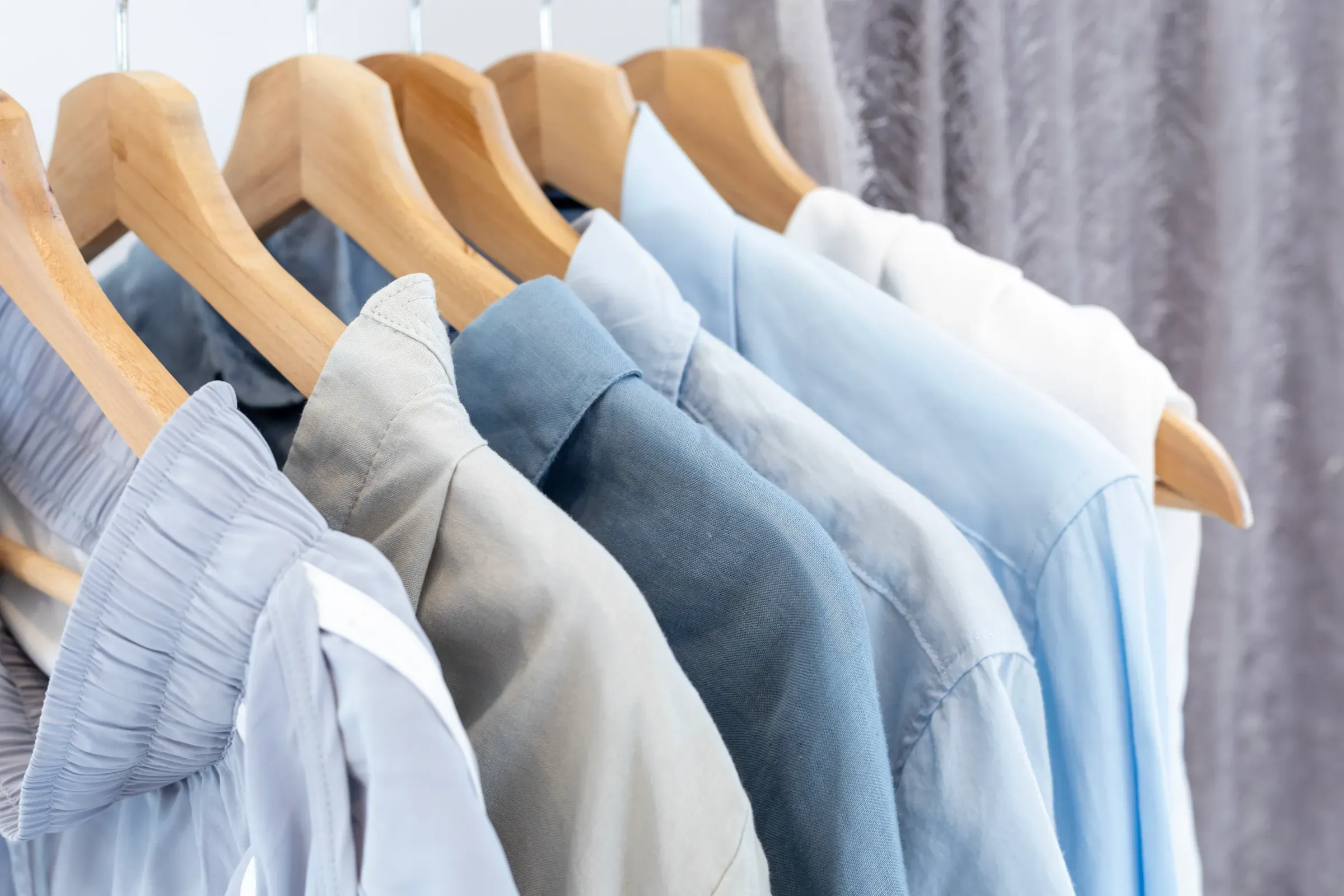
Rack of blue and grey tone cotton shirts on the open closet at second hand retail shop for eco friendly, sustainable fashion ecommerce
Sustainable fashionShoppers who read fibre content before price, look for marks such as GOTS, OEKO-TEX, Fair Trade Certified, bluesign or B Corp, and want to know the country and the factory a garment came from.

How sustainable fashion makes money

Four levers, and what limits each one here

Revenue is traffic times conversion rate times order value times purchase frequency. In this niche each lever has its own ceiling.

Traffic

Traffic: fibre, certificate and country are the queries

Nobody types sustainable clothing and buys. The searches that convert name the material, the standard or the place: organic cotton t-shirt, recycled wool coat, GOTS certified kids clothing, made in Canada jeans. Most brands answer all of that with an About page about their values and a single shop-all collection, so the specific demand lands on marketplaces and on editorial round-ups. The traffic work here is to give every fibre, standard and production country an indexable collection with real copy, the products that qualify and the evidence behind the claim. Those pages also earn links, because writers and directories need somewhere to point when they list brands working to a given standard.

Conversion

Conversion: proof placed where the doubt is

The objection in this niche is not price, it is credibility. A shopper who has read about greenwashing assumes a claim is marketing until the page shows otherwise, and the moment of doubt arrives right beside the claim. So the certificate number, the certifier's own wording, the fibre percentages, the mill or factory and the repair terms belong on the product page in plain text, not in a values manifesto three clicks away. The second conversion job is the price itself. A page that explains what the garment costs to make in fair conditions, what the fibre costs and how long the piece should last does more for the add-to-cart rate than a discount, which quietly undercuts the argument the brand is making.

Order value

Order value: the capsule, not the coupon

Discounting is awkward for a brand that argues against disposable clothing, so order value has to come from the assortment. A capsule built around one piece, styled with the two garments that complete it and priced as a set with a small saving, raises the basket without teaching customers to wait for a sale. Care products, repair kits, replacement buttons and spare hardware add margin and reinforce the longevity message at the same time. Gift cards and made-to-order pieces with a stated lead time also sell well here, because the customer is buying something considered. Each of these needs its own page and its own place in the cross-sell rather than a generic row of suggestions.

Frequency

Frequency: repair, take-back and the next wardrobe gap

A brand built on garments that last cannot rely on people wearing them out. Repeat revenue comes from filling the next gap in the wardrobe, from care and repair, and from take-back or resale programmes that bring a customer back with an old piece and out with a new one. That means a customer record that knows which fibres and fits they already own, a post-purchase sequence that teaches washing and storage rather than pushing another product in week one, and a seasonal note when the range that suits them lands. Take-back schemes need clear mechanics on the site, a credit the customer can spend, and reporting that shows whether returned garments actually produce a second order.

Search visibility

Search: material collections, standards pages and made-in landing pages

This category ranks on evidence and structure. The commercial queries are material-led (organic cotton dress, recycled polyester jacket, hemp shirt), standard-led (GOTS certified clothing, bluesign approved fabric) and origin-led (made in Canada clothing brands), and each deserves a collection with copy that explains the fibre or the standard, why it matters to the garment and which products carry it. Built from product data rather than from filter parameters, those collections stay indexable and stay accurate as the range changes.

The second layer is explanatory. Pages that define a standard, compare two fibres honestly or explain what a certificate does and does not cover attract links from publications and directories and answer the informational half of the demand. They should link down to the collections and to the products, so the authority they earn is not stranded on a blog.

Technically, the catalog needs one canonical product page per style with colour and size as variants, structured data whose material and colour fields agree with the feed, and collection pages that survive a range selling out. Small batches make that harder than it looks. A page that empties every season loses its rankings if the store unpublishes it, so sold-out styles stay live with a notify path and the collection keeps its copy.

Queries that matter

  • organic cotton t shirt canada
  • GOTS certified clothing brands
  • recycled polyester jacket
  • ethically made womens clothing
  • what does OEKO-TEX certified mean
  • hemp clothing brand
  • clothing made without plastic

Fibre and standard collections with real explanation, plus honest comparison pages between two materials, are what rank here. A values page and a shop-all grid do not, because they answer none of the queries people type.

AI answers

AI answers: assistants are asked to check the claim

The questions people put to an assistant in this niche are verification questions: is this brand actually certified, what does the certificate cover, is recycled polyester better than conventional, which brands make organic cotton basics in a given country. Stores get named when the claim, the certifier's wording and the certificate scope sit on the page as plain text, when the material and country data in the structured markup matches the feed and the copy, and when an About page states who owns the brand and where the garments are made. We write the standard and fibre pages answer first, keep one wording for each claim everywhere it appears, and check the pages render as plain HTML for the crawlers behind the major assistants.

Is this brand's organic cotton actually GOTS certified?
What is the difference between recycled and virgin polyester in clothing?
Which clothing brands make organic cotton basics in Canada?
Does OEKO-TEX certification mean a garment is organic?

Questions shoppers put to assistants. A store gets named when its pages answer them in plain text.

Google Shopping and Merchant Center

Google Shopping and Merchant Center when the claim is the product

Apparel feeds need age_group, color, gender and size before anything else, and this niche adds material as a load-bearing attribute rather than an optional one. Fibre percentages belong in material and in product_detail, where the certification name, the certificate scope and the country of manufacture can also sit as attribute and value pairs. Product_highlight carries the three things a shopper would repeat about the garment. Own-brand pieces without a retail barcode set identifier_exists to false rather than carrying an invented code.

Policy risk here is misrepresentation. A title or description that calls a garment sustainable, carbon neutral or plastic free without the evidence on the landing page is the kind of claim that draws a review, and the same wording draws attention from consumer protection regulators in the United States and Canada, whose guidance on environmental marketing asks for specific, substantiated and qualified statements. We write feed text that names the fibre, the percentage and the standard instead of the adjective, and we keep the certificate wording identical on the page.

Campaign structure follows stock. Small-batch and made-to-order styles sit in a campaign that can be paused the day a size run breaks, carry-over core styles are bid to margin, and free listings run and are reported as their own line.

Feed attributes that decide eligibility

  • material with fibre percentages
  • product_detail for certification scope and country
  • product_highlight
  • age_group, color, gender and size
  • item_group_id
  • identifier_exists on own-brand styles

Disapprovals we see in this niche

  • Misrepresentation review over unqualified environmental claims
  • Availability mismatch when a small batch sells out
  • Missing apparel attributes on made-to-order styles
  • Image policy for promotional text or badges on product photographs

Meta and social ads

Meta and social ads: showing the making, not the manifesto

The creative that works here shows work. Footage from the cutting table, the mill or the dye house, a close look at a seam, a founder explaining why a fibre was chosen over a cheaper one, and a customer wearing a piece she has owned for three years all outperform a graphic about the planet. Claims in creative carry the same substantiation burden as claims on the page, and absolute statements such as zero impact are the ones that get pulled, so the ad names the fibre, the standard or the practice and lets the landing page carry the detail.

Prospecting works better broad than through interest targeting, because sustainability interests are crowded and shallow as a signal. Catalog ads retarget well when the images show the actual colourway. Creator partnerships need written rights and a check that nothing the creator says goes further than the brand can support, since the account running the ad owns the claim.

  • Inside the factory or mill, with the process named
  • One seam and one fabric, filmed close
  • A garment after three years of wear, shown honestly
  • The founder on why a fibre costs what it costs
  • Repair and care demonstrated step by step

Policy line

Environmental claims must be specific and supportable, absolute wording such as zero impact or plastic free needs evidence on the landing page, and creator content carries the brand's own claim liability.

Conversion and the store

The store: the page has to prove what the brand says

The product page has four jobs in this niche: state the fibre content exactly, show the certificate or the factory, give garment measurements that let the shopper size once, and explain the care and repair terms that make the price make sense. Most templates put the composition in a collapsed tab and the sustainability story on a separate page, which splits the argument from the product. We bring the composition, the standard, the origin and the care terms into view, and add a longevity or cost-per-wear note wherever the brand can back it.

Small batches change the checkout as well. A size that is nearly gone should say so honestly, a size that has gone should offer a notify path rather than a dead button, and pre-order or made-to-order items need the ship date stated before the shopper commits. On mobile, the composition block, the measurements table and the returns terms all need to be reachable without hunting through tabs.

Objections the page must answer

  • “What is it actually made of, in percentages”
  • “Who certified this and what does the certificate cover”
  • “Where and by whom was it made”
  • “Why does it cost more than the equivalent on a marketplace”
  • “How do I care for it and can it be repaired”
  • “When will a made-to-order piece ship”

Email, SMS and retention

Email and SMS: care first, then the next gap in the wardrobe

The post-purchase sequence here starts with care, not with another product. Washing temperature, drying, storage and how to deal with pilling arrive with the parcel and again after the first wash, because a garment that survives is the whole argument. A repair or alteration note follows a few months later, and a take-back or resale invitation lands once the piece has had a real life.

Acquisition flows move more slowly than in fast fashion. A welcome series that explains fibres and standards earns the right to sell, and browse and cart flows should answer the credibility objection rather than offer a code. Restock and new-batch alerts do the heavy lifting for small runs, and SMS is reserved for size-specific restocks and for the ship-date update on made-to-order pieces. Win-back mentions the fibre or the fit the customer chose last time rather than a blanket offer.

  1. Care and washing guide

    On delivery and again after two weeks

  2. Fibre and standards welcome series

    Four emails across the first three weeks

  3. New batch and restock alert

    When a size run returns, filtered by size where known

  4. Repair and alteration reminder

    Three to six months after purchase

  5. Take-back and resale invitation

    Twelve to eighteen months after the first order

Where revenue leaks

The leaks we find in sustainable fashion stores

The Growth Analysis ranks these against your own numbers and says which to close first.

Get a Growth Analysis for your sustainable clothing brand
  • The claim with no evidence behind it

    The word sustainable appears on the collection, the ad and the feed, and nowhere on the site is there a certificate, a percentage or a factory name. The shopper who checks leaves, and the feed risks a review.

  • Sold-out small batches taken offline

    Unpublishing a style when the run ends throws away the rankings and links it earned. The page should stay live with a notify path and return with the next batch.

  • Composition hidden in a tab

    The fibre percentages are the first thing this shopper looks for and the last thing the template shows, so they check a marketplace listing instead and often buy there.

  • Care and repair sold as a value rather than a service

    The site says garments are made to last but offers no washing guidance, no spare parts and no repair path, so nothing brings the customer back between wardrobe gaps.

Platform notes

Where the platform changes the work

Shopify

Fibre percentages, certificate numbers and factory names live in metafields so they render on every product page, flow into product_detail in the feed and stay consistent in structured data. Collections built from those metafields keep material and standard pages accurate as the range turns over.

WooCommerce

Global attributes for fibre, standard and country power both the filters and the attribute archives that can be set to index, and the feed plugin has to map them into material and product_detail rather than dropping them at export.

BigCommerce

Custom fields carry composition and certification detail, and faceted search needs canonical rules so filtered views of a small catalog do not multiply in the index.

Questions

Sustainable fashion owners ask us

By CartKernel · Last reviewed

How do we talk about sustainability without a regulator taking an interest?

By making claims specific, qualified and provable. Name the fibre and its percentage, name the certifier and the scope of the certificate, and say what the claim does not cover. Guidance on environmental marketing in both the United States and Canada asks for exactly that. We rewrite site, feed and ad copy to that standard and keep one wording for each claim everywhere it appears.

Is it worth building a page for every certification we hold?

Usually yes, when the certificate has search demand and you can explain what it covers. A page that defines the standard, says which of your products carry it and answers the questions shoppers ask about it earns links and ranks for informational queries. A logo in the footer does none of that. Certificates nobody searches for belong on the product page instead.

How do you market small-batch runs that sell out and come back months later?

By keeping the page live and turning scarcity into a list. The style keeps its URL, its copy and its rankings, sold-out sizes offer a notify path, and the next batch launches to the people who raised their hand rather than to the whole list. Feed availability is updated on the same schedule so the listing does not sit disapproved between runs.

Can a sustainable brand run paid ads without undermining the message?

Yes, when the ads sell garments rather than virtue. Material, fit and craft angles carry the same intent people search with, and they avoid the absolute environmental claims that draw reviews. We keep brand and non-brand reporting separate so budget is judged on new customers, and we cap early-stage category terms that mostly serve round-up publishers.

What should we measure that a conventional apparel brand would not?

Revenue net of returns by fibre and by fit, the share of orders that come back through care, repair or take-back, and the second-purchase rate by wardrobe category rather than by product. Those tell you whether the longevity argument is producing repeat revenue or only goodwill. Everything reconciles to orders in the platform rather than to what the ad accounts report.

Do you build the take-back or resale mechanics inside our store?

We build the parts that live on the site: the explanation page, the credit mechanics, the customer record that ties a returned garment to a new order, and the flows that invite people in at the right point in the ownership cycle. Where a third-party resale platform is involved we connect it and report on whether it produces a second order.

Grow your sustainable fashion store.

A free Growth Analysis ranks what your store should fix first, by revenue at stake, in about a week.