Skip to content

Fashion & apparel · ecommerce growth

Lingerie brand marketing agency

A bra is bought by band and cup before it is bought by style, and the shopper who finds a fit that works will come back for it for years. She searches for the size and the construction, uses a fit tool if the store has one, and checks how the parcel and the bank statement will read before she pays. We build lingerie brands around that: size and construction pages that rank, creative and product images that pass the adult-content review on Meta and Google, a fit finder that ends on one size, and flows timed to when a bra wears out.

The buyer, in brief

Consideration
Days for a first bra, with a fit tool or a fitting guide usually consulted; minutes for a repeat of a known style and size
Purchase frequency
A bra is replaced when it loses support, typically within a year of regular wear, and matching briefs and second colours fill the gaps
Seasonality
Valentine's, Christmas and bridal season lift gifting and sets; everyday bras and shapewear sell steadily year round
Price band
Broad, from everyday multi-packs to premium bra-sized pieces, with sets and gifting at the upper end
Return risk
Fit exchanges are common; hygiene rules limit returns on briefs, and a fit-based exchange path keeps most of those orders
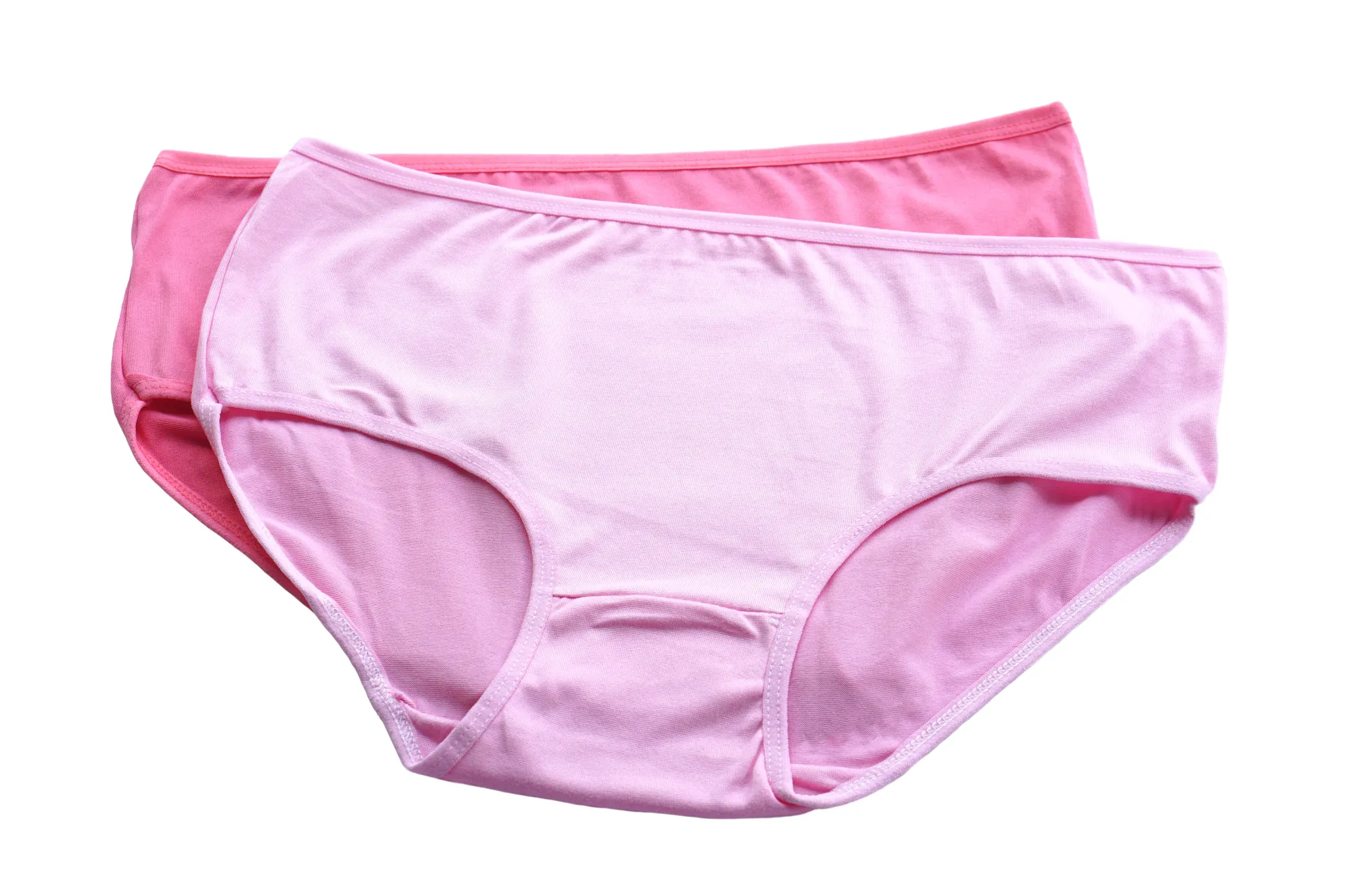
Two pink women's underwear briefs isolated on a white background, featuring a simple comfortable design for, lingerie & intimates ecommerce
Lingerie & intimatesWomen buying for themselves by band and cup size, often after a poor fitting experience elsewhere, who look for sister-size guidance, wire or wireless construction and honest reviews from their size, and partners buying gifts who need the size explained to them.

How lingerie & intimates makes money

Four levers, and what limits each one here

Revenue is traffic times conversion rate times order value times purchase frequency. In this niche each lever has its own ceiling.

Traffic

Traffic: band, cup and construction searches, not the word lingerie

The searches that convert in this niche are specific in a way most catalogs are not. A 34DD bra with no underwire, a plunge bra for a low neckline, a wireless bra with real support for a large bust, a bralette in a 32F, a strapless that stays up. A brand with collections named by colour and collection season ranks for none of it. The traffic lever is a catalog architecture built on size ranges, constructions and problems solved, with a page for each cup range that explains sister sizes and links to every style stocked in it, and Shopping listings whose size and size_system attributes are set so a UK cup does not get served for a US query.

Conversion

Conversion: the fit finder, the sister size and the plain box

Three doubts stop a lingerie order: is this my size in this brand, will anyone know what is in the parcel, and can I exchange it if the cup is wrong. What limits conversion is a size chart with a tape-measure diagram and no brand-specific guidance, a sold-out size with no sister-size suggestion, and shipping and billing details buried in the policy pages. We build a fit finder that asks for current size, brand and fit problems and ends on one size in this brand, show the sister size when a variant is out of stock, state the plain packaging and the billing descriptor on the product page, and put the exchange promise beside the add-to-cart button.

Order value

Order value: the matching set and the second bra in a fit that works

Order value in lingerie grows in two ways: the matching brief added to the bra, and the second colour of a bra the shopper already trusts. The limits are a product page that shows the bra alone, a cart that never suggests the brief, and set pricing that appears only during a sale. We build a complete-the-set block that respects live stock in the shopper's size, a colourway carousel that lets a returning customer add a second bra in her known size from the page, multi-buy pricing on briefs that holds all year, and a gifting path with a size guide written for the partner who does not know the numbers.

Frequency

Frequency: bras wear out on a schedule the customer does not track

A well-made bra loses its band elasticity and support with regular wear and washing, but the customer rarely replaces it until it fails, by which point she may search generically and land elsewhere. The limits are a customer file that records nothing about the size kept, no replacement reminder, and gifting occasions that pass without a message. We record the kept size from orders and exchanges, send a replacement nudge for the same style and size some months after purchase, alert customers when a new colour or a restock lands in their size, and run a gifting flow before Valentine's and Christmas that lets a partner buy the right size without asking.

Search visibility

Search: bra-size pages, construction collections and the fit guide that ranks

Lingerie search demand splits into size queries (34DD bra, 32F bralette, 38B wireless), construction queries (plunge, balconette, t-shirt bra, strapless, underwire versus wireless, front closure) and problem queries (bra for a large bust with narrow shoulders, bra that does not dig in, shapewear for a backless dress). Each cluster needs an indexable collection with copy that explains the construction, who it suits and how the sizing runs, with the grid built from product data rather than a filter parameter.

Size-range pages are the second layer and few brands build them. A page for each cup range that explains sister sizes, what the brand's band feels like, and which styles are stocked to that size earns rankings for the size queries and feeds the product pages. A fitting guide that walks through measuring, common fit faults and how to read them, and the difference between US, UK and EU cup progression ranks for the fitting queries and answers what assistants get asked.

Technically, band and cup run as two variant options on one product URL, colourways stay as variants rather than separate products, size filters are never indexed on their own, and Product and Offer markup reports the real availability per variant so a sold-out 30G does not show as in stock.

Queries that matter

  • 34DD bra without underwire
  • wireless bra with support for large bust
  • plunge bra for low neckline
  • bralette 32F
  • how to find my sister size bra
  • strapless bra that stays up
  • shapewear for backless dress

Construction and problem collections with real fitting copy, cup-range pages that explain sister sizes, and a proper fitting guide rank in this niche. Colour-named collections and lookbook pages with no fit information do not.

AI answers

AI answers: sister sizes, wire versus wireless and what arrives on the doorstep

Shoppers ask assistants what their sister size is when a 34DD is sold out, whether a wireless bra can support a large bust, which brands go up to a J cup, and whether a store ships in plain packaging. The stores that get cited state sizing, construction and support level in plain text on the product and the fitting guide, publish the size range they actually stock, and say on the page what the parcel and the bank statement look like. We write the cup-range and fitting pages answer-first, keep the size-system language consistent between the site and the Shopping feed, and make sure the fit finder has a static text fallback so assistant crawlers read the guidance rather than an empty widget.

What is my sister size if a 34DD is sold out?
Can a wireless bra support a G cup?
Which lingerie brands stock band sizes down to 28?
Does this store ship in discreet packaging?
Is a UK 34DD the same as a US 34DD?

Questions shoppers put to assistants. A store gets named when its pages answer them in plain text.

Google Shopping and Merchant Center

Google Shopping and Merchant Center with the adult flag in mind

Lingerie feeds need the apparel attributes, age_group, color, gender and size, plus item_group_id tying band, cup and colour variants to one product. The size attribute should carry band and cup together, and size_system must state US, UK or EU, because cup progression differs between systems and a mismatch produces returns and a misleading listing. Product_detail carries construction, wire or wireless, padding and support level; material carries the fabric. Titles read as the query reads: brand, construction, feature, size range, colour.

The adult attribute exists in Merchant Center, and most lingerie does not need it, but imagery decides whether a reviewer flags a product as adult-oriented, which limits where and to whom it is shown. Product images on a mannequin, a flat lay or a model in a straightforward pose clear review; suggestive poses and tight crops invite the flag. Descriptions should describe fit and construction and avoid suggestive language. Shapewear that claims to change the body permanently drifts toward misrepresentation; describing smoothing as a construction feature is fine.

Campaigns are split by margin and by role: bra-sized styles in a campaign bid to margin, everyday multi-packs in a volume campaign, sets and gifting in a seasonal campaign that opens before Valentine's and Christmas, and free listings monitored separately so size-page traffic is visible.

Feed attributes that decide eligibility

  • size as band and cup together
  • size_system for US, UK or EU cup progression
  • item_group_id across band, cup and colour
  • product_detail for construction and support
  • adult attribute reviewed per product
  • custom_label for bra-sized, everyday, gifting

Disapprovals we see in this niche

  • Adult-oriented content flags from suggestive imagery or copy
  • Size mismatch between the feed and the page when size_system is missing
  • Availability mismatch on a sold-out band and cup combination
  • Missing gender or age_group on a colourway upload

Meta and social ads

Meta and social ads: product-first creative that clears the adult content review

Lingerie creative on Meta lives inside the adult content rules, and the brands that run consistently learn to sell fit rather than allure. Ads that show the bra on a mannequin or a flat lay clear review; ads on a model clear when the pose is straightforward, the framing shows the garment, and the crop does not focus on a body part. The creative that converts is the fit story: a fitter explaining why a band rides up, a customer describing the first bra that did not dig in, a construction close-up showing the wire channel or the wireless support, and the sister-size explainer as a short video.

Audiences start with customers and site visitors, with lookalikes on customers who kept their first order. Broad prospecting works with fit-led creative and fails with lifestyle glamour. Catalog ads retarget well when the feed images are product-first. UGC needs written rights and a check that the creator has not made claims or shown imagery the account cannot support.

  • A fitter explaining one fit fault and the size that fixes it
  • Construction close-up: the wire channel, the band, the strap adjuster
  • The sister-size explainer as a fifteen-second video
  • Customer in her own words about the first bra that did not dig in
  • What arrives: the plain parcel and the discreet billing descriptor

Policy line

No suggestive poses, no focus on body parts, no implied nudity, no copy that sexualises the product; garments shown on a model in a straightforward pose or on a mannequin, with framing on the product.

Conversion and the store

The store: fit confidence, discretion and the exchange promise

The lingerie product page has to settle the size question and the privacy question before the shopper will pay. We put a fit finder entry on every bra page that asks for current size, brand and the fit problem and ends on one size in this brand, show the sister size automatically when the chosen variant is out of stock, state the model's size, and describe the construction and support in words. Plain packaging and the exact billing descriptor are stated on the product page, not only in the shipping policy, and the exchange promise sits next to the button with the hygiene rule for briefs explained plainly.

Gifting needs its own path: a size guide written for the buyer who does not know the numbers, a gift receipt with no prices, and an exchange window long enough to cover the occasion. On mobile, the band and cup selectors need to work as two clear steps with stock shown per combination, the complete-the-set block should follow the chosen size, and the reviews should be filterable by the reviewer's size so she reads the ones that matter to her.

Objections the page must answer

  • “Am I really a 34DD in this brand or something else”
  • “What happens if the cup is wrong, can I exchange it”
  • “Will the parcel or my bank statement give this away”
  • “Is wireless going to support me or not”
  • “I am buying this as a gift and do not know her size”

Email, SMS and retention

Email and SMS: the fit follow-up, the replacement clock and the gifting calendar

The fit follow-up is the first flow to build. A week after delivery it asks how the band and cup felt, offers a one-click exchange for the sister size, and records the size the customer kept. Everything after that is segmented by the kept size, so a restock or a new colour email only goes to a customer who can actually buy it. A short fit-education series, how to tell when a band has stretched, how to wash to keep the shape, earns the right to keep sending and sets up the replacement message.

The replacement clock runs some months after purchase, timed to the style and to the customer's own reorder pattern where there is one, and offers the same style in the kept size. The gifting calendar runs before Valentine's, Christmas and a wedding season, with a message to the partner where consent exists and a self-purchase message to the wearer. SMS is limited to delivery updates, size restocks and the gifting cut-off, because lingerie is a category where an unexpected message is unwelcome. Win-back names the style and size the customer kept rather than sending a generic code.

  1. Fit follow-up and sister-size exchange

    Seven days after delivery

  2. Set completion

    Two weeks after a bra-only first order

  3. Fit education

    Three short emails over the first month

  4. Replacement reminder

    Some months after purchase, tuned by style and reorder data

  5. Gifting cut-off

    Two to three weeks before Valentine's and Christmas

Where revenue leaks

The leaks we find in lingerie & intimates stores

The Growth Analysis ranks these against your own numbers and says which to close first.

Get a Growth Analysis for your lingerie brand
  • The sold-out size with no sister size offered

    The 34DD is gone, the page says sold out, and the shopper leaves, when a 36D or a 32E would have fitted and was sitting in stock.

  • Ads pulled into review during Valentine's

    A lifestyle image with a suggestive pose gets the ad rejected, the appeal takes days, and the gifting peak passes with the account in review.

  • Discretion buried in the policy page

    The plain packaging and the billing descriptor exist but are stated nowhere near the button, so the shopper who cares most about them never finds out and does not buy.

  • Cup progression lost between markets

    The feed and the size chart use one cup system for customers in two countries, so a UK F cup is served to a US query and comes back as a return with a poor review.

  • The fit finder that ends on a collection

    The quiz asks six questions and lands on a grid of forty bras instead of one size in one style, so the shopper still has to guess and often does not.

Platform notes

Where the platform changes the work

Shopify

Band and cup run as two variant options with stock per combination, construction and support level live in metafields that feed the page and product_detail, and a fit-finder app or a native quiz writes the recommended size to the customer record so flows can segment by it.

WooCommerce

Variable products carry band and cup as attributes with per-combination stock, global attributes for construction power the indexable archives, and the feed plugin must export size_system and product_detail rather than the default size only.

BigCommerce

Variant options handle band, cup and colour with per-variant stock, and custom fields carry construction and support level; faceted search needs canonical rules so size-filtered URLs stay out of the index.

Questions

Lingerie & intimates owners ask us

By CartKernel · Last reviewed

Can a lingerie brand run Meta ads without constant rejections?

Yes, when the creative is product-first. Garments on a mannequin, flat lays and models in straightforward poses with the framing on the garment clear review; suggestive poses, tight crops and sexualised copy do not. We build the creative plan around fit stories and construction close-ups and review every asset against the adult content rules before it goes live.

Should our products be marked as adult in Merchant Center?

Most lingerie does not need the adult attribute, and setting it limits reach. The decision is made product by product based on the imagery and the copy. If a product's images would read as adult-oriented to a reviewer, the images are changed first; the attribute is a last resort for items that cannot be presented otherwise.

How do you build bra-size pages that actually rank?

As indexable pages per cup range, built from product data, with copy that explains sister sizes, how the brand's band feels, and which styles are stocked to that size, linked from every product available in the range. They are supported by a full fitting guide and a construction collection for each bra type.

What should a lingerie fit finder ask and where should it end?

Current size and the brand it was bought in, the fit problems experienced in words the shopper uses, and a preference for wired or wireless. It should end on one size in one style in this brand, with the sister size named, and it should write that size to the customer record so later emails only show what she can buy.

How do you handle the difference between US, UK and EU bra sizes?

By setting size_system correctly in the feed for each market, publishing a conversion table in the fitting guide, and showing the shopper's local system on the product page based on the market she is shopping in. Sizes are never converted silently, because a silent conversion produces the returns it was meant to prevent.

Is discreet packaging really a conversion factor?

For a meaningful share of shoppers, yes, and it costs nothing to state. Plain outer packaging, no branding on the label and a neutral billing descriptor, all written on the product page near the button, remove a doubt that otherwise goes unspoken and unaddressed.

Grow your lingerie & intimates store.

A free Growth Analysis ranks what your store should fix first, by revenue at stake, in about a week.