Skip to content

Pets · ecommerce growth

Small pet brand marketing agency

Rabbit, guinea pig, hamster, chinchilla and parrot owners shop in a long tail almost nobody serves well. They search by species and by a safety question, because the wrong shavings, the wrong wheel size or the wrong cage bar spacing can hurt the animal, and they reorder hay, pellets and bedding on a rhythm the calendar does not match. We build small-animal stores as species-first catalogs: species hubs that answer the safety question and list only what is safe, care guides that rank where big retailers have nothing, subscriptions for the bulky consumables, and shipping rules that make a box of hay economic to send.

The buyer, in brief

Consideration
Days for a cage or an enclosure while dimensions are checked against welfare guidance; minutes for hay, pellets and bedding once a brand is trusted
Purchase frequency
Hay and bedding every two to four weeks, pellets monthly, chews and toys as they are destroyed; cages and wheels once, often upgraded within the first year
Seasonality
Flat for consumables, with a hay bump at each new harvest, cage upgrades after holiday adoptions, and outdoor run and hutch demand in spring
Price band
Value on consumables with margin in subscriptions and bundles; mid to premium on enclosures, wheels and bird cages sized to welfare guidance
Return risk
Low on consumables; cage and wheel returns come from size and bar-spacing confusion, prevented by stating dimensions and species suitability on the page
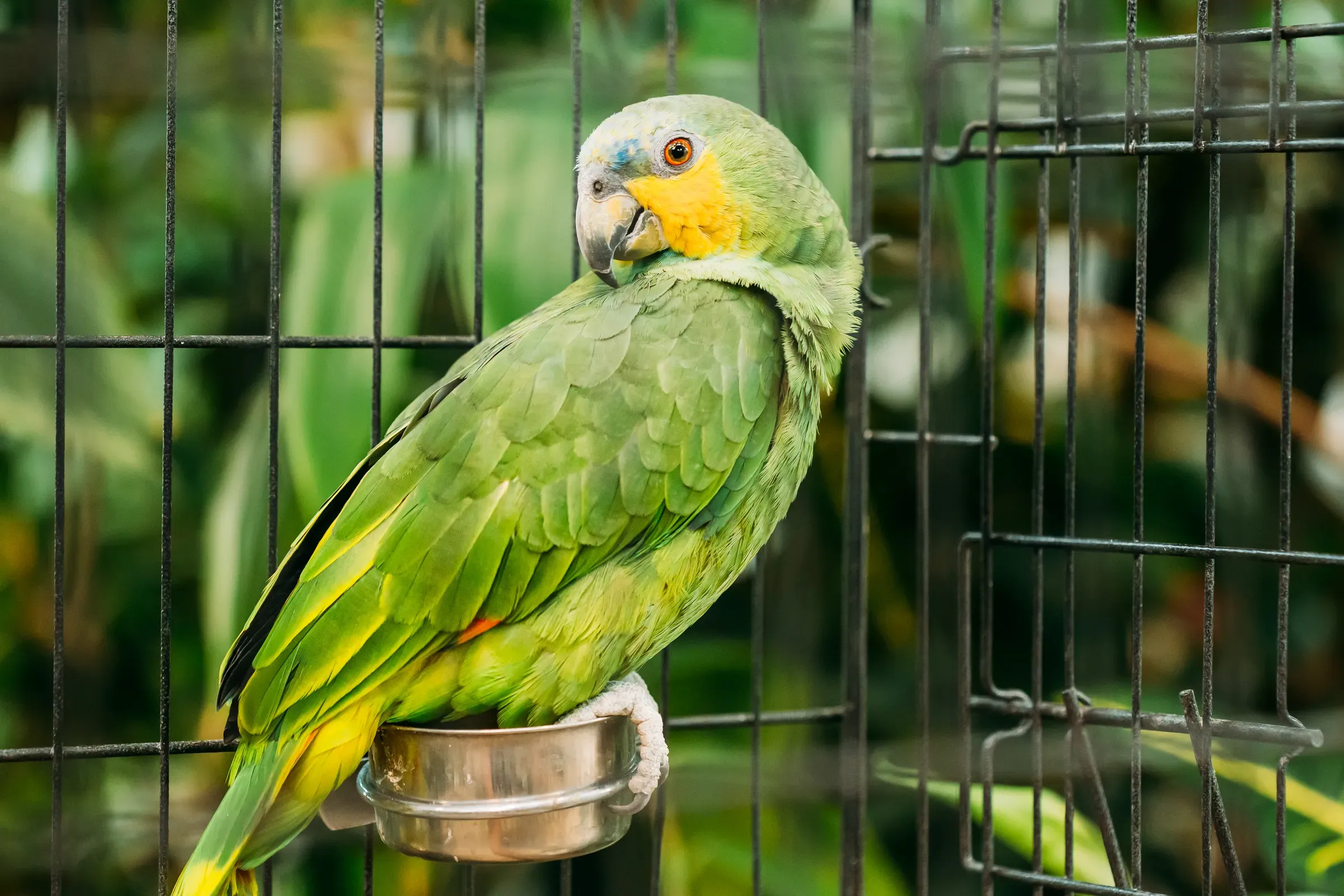
Orange-winged Amazon Or Amazona Amazonica, Also Known Locally As Orange-winged Parrot And Loro Guaro, Is A, bird & small animal supplies ecommerce
Bird & small animal suppliesOwners of rabbits, guinea pigs, hamsters, rats, chinchillas, budgies and parrots, often first-time keepers of that species, who check whether a product is safe for their animal, look for hay cut, pellet formulation and cage dimensions, and trust the store that explains why over the store that only lists.

How bird & small animal supplies makes money

Four levers, and what limits each one here

Revenue is traffic times conversion rate times order value times purchase frequency. In this niche each lever has its own ceiling.

Traffic

Traffic: the species page and the safety question nobody else answers

The queries in this niche are specific and lightly contested: is pine bedding safe for hamsters, what size wheel does a Syrian hamster need, first cut versus second cut timothy hay, guinea pig pellets with vitamin C, cage bar spacing for budgies, chinchilla dust bath sand. Large retailers have a Small Animals category and nothing else, so a store that builds a hub per species, a guide per safety question and product pages that state which species each item suits can rank quickly. The traffic work is that structure, written from welfare guidance rather than from packaging, with feed titles that name the species and the defining attribute so Shopping serves the listing for the right animal.

Conversion

Conversion: safe for this species, in this size, with dimensions in centimeters

A small-animal owner needs to know that a product is safe for their species before anything else, and then that it is big enough. Conversion work is a species badge on every product, a plain sentence on why an item is or is not suitable for related species, dimension tables for cages, hutches and wheels in centimeters and inches, bar spacing stated for bird cages, and hay pages that explain cut, softness and which animals prefer which. Pellet pages list ingredients and the formulation notes that matter for that species, such as stabilized vitamin C for guinea pigs, without turning them into health claims. A days-of-supply figure by animal count answers the last question.

Order value

Order value: the hay box, the species starter kit and the enclosure that meets the guidance

Hay is cheap per bag and expensive to ship, so the order value lever is the box: a larger quantity priced per kilogram beside the small bag, with the shipping cost per kilogram shown so the saving is obvious. Species starter kits (enclosure, hay rack, bottle, bowl, hideout, first hay and pellets) carry the first order for new owners who would otherwise buy piece by piece from three stores. Enclosure upgrades from a starter cage to one that meets welfare guidance are the second big order. Parrot owners buy toys as consumables because the bird destroys them, and a toy bundle by beak size sells better than single toys.

Frequency

Frequency: hay, bedding and the parrot's monthly toys

Consumption in this niche is set by animal count and species, and the subscription should be computed from both: two rabbits use hay at a rate the store can estimate, a pair of guinea pigs empties a pellet bag on a schedule, a hamster's bedding change follows the cage size. Reminders are timed to that rate rather than to thirty days. Parrot toys are the surprising frequency product, destroyed and replaced every few weeks. A harvest alert for new-season hay brings hay buyers back on a real event, and a species care series in the first month establishes the store as the place the owner returns to when the next question comes up.

Search visibility

SEO for small-animal stores: species hubs, safety guides and hay pages that outrank the giants

Search demand for small animals and birds is a long tail of species-specific, safety-led questions with thin competition. The catalog should be built species first: a hub for rabbits, one for guinea pigs, one for hamsters and so on, each listing only the products that are safe for that animal, with copy on housing, diet and the mistakes new owners make. Under each hub sit the guides that answer one question each, such as which bedding is safe for hamsters or what size cage a pair of rabbits needs indoors, written from established welfare guidance and linking to the products that qualify.

Hay and pellet pages are the commercial core. A hay page explains the cut, the softness, the harvest and which animals tend to prefer it, and shows the box price per kilogram beside the bag. A pellet page lists ingredients, the formulation notes for the species and the feeding amount by weight. Enclosure and wheel pages state internal dimensions, bar spacing and floor area in both units, because those are the numbers the guidance uses and the numbers the owner is checking.

Technically, species filters must be indexable collections, hay and bedding sizes are variants of one product rather than separate URLs, and bird supplies belong in their own species hubs by size class (budgie, cockatiel, large parrot) rather than in a single Bird category.

Queries that matter

  • is pine bedding safe for hamsters
  • what size wheel does a Syrian hamster need
  • timothy hay first cut vs second cut
  • guinea pig pellets with vitamin C
  • budgie cage bar spacing
  • chinchilla dust bath sand
  • rabbit hay delivery subscription

Species hubs that list only what is safe, guides that answer one safety question each, hay and pellet pages that explain cut and formulation, and enclosure pages with full dimensions rank in this niche, often against thin marketplace listings. A Small Animals category with fifty unsorted products does not.

AI answers

AI answers: is this safe for a rabbit, and how much hay does a guinea pig eat

Owners ask assistants whether a bedding is safe for rats, how much hay a guinea pig should eat each day, what size cage a pair of rabbits needs indoors, and whether budgies can eat the pellets sold for cockatiels. The stores that get cited state species suitability in a plain sentence on each product page, give dimensions and bar spacing as text, quote feeding amounts by body weight, and keep the safety guides consistent with the welfare guidance an engine will cross-check against. Product markup that carries species and size correctly, and an About page that says who writes the care content, make a small store citable where a marketplace listing is not.

Is this bedding safe for rats?
How much hay should a guinea pig eat each day?
What size cage does a pair of rabbits need indoors?
Can budgies eat the same pellets as cockatiels?

Questions shoppers put to assistants. A store gets named when its pages answer them in plain text.

Google Shopping and Merchant Center

Shopping for small-animal supplies: species in the title, box size in the rates

Small-animal feeds succeed on species and fail on shipping. Titles carry the species and the product's defining attribute: timothy hay, second cut, in a 4.5 kg box; guinea pig pellets with stabilized vitamin C; silent hamster wheel, 28 cm. Google_product_category sits at the small animal or bird supplies node, and product_detail carries species suitability, cage dimensions, bar spacing and wheel diameter so Shopping can match the safety-led queries.

Hay and bedding are light and bulky, which means carriers charge dimensional weight, and a feed that sends actual weight with a parcel rate will show a shipping cost the cart cannot honor. Shipping in Merchant Center has to reflect box-size pricing, either through dimensional weight in the feed or through rate tables built per box. Multipack handles boxes of hay and bedding as one listing. Large cages and hutches ship by freight and need a freight rule rather than a parcel rate. Pellet descriptions that promise to prevent scurvy or dental disease drift into healthcare language and should describe the formulation instead.

Campaigns are split into consumables, bid to a subscriber-acquisition target, enclosures and wheels bid to their margin, and bird supplies as their own line because the audience and the price points differ. Free listings are switched on and checked for the same shipping issues.

Feed attributes that decide eligibility

  • product_detail for species suitability
  • product_detail for cage dimensions, bar spacing and wheel diameter
  • shipping_weight set to dimensional weight for hay and bedding
  • multipack for hay and bedding boxes
  • google_product_category at the small animal or bird supplies node
  • custom_label for species

Disapprovals we see in this niche

  • Shipping in the feed set by actual weight while the carrier charges dimensional weight on hay
  • Species missing from titles so listings serve for the wrong animal
  • Large cages listed with parcel rates that checkout replaces with freight
  • Pellet descriptions that promise to prevent a deficiency or disease

Meta and social ads

Meta ads for small-animal stores: the enclosure tour, the hay test and the toy that got destroyed

Small-animal creative works when it shows correct care in a real home. An enclosure tour with the dimensions on screen and the species named, a hay comparison with first, second and third cut side by side, a parrot destroying a toy followed by the refill pack, a hay box arriving and being decanted with the days of supply shown, and a pair of guinea pigs eating pellets with the ingredients read out all demonstrate the thing the owner is checking. The animals should be seen in housing that meets guidance, because this audience notices and says so.

Policy is welfare-led: Meta's commerce rules keep live animals out of catalogs, imagery of animals in cramped cages or distress is refused and, more to the point, alienates the audience, and food descriptions cannot claim to prevent illness. Audiences begin with hay and pellet subscribers for the enclosure upgrade, then broad prospecting by species creative, because the interest categories for these animals are small. Owner clips need written rights.

  • An enclosure tour with the dimensions on screen and the species named
  • Hay cut comparison: first, second and third cut side by side
  • A parrot destroying the toy, then the refill pack
  • The hay box arriving and being decanted, with days of supply shown
  • A guinea pig pair eating the pellets, ingredients read out

Policy line

Meta's commerce rules do not permit live animals in catalogs, no imagery of animals in undersized cages or in distress, and no claims that a food or supplement prevents a deficiency or illness.

Conversion and the store

The store: safe for this animal, in this size, and how long it lasts

The product page answers the species question first. A species badge and a one-line suitability statement sit beside the title, with a note on related species where it matters (safe for rabbits, not recommended for chinchillas). Enclosures and wheels show internal dimensions, floor area and bar spacing in a table in both units, with a sentence on which animals and how many the size suits. Hay pages show the cut, the softness, the box price per kilogram and a days-of-supply figure by animal count. Pellet pages list ingredients and the feeding amount by weight.

The box is offered on every bag page with the shipping saving shown, and the species starter kit is linked from every hub. Subscriptions ask animal count and species at signup and set the interval from them. On mobile, the species badge, the dimension table and the box price per kilogram carry the decision; a gallery of the product from six angles does not.

Objections the page must answer

  • “Is this safe for my species”
  • “Will this cage or wheel be big enough”
  • “How long will a box of hay last two rabbits”
  • “Which hay cut should I choose”
  • “Will shipping on a box of hay cost more than the hay”

Email, SMS and retention

Email and SMS for small-animal stores: the species series, the hay cycle and the toy refill

A first order for a species starts a four-week care series for that animal: housing, diet, the common mistakes, and the products that solve each, sent weekly. It builds the trust that a new owner would otherwise look for in a forum, and it names the store as the place to come back to. Hay and bedding reorders are computed from animal count and box size and sent five days before the estimated run-out, with the interval adjustable from the email.

Parrot toy buyers get a refill offer three to four weeks after the toy order, because the toy is gone by then. Starter-cage buyers get an enclosure upgrade message around three months in, when the animal has grown and the owner has read the guidance. A harvest alert goes to hay buyers when the new season arrives. Win-back after a missed cycle asks about the animal by species rather than leading with a code.

  1. Species care series

    Weekly for four weeks after a first order for that species

  2. Hay and bedding reorder

    Five days before the run-out computed from animal count and box size

  3. Toy refill

    Three to four weeks after a parrot toy order

  4. Enclosure upgrade

    Three months after a starter cage order

  5. Harvest alert

    When new-season hay arrives, to past hay buyers

  6. Win-back

    One missed reorder cycle, asking about the animal by species

Where revenue leaks

The leaks we find in bird & small animal supplies stores

The Growth Analysis ranks these against your own numbers and says which to close first.

Get a Growth Analysis for your small pet brand
  • A catalog organized by product type instead of species

    Bedding, food and cages sit in three categories that mix every species. The hamster owner cannot tell which bedding is safe, the guide that would have said so does not exist, and the sale goes to the forum's recommended store.

  • Hay priced by weight, shipped by volume

    The feed and the free-shipping threshold assume a hay box weighs what the scale says. The carrier bills dimensional weight, the shipping line surprises the shopper, and the Merchant Center rates drift out of step.

  • The safety answer on someone else's site

    The store sells the safe bedding but never says why the other kind is not. The owner finds the answer on a forum and buys wherever the forum links.

  • Parrot toys sold once

    The toy is destroyed in three weeks, nothing arrives to suggest the next one, and the most frequent purchase in the bird category happens at a shop the owner passes on the way home.

Platform notes

Where the platform changes the work

Shopify

Species tags drive indexable collections and the species badge, dimensions and bar spacing live in metafields that render as tables and map to product_detail, shipping profiles or carrier-calculated rates handle box-size pricing for hay, and selling plans carry the animal-count interval.

WooCommerce

Global attributes for species and dimensions feed both the filters and the attribute archives, shipping classes per box size with a table-rate plugin make hay shipping true, and WooCommerce Subscriptions carries the reorder interval.

BigCommerce

Custom fields hold dimensions and species suitability, product options carry bag and box sizes as one product, and real-time carrier rates with box dimensions set per product make dimensional pricing accurate.

Questions

Bird & small animal supplies owners ask us

By CartKernel · Last reviewed

Why should a small-animal store organize its catalog by species rather than by product type?

Because the owner searches by species and checks safety by species, and because welfare guidance differs by animal. A hub per species that lists only what is safe, with guides beneath it, ranks for the long-tail queries and answers the first objection on every product. Product-type categories force the owner to work out safety themselves, and most leave to ask a forum instead.

How do you make hay and bedding shipping work when carriers charge by box size?

By pricing shipping from dimensional weight rather than scale weight, offering the larger box with the per-kilogram saving shown, setting any free-shipping threshold from the real cost of the biggest box to the farthest common zone, and putting the same box-based rates in Merchant Center so the feed never quotes a rate the cart replaces. Subscriptions take the margin that single boxes cannot.

Can a small store rank against big retailers for rabbit and guinea pig searches?

Yes, because the big retailers mostly do not write for those animals. A guide that answers whether pine bedding is safe for hamsters, a hay page that explains cuts, and an enclosure page with full dimensions face thin competition. We build the species hubs and guides first, then the product pages beneath them, and rankings in this niche tend to move faster than in crowded categories.

Should we publish minimum cage sizes on product pages?

Yes, drawn from established welfare guidance and attributed to it, with the product's internal dimensions and floor area beside them so the owner can compare. It reduces returns from undersized purchases, it is what the community checks, and it keeps the store's advice consistent with what an assistant will cross-check against when an owner asks.

How do you build a subscription for hay when every household uses a different amount?

The signup asks for species and animal count, the interval and box size are estimated from those, and the confirmation states the run-out estimate so the owner can correct it. The reminder before each shipment lets them move the date. We report how often intervals change in the first two cycles and adjust the defaults by species from that data.

Is it worth adding bird supplies to a small-animal store?

Usually, if they get their own species hubs by size class rather than a single Bird category. Budgie, cockatiel and large parrot owners have different cage, diet and toy needs, and parrot toys in particular are a frequent repeat purchase. The audience and the price points differ enough that bird campaigns and flows run as their own lines.

Grow your bird & small animal supplies store.

A free Growth Analysis ranks what your store should fix first, by revenue at stake, in about a week.